
Is a Dog Training Franchise Worth It? Here's an Honest Assessment
You've probably seen the pet industry headlines and thought about jumping in. But before you write a check, you need to know what 'worth it' actually means for a dog training franchise. The answer depends on more than just money.
What Does "Worth It" Actually Mean?
When people ask if a dog training franchise is worth it, they usually mean one of three things: Will I make money? Will I enjoy the work? Will I feel good about what I do every day?
The financial question gets the most attention, but it shouldn't be the only one you ask. Plenty of businesses make money while making their owners miserable. And plenty of passion projects go broke because nobody planned the numbers.
A dog training franchise sits at a unique spot where all three questions can get a "yes" -- but only if you go in with clear expectations. You need to understand the market, the business model, and what your days will actually look like.
The best way to think about "worth it" is this: Does the total investment (money, time, energy) produce returns that match your goals? Those goals might be a six-figure income, flexible hours, community impact, or all three. Define your version of success before you evaluate any opportunity.
The Market Demand Is Real and Growing
The pet industry in the United States has grown to over $157 billion annually. More than 65 million households own at least one dog. And pet care services -- the category that includes training, daycare, grooming, and boarding -- have doubled to $5.9 billion over the last decade.
But raw market size doesn't tell the whole story. What matters is the trend underneath those numbers. Pet parents are spending more per dog than ever before. They're treating dogs as family members, not backyard animals. That shift in attitude drives demand for professional training, socialization classes, and behavior support.
Post-pandemic demand has been especially strong. Millions of people adopted dogs during lockdowns and now face behavioral challenges they aren't equipped to handle alone. Puppy classes, reactive dog training, and socialization programs are in high demand across most metro areas.
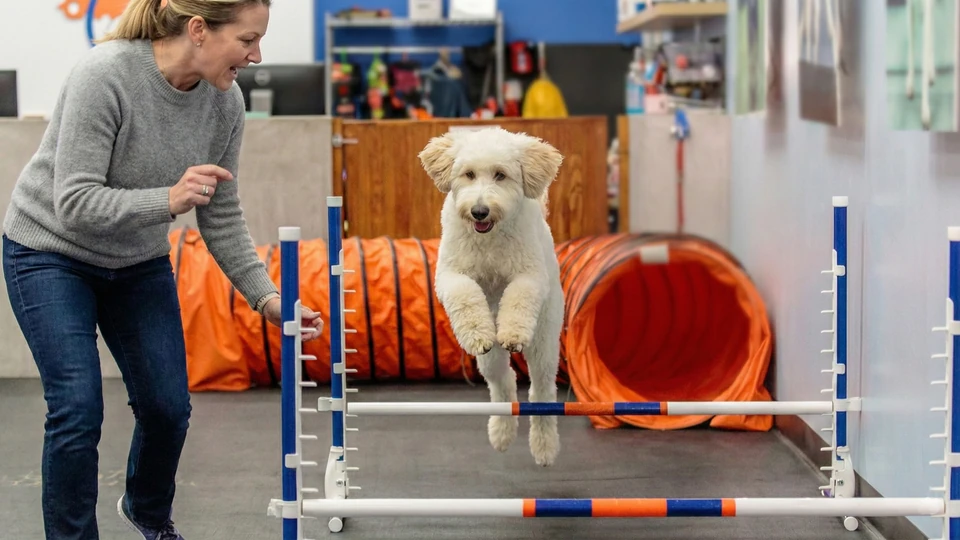
Unlike some pet categories that rely on one-time purchases, training creates ongoing relationships. A puppy owner might start with a basic obedience class, then move into agility, then come back for a refresher when they get a second dog. That recurring customer base is a core strength of the training model.
What Makes Dog Training Different from Other Pet Franchises
Not all pet franchises are built the same. Dog training, dog daycare, pet grooming, and pet retail are fundamentally different businesses with different economics, staffing challenges, and risk profiles.
Dog training franchises typically operate in standard retail spaces. You don't need massive outdoor yards, industrial ventilation systems, or specialized plumbing. That keeps buildout costs manageable and makes site selection more flexible.
Staffing is another major difference. In a training business, you need skilled trainers -- but you don't need dozens of floor staff watching dogs all day. A two-person floor is standard for many training operations. Compare that to daycare, where you might need one handler for every 10-15 dogs on site at all times.
Liability exposure varies too. When dogs are left unsupervised with other dogs (daycare and boarding), bite incidents and injuries are more common. Owner-participatory training -- where the dog's owner is present and involved in every class -- significantly reduces that risk.
Finally, the revenue model matters. Training businesses built on class packages and memberships generate recurring revenue. Grooming and retail tend to be more transactional. Recurring revenue means more predictable cash flow and higher customer lifetime value.
The Investment: What You're Actually Paying For
A dog training franchise like Zoom Room requires a total investment in the range of $302,000 to $465,000. That covers the franchise fee, buildout, equipment, initial marketing, and working capital to get through your first months of operation.
That's a real number, and you should take it seriously. But compare it to what you'd spend opening a dog daycare (often $500,000 to $1 million or more due to facility requirements) or a fast-food restaurant franchise (easily $1 million to $2.5 million).
What you're buying with a franchise fee goes beyond a name on the door. You get a proven training curriculum, marketing systems, technology platforms, site selection guidance, and ongoing operational support. The question isn't whether those things have value -- it's whether that value exceeds what you could build on your own for less money.
For most people without deep dog training experience, the answer is yes. Building a training curriculum from scratch, developing a brand, creating a marketing engine, and figuring out operations through trial and error takes years and carries significant risk. A franchise compresses that timeline.
The Lifestyle Factor Nobody Talks About
Here's where dog training franchises have an edge that doesn't show up on a spreadsheet. The day-to-day experience of running a training business is fundamentally different from running a daycare or boarding facility.
In a training business, you work with dogs and their people. You see the transformation when a reactive dog learns to be calm around other dogs. You watch a nervous first-time owner gain confidence. That emotional payoff is real, and it sustains owners through the hard early months of any business.
The hours can also be more manageable. Training classes run on a schedule. You're not managing overnight boarding or early morning drop-offs. Many training franchise owners find they can build a schedule that works around their life, especially once the business is established and they've hired trainers.
That said, don't romanticize it. You're still running a business. You'll deal with marketing, hiring, customer complaints, lease negotiations, and all the other things every business owner faces. The dogs are great. The spreadsheets are still spreadsheets.
How to Decide If It's Worth It for You
Start by getting honest about your goals. If you want a passive investment that runs itself, a franchise of any kind probably isn't right for you. Franchise owners who succeed are engaged, present, and involved -- especially in the first two years.
Next, look at the numbers in the Franchise Disclosure Document (FDD). Every franchisor is required to provide one, and it contains detailed financial information. Pay close attention to Item 19 (financial performance representations) if it's included, and Item 7 (estimated initial investment). Talk to existing franchisees -- the FDD lists their contact information.
Consider your market. Is there demand for professional dog training where you live? Look at population density, median household income, dog ownership rates, and existing competition. A great franchise in the wrong market will struggle.
Finally, ask yourself this: Can I see myself doing this in five years? Ten years? The best franchise owners aren't just chasing a return. They believe in the work. If the idea of building a community around dogs, helping families, and growing a business excites you, a dog training franchise might be exactly worth it.
Frequently Asked Questions
- Total investment varies by brand, but a dog training franchise typically requires between $300,000 and $500,000. This includes the franchise fee, buildout of your training space, equipment, initial marketing, and working capital. That's significantly less than dog daycare or boarding franchises, which often start above $500,000 due to facility requirements.
- No. Most dog training franchises don't require prior training experience. The franchisor provides a proprietary curriculum and trains your staff. What matters more are business skills, people skills, and a genuine passion for dogs. You'll hire certified trainers to lead classes while you focus on growing the business.
- Most franchise businesses take 12 to 24 months to reach profitability, and dog training franchises are no exception. The timeline depends on your market, how quickly you build a customer base, and your operating costs. Recurring revenue models (memberships and class packages) help accelerate the path because they create predictable income early on.
- Yes. The U.S. pet industry has grown to over $157 billion annually and has increased every year for more than two decades. Pet care services, including training, have doubled to $5.9 billion in the last decade. The trend toward treating pets as family members continues to drive spending on professional services.
- Dog training franchises focus on structured classes where owners participate alongside their dogs. Dog daycare franchises provide supervised care while owners are at work. They differ significantly in space requirements, staffing ratios, liability exposure, and revenue models. Training tends to require less capital, fewer staff, and carries lower insurance risk.
How much does a dog training franchise cost to open? +
Do I need to be a dog trainer to own a dog training franchise? +
How long does it take for a dog training franchise to become profitable? +
Is the pet industry still growing? +
What's the difference between a dog training franchise and a dog daycare franchise? +
Ready to Explore Dog Training Franchise Ownership?
Zoom Room is the #1 dog training franchise in the Entrepreneur Franchise 500. Learn about the investment, the model, and whether your market is available.
Request InfoThis is not an offer to sell a franchise. An offer can only be made through a Franchise Disclosure Document. Financial performance representations are available in Item 19 of our Franchise Disclosure Document. Contact us to request our FDD.