
How Much Does It Cost to Open a Dog Training Business?
The cost of opening a dog training business depends heavily on whether you go independent or buy a franchise. Either way, you need a realistic budget -- not a best-case fantasy. Here's what the numbers actually look like.
Independent vs. Franchise: Two Different Price Tags
Opening an independent dog training business and buying a franchise are fundamentally different investments with different cost structures. An independent operation can technically start for as little as $10,000 to $50,000 if you train dogs in parks, clients' homes, or rented community spaces. But that low-cost approach has major limitations in terms of scalability and credibility.
A brick-and-mortar independent training business with a dedicated facility will run $100,000 to $300,000 or more, depending on your market, the size of your space, and the quality of your buildout. You'll also need to develop your own curriculum, branding, marketing, and operating systems from scratch.
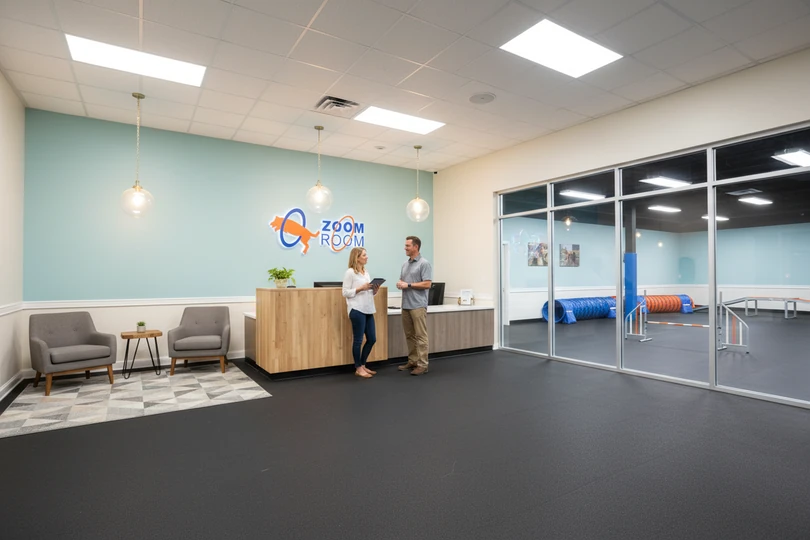
A dog training franchise like Zoom Room requires a total investment of $302,000 to $465,000. That includes the franchise fee, buildout, equipment, signage, initial marketing, technology setup, and working capital. The higher cost compared to a barebones independent operation buys you a proven system, brand recognition, and ongoing support.
Breaking Down the Major Costs
Lease and security deposit: Commercial lease costs vary dramatically by market. Expect to pay $15 to $40 per square foot annually in most suburban markets. For a 1,500 to 3,000 square foot space, that's $22,500 to $120,000 per year in rent alone. Landlords typically require a security deposit equal to one to three months' rent, plus first and last month upfront.
Buildout and improvements: Turning raw commercial space into a functional training facility requires flooring (rubber or similar durable material), mirrors, lighting, paint, a retail display area, a front desk, and potentially plumbing upgrades for a dog wash station. Buildout costs typically range from $50,000 to $150,000 depending on the condition of the space and your market's construction costs.
Equipment: Agility equipment, training tools, retail inventory, a point-of-sale system, computers, and AV equipment for classes. Budget $15,000 to $40,000 depending on how fully equipped you want to be at launch.
Signage and branding: Exterior signage, interior graphics, and branded materials. For an independent business, you'll also need logo design and brand development. Budget $5,000 to $20,000.
Insurance, Licenses, and Legal Costs
Insurance is non-negotiable for any dog training business. You'll need general liability insurance, professional liability coverage (for the training advice you give), workers' compensation (once you hire employees), and potentially commercial property insurance.
General liability for a dog training business typically runs $1,500 to $4,000 per year, though rates vary based on your location, coverage limits, and claims history. Owner-participatory training models generally get better rates than businesses where dogs are left in your care without their owners present.
Business licenses and permits vary by city and state. Budget $500 to $2,000 for initial licensing, zoning verification, and any required permits. Some municipalities require special permits for businesses that house animals, though training facilities where dogs come and go for classes typically face fewer regulatory hurdles than daycare or boarding operations.
Legal costs for entity formation, lease review, and franchise agreement review (if applicable) can run $2,000 to $7,000. Don't skip the lease review -- a bad lease term can cost you far more than the attorney's fee.
Marketing and Working Capital
Initial marketing: You need customers from day one, and building awareness before you open is critical. Budget $10,000 to $30,000 for pre-opening marketing, which should include a website, local SEO setup, Google Business profile optimization, social media presence, grand opening events, and initial paid advertising.
Franchise systems typically include initial marketing support and materials in the franchise fee, which reduces your out-of-pocket spend. Independent operators need to build everything from scratch, which often costs more and takes longer to produce results.
Working capital: This is the money you need to cover operating expenses (rent, payroll, utilities, supplies) before the business generates enough revenue to cover its own costs. Most dog training businesses need three to six months of working capital, which typically means $30,000 to $75,000 set aside.
Working capital is where many new business owners cut corners, and it's the most dangerous place to be underfunded. Running out of cash before you hit profitability forces bad decisions -- cutting marketing too early, delaying hires, or worse, closing the doors before you gave the business a fair chance.
Hidden Costs Most People Miss
Permit delays: Construction permits and inspections can take weeks or months longer than expected, which means you're paying rent on a space you can't use yet. Budget at least one extra month of rent as a buffer.
Technology: Booking software, customer management systems, email marketing platforms, and accounting tools all carry monthly subscription costs. These add up to $500 to $1,500 per month and are easy to overlook in initial budgets.
Trainer certification: If you're hiring trainers who need additional certification or training on your specific curriculum, factor in their wages during the training period before you open. That's payroll with no revenue coming in.
Utility costs: Commercial electricity, water, and HVAC for a space designed to accommodate active dogs can run higher than you expect. Budget $500 to $1,500 per month depending on your space and climate.
Ongoing franchise fees: If you go the franchise route, remember that ongoing royalties (typically 6-8% of gross revenue) and marketing fund contributions (typically 1-2%) are permanent costs that need to be in your financial model from day one. These fees buy you ongoing support, marketing, and brand development -- but they need to be accounted for in your profitability projections.
Frequently Asked Questions
- You can start a mobile or park-based training business for under $50,000, but this limits your scalability and professionalism. A brick-and-mortar location with a dedicated training space will require significantly more capital. If budget is tight, consider starting mobile while saving for a physical location.
- A franchise fee typically covers the right to use the brand, access to proprietary training curriculum, initial training for you and your staff, site selection support, build-out guidance, marketing templates, technology platform access, and pre-opening support. It does not cover buildout costs, equipment, or ongoing operating expenses.
- Plan for three to six months of operating expenses as working capital. This typically means $30,000 to $75,000 depending on your market and cost structure. Being underfunded at launch is one of the most common reasons small businesses fail -- don't cut this number to make the total investment look smaller.
- Yes, significantly. Dog daycare requires larger facilities, specialized construction (drainage, ventilation, outdoor areas), and higher ongoing staffing costs. Daycare franchises often require $500,000 to $1 million or more in total investment. Dog training franchises like Zoom Room range from $302,000 to $465,000, with simpler buildouts in standard retail space.
- Monthly operating costs typically include rent ($2,000-$10,000), payroll for trainers and staff ($8,000-$20,000), insurance ($200-$400), utilities ($500-$1,500), marketing ($1,000-$3,000), technology subscriptions ($500-$1,500), and supplies. Total monthly costs for a brick-and-mortar location are often $15,000 to $35,000 depending on your market.
Can I start a dog training business for under $50,000? +
What's included in a franchise fee for dog training? +
How much working capital should I have when opening a dog training business? +
Is dog training cheaper to start than dog daycare? +
What are the ongoing monthly costs of running a dog training business? +
Get the Full Cost Picture for a Zoom Room Franchise
Request a Franchise Disclosure Document to see the detailed investment breakdown for a Zoom Room dog training franchise, including Item 7 estimated costs.
Request InfoThis is not an offer to sell a franchise. An offer can only be made through a Franchise Disclosure Document. Financial performance representations are available in Item 19 of our Franchise Disclosure Document. Contact us to request our FDD.