
What Does a Franchise Owner Do? The Realistic Day-to-Day
The franchise brochure shows the polished version. The reality involves hiring, training, managing cash flow, marketing locally, solving problems, and gradually building a business that can run without you in the building every hour. Here is what franchise ownership actually looks like, stage by stage.
The Role Changes as the Business Matures
One of the most common misconceptions about franchise ownership is that the job is static. It is not. What you do in month three looks nothing like what you do in year three. The role evolves from operator to manager to strategic leader -- if you build the business correctly.
Understanding this progression matters because it affects the type of person who thrives in franchising. If you love building from scratch and solving novel problems, the early phase will energize you. If you prefer managing systems and leading people, the later phase is where you will find satisfaction. The best franchise owners have the temperament for both.
The franchise system provides the playbook. Your job is to execute it locally, adapt it to your market, build a team that delivers consistently, and manage the financial performance of the business. That is the job at every stage -- the mix just shifts over time.
Year One: Building the Foundation
The first year of franchise ownership is the most demanding. You are simultaneously learning the business, building a customer base from zero, hiring and training your initial team, and managing cash flow through the pre-profitability period.
A typical day in year one might start with reviewing the previous day's revenue and customer metrics. Mid-morning, you are meeting with a potential landlord or vendor, or handling a marketing initiative -- posting on social media, planning a community event, or following up with local partnerships. The afternoon involves working alongside your team on the floor, coaching them on service standards, and handling customer interactions directly.
In the evening, you are reviewing finances, paying invoices, adjusting the schedule, or catching up on email from the corporate support team. Weekends are often work days, especially if your business has peak weekend traffic.
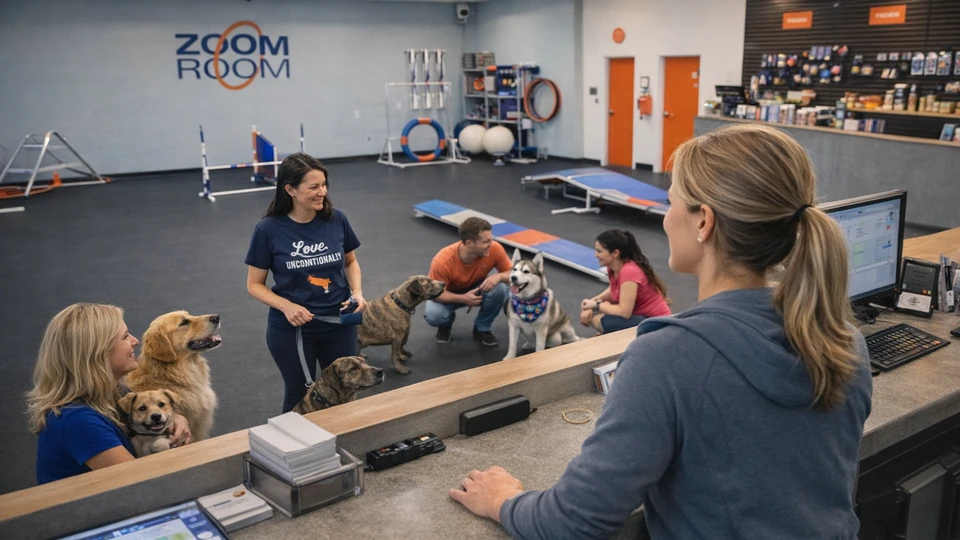
For service-based franchises like Zoom Room -- which runs with approximately two staff members per shift -- the owner often works shifts directly during year one. This is not because the business is designed to require it permanently. It is because you need to understand every aspect of the operation before you can effectively manage others doing the work.
Key year-one responsibilities:
Hiring your initial team and training them on the franchise system's standards. Building local brand awareness through grassroots marketing, community events, and digital presence. Managing cash flow tightly while revenue ramps. Establishing relationships with vendors and landlords. Learning the franchise's technology and reporting systems. Communicating regularly with your franchisor's support team and field consultants.
Year Two: Systematizing and Delegating
If year one is about building, year two is about systematizing. You have learned the operation. Your team is trained. The customer base is growing. Now the work shifts to optimization and delegation.
A typical day in year two looks different. Morning starts with a team huddle -- reviewing the day's schedule, discussing customer follow-ups, and addressing any operational issues. You are no longer working every shift but you are present for key hours, observing, coaching, and reinforcing standards.
Your focus shifts to the levers that drive growth: marketing strategy, customer retention programs, staff development, and local partnerships. You spend more time analyzing data -- customer acquisition costs, retention rates, average ticket size, labor efficiency -- and making strategic adjustments.
Financial management becomes more sophisticated. You are reading profit-and-loss statements monthly, comparing your performance to benchmarks within the franchise system, and forecasting cash flow with greater accuracy. Many franchise systems provide benchmarking tools that let you compare your location's performance to peers, which is one of the underappreciated advantages of operating within a franchise network.
Delegation is the core skill of year two. You are building a team that can execute the operation without you present for every hour. This means investing in hiring, training, and retaining strong employees -- which is one of the most challenging aspects of small business ownership in any category.
Year Three and Beyond: Leading and Growing
By year three, a well-run franchise should be operating with meaningful autonomy from the owner's daily presence. The systems are established, the team is experienced, and the customer base is generating predictable recurring revenue.
The owner's role becomes strategic. You are reviewing weekly and monthly performance dashboards, meeting with your team leads, planning marketing campaigns for the next quarter, and evaluating growth opportunities. Some franchise owners begin exploring multi-unit expansion at this stage, leveraging the operational knowledge they have built.
Community engagement becomes an increasingly important part of the role. Building relationships with local organizations, participating in industry events, and establishing yourself as a resource in your market creates a competitive moat that protects the business over time.
Financial stewardship remains central. You are managing relationships with your accountant and financial advisor, planning for tax obligations, and building the financial discipline that supports long-term equity growth. The franchise is now an asset, and managing it like an investor -- not just an operator -- becomes the appropriate mindset.
The best franchise owners at this stage also become contributors to the franchise system itself. They mentor newer franchisees, participate in advisory councils, and provide feedback that helps the franchisor improve the system for everyone. This is one of the unique benefits of franchising: you are building your own business, but you are not doing it alone.
Owner-Operator vs. Semi-Absentee: Two Valid Models
Franchise ownership does not require a single operating model. Some franchisees are owner-operators who work in the business daily. Others pursue semi-absentee ownership, where they focus on management and strategy while a general manager handles daily operations.
The right model depends on the franchise system, your financial resources, and your personal goals. Semi-absentee models typically require a higher total investment to fund the general manager's salary, and they demand strong hiring and management skills. You are not absent -- you are managing from a different altitude.
Many franchise owners start as owner-operators and transition to semi-absentee as the business matures and they develop trusted team members. Others begin semi-absentee because they are maintaining a primary career or managing multiple locations.
The key to semi-absentee success is having robust systems, reliable staff, and disciplined oversight. You need clear KPIs, regular reporting, and weekly in-person or virtual check-ins. The franchise system's technology and operating procedures are essential infrastructure for making this model work.
Before choosing a franchise, be honest about which model you envision and verify that the franchisor supports it. Not every system is designed for semi-absentee operation, and attempting it in a system that requires owner-operator involvement is a recipe for underperformance.
Frequently Asked Questions
- During the first year, most franchise owners work 50 to 60 hours per week as they build the business. By year two and three, that typically decreases to 30 to 45 hours as systems are established and the team takes on more responsibility. Semi-absentee owners may spend 15 to 25 hours per week once the business is stabilized, though this varies by franchise system.
- Most franchise systems do not require prior industry experience. The franchise model is designed to teach you the business through initial and ongoing training. What matters more than technical expertise is management ability, financial discipline, and willingness to follow the system. Transferable skills from other industries -- leadership, customer service, operations management -- are often more valuable than category-specific knowledge.
- Some franchise models support semi-absentee ownership, which allows you to maintain other professional commitments while a general manager handles daily operations. However, most franchisors expect significant involvement during the first six to twelve months. Be transparent with the franchisor about your intended involvement level and confirm their model supports it before investing.
- Most franchise owners cite hiring and retaining quality employees as the single biggest challenge. Building a reliable team in a competitive labor market requires consistent effort, competitive compensation, and a strong workplace culture. Cash flow management during the ramp-up period is the second most commonly cited difficulty, followed by the emotional demands of business ownership.
- Franchise agreements require adherence to brand standards, approved products and services, and core operating procedures. These standards protect the brand and ensure consistency across locations. Within those guardrails, franchisees have latitude in local marketing, team management, community engagement, and day-to-day decision-making. The most successful franchisees master the system before innovating within it.
How many hours a week does a franchise owner work? +
Do franchise owners need industry experience? +
Can I own a franchise while working a full-time job? +
What is the hardest part of owning a franchise? +
Do franchise owners need to follow the system exactly? +
See What a Day at Zoom Room Looks Like
Zoom Room franchise owners lead a lean team in a service-based business with high customer retention and a manageable operational footprint. Learn about the model.
Request InfoThis is not an offer to sell a franchise. An offer can only be made through a Franchise Disclosure Document. Financial performance representations are available in Item 19 of our Franchise Disclosure Document. Contact us to request our FDD.