
How Does Franchising Work? What You're Actually Buying
Franchising is a business model built on a simple exchange: you pay for the right to operate under a proven brand and system, and the franchisor provides the playbook, training, and ongoing support. But that summary barely scratches the surface. Understanding how franchising actually works -- from the legal structure to the daily reality -- is essential before you invest.
The Franchise Model, Explained
At its core, a franchise is a licensing arrangement. The franchisor owns the brand, the operating system, and the intellectual property. The franchisee pays for the right to use all of it within a defined territory and time period.
This is fundamentally different from starting a business from scratch. You are not inventing a concept, testing a market, or building systems through trial and error. You are buying access to something that has already been refined -- ideally over years of operation and across multiple markets.
The legal foundation of every franchise relationship is the Franchise Disclosure Document (FDD), a federally mandated document that the franchisor must provide to every prospective franchisee at least 14 days before any agreement is signed or money changes hands. The FDD contains 23 items covering everything from the company's litigation history to the total investment range to the list of every current and former franchisee.
Reading the FDD is not optional. It is the single most important document in the franchise evaluation process, and treating it as a formality is one of the most common mistakes prospective franchisees make.
What You Pay: Franchise Fees, Royalties, and Total Investment
The financial structure of a franchise involves several distinct costs, and understanding each one is critical to evaluating the opportunity accurately.
The franchise fee is the upfront cost for the license itself. This is a one-time payment made when you sign the franchise agreement. Franchise fees across the industry range from under $20,000 to over $100,000, depending on the brand, the category, and what the fee covers. For context, Zoom Room's franchise fee is $49,500, with a 10% discount for military veterans.
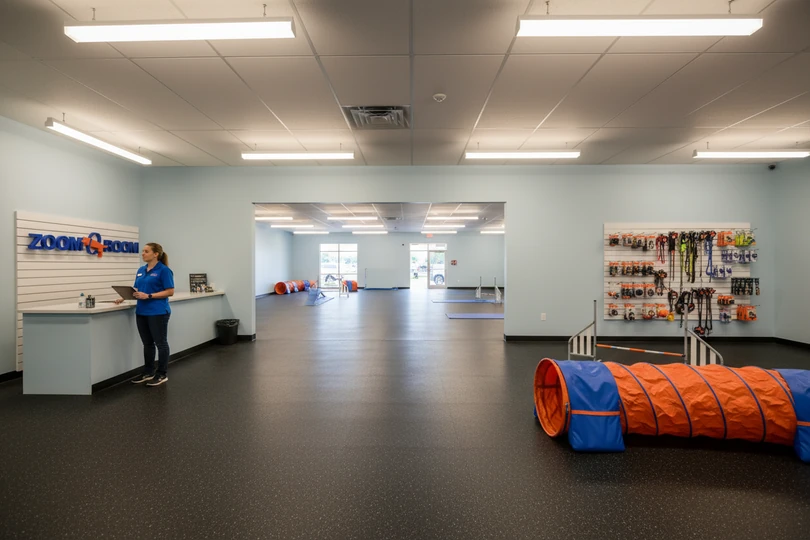
The total investment includes everything beyond the franchise fee: real estate buildout, equipment, signage, initial inventory, technology systems, insurance, working capital, and professional fees for legal and accounting support. Total investment ranges vary enormously by category. A home-based consulting franchise might require $50,000 to $75,000 all-in. A full-service restaurant could require $1 million or more. Zoom Room's total investment ranges from $302,000 to $465,000, which includes the buildout of an approximately 3,000-square-foot training facility.
Royalties are ongoing fees paid to the franchisor, typically calculated as a percentage of gross revenue. These fund the corporate team's ongoing support, system development, and operational infrastructure. Most franchise royalties range from 4% to 8% of gross revenue.
Marketing fund contributions are separate from royalties and fund national or regional advertising managed by the franchisor. These typically range from 1% to 3% of gross revenue.
The total investment figure in the FDD (Item 7) is your best guide to the full cost picture. Study it carefully and build your own financial model using conservative assumptions.
What the Franchisor Provides
The value proposition of a franchise rests on what the franchisor delivers in exchange for your fees. A strong franchise system provides a comprehensive infrastructure that would take years and significant capital to build independently.
Brand and marketing: You operate under an established brand with existing consumer recognition. The franchisor typically manages national marketing strategy, provides local marketing templates and playbooks, and maintains the brand's digital presence. In a crowded market, brand recognition is a meaningful competitive advantage from day one.
Training: Initial training programs vary in depth, but the best systems provide weeks of structured instruction covering operations, sales, customer service, staffing, and financial management. Training is not a one-time event -- ongoing education through webinars, conferences, and updated materials keeps franchisees current.
Operating systems: This includes proprietary software, point-of-sale systems, scheduling tools, customer management platforms, and standard operating procedures. These systems represent years of optimization and eliminate the guesswork that independent operators face.
Supply chain and vendor relationships: Franchisors negotiate pricing with vendors across the system, giving individual franchisees access to purchasing power they could never achieve alone. This affects everything from build-out costs to ongoing supplies.
Ongoing support: Field consultants, performance benchmarking, peer networks, and corporate support teams provide a safety net that independent business owners simply do not have. When problems arise -- and they will -- you are not solving them alone.
What You Do: The Day-to-Day Reality
The daily experience of a franchise owner depends heavily on the category, the maturity of the business, and whether you operate as an owner-operator or as a semi-absentee investor.
In the first year, most franchise owners are deeply involved in every aspect of the business. You are hiring and training your team, building the customer base, managing cash flow through the ramp-up period, and learning the operational rhythms of the business. This phase is intensive and demands full engagement.
By years two and three, a well-run franchise shifts. Systems are established, the team is trained, and the customer base is generating recurring revenue. The owner's role evolves from doing the work to managing the business: reviewing financial performance, coaching staff, planning marketing initiatives, and building community relationships.
Some franchise models are designed for owner-operators who work in the business daily. Others -- including many service and fitness brands -- are structured to allow semi-absentee ownership, where the franchisee focuses on management and growth while a trained team handles daily operations. Zoom Room locations, for example, typically run with just two staff members per shift, keeping the operational footprint lean.
The key question to ask yourself is not just "can I do this work" but "do I want to do this work for the next 10 years" -- because most franchise agreements run for a decade or longer.
How to Evaluate a Franchise Opportunity
Not all franchises are created equal, and the evaluation process should be rigorous. Here is a structured approach to vetting any franchise opportunity.
Start with the FDD. Read every item, but focus especially on Items 5-7 (fees and investment), Item 19 (financial performance, if provided), Item 20 (franchisee list), and Item 3 (litigation history). Have a franchise attorney review the agreement before you sign.
Talk to existing franchisees. Item 20 gives you contact information for every current and former franchisee. Call at least 10 to 15 of them. Ask about their experience, their financial results, the quality of support they receive, and whether they would make the same investment again. Patterns will emerge quickly.
Assess the leadership team. Who runs the franchisor, and what is their track record? Experienced franchise executives who have scaled systems successfully bring a level of operational maturity that matters. Zoom Room's leadership, for example, includes Ron Coughlin (Chairman, former CEO of Petco), Don Allen (COO, former executive at Orangetheory Fitness), and Jackie Mendes (SVP of Franchise Development, who is also a Zoom Room franchisee).
Understand the category dynamics. Is the industry growing or contracting? What are the competitive dynamics? The pet industry, which surpasses $157 billion annually, has demonstrated sustained growth through multiple economic cycles. Not every category can make that claim.
Model the finances locally. Take the investment and fee structure from the FDD and build a financial model based on your specific market's rent, labor costs, and competitive landscape. Run multiple scenarios. If the business only works under optimistic assumptions, reconsider.
Common Misconceptions About Franchising
"Franchising is a guaranteed success." It is not. Franchising reduces risk by providing a proven system, but it does not eliminate risk. Your execution, your market, and your financial discipline all matter enormously. Franchised businesses have statistically lower failure rates than independent startups, but failure is still possible.
"You have no freedom as a franchisee." You operate within a defined system, which includes brand standards, approved products, and operational procedures. But within that system, you run a business. You hire your team, manage your finances, build your local customer base, and make strategic decisions about growth. The system provides guardrails, not a straitjacket.
"The franchise fee is the total cost." The franchise fee is one component of the total investment. Real estate, buildout, equipment, working capital, and professional fees typically represent the majority of the financial commitment. Always evaluate the full investment range in Item 7, not just the franchise fee.
"All franchises are the same." The quality of franchise systems varies enormously. A strong franchisor provides robust training, ongoing support, proven marketing, and transparent financial data. A weak one collects fees and provides little in return. The evaluation process exists to help you distinguish between the two.
Frequently Asked Questions
- Total franchise investment varies dramatically by category and brand. Home-based service franchises can start under $100,000, while restaurant and hotel franchises can exceed $1 million. The franchise fee is only one component -- the total investment includes buildout, equipment, working capital, and other costs detailed in Item 7 of the FDD. Always evaluate the full investment range, not just the franchise fee.
- The FDD is a federally mandated legal document that franchisors must provide to prospective franchisees at least 14 days before signing any agreement or paying any fees. It contains 23 items covering the franchisor's financial statements, litigation history, fees, investment requirements, territorial rights, and a complete list of current and former franchisees. It is the most important document in the franchise evaluation process.
- Most franchise agreements run for 10 to 20 years, with options to renew. The initial term, renewal conditions, and any transfer restrictions are detailed in the franchise agreement and summarized in the FDD. Understanding the full term commitment -- and what happens at expiration -- is an important part of the evaluation process.
- Some franchise models are designed for semi-absentee ownership, where a trained manager handles daily operations while the franchisee focuses on oversight and strategic decisions. However, most franchisors expect significant involvement during the first year as the business launches and stabilizes. Review the franchisor's expectations for owner involvement before assuming you can maintain other commitments.
- If a franchise location closes, the franchisee typically loses their investment. The franchise agreement may include provisions about equipment, lease obligations, and non-compete restrictions that survive termination. Understanding these provisions before you sign is essential. Franchise attorneys can help you evaluate the downside scenarios and your exposure.
How much does it cost to buy a franchise? +
What is a Franchise Disclosure Document? +
How long do franchise agreements last? +
Can you own a franchise and keep your current job? +
What happens if a franchise fails? +
See How Zoom Room's Franchise Model Works
Zoom Room has been recognized as the number one dog training franchise in Entrepreneur's Franchise 500 for 2026. Learn more about the investment, the model, and the support system.
Request InfoThis is not an offer to sell a franchise. An offer can only be made through a Franchise Disclosure Document. Financial performance representations are available in Item 19 of our Franchise Disclosure Document. Contact us to request our FDD.