
How Much Does It Cost to Open a Franchise? Breaking Down the Real Numbers
The franchise fee gets all the attention, but it is rarely more than 15% of the total investment. Understanding the full cost picture -- from buildout to working capital to the expenses no one warns you about -- is the difference between a realistic financial plan and a painful surprise.
Total Investment Is What Matters, Not the Franchise Fee
Every franchise advertises its franchise fee prominently, and prospective buyers often anchor on that number. That is a mistake. The franchise fee is just the cost of the license. The total investment is what you need to fund.
Item 7 of the Franchise Disclosure Document breaks down the estimated total investment in granular detail. For every franchise you evaluate, this is the number that should drive your financial planning.
Investment ranges vary enormously by category. Home-based service franchises might require $75,000 to $150,000 all-in. Fitness and wellness concepts typically range from $200,000 to $500,000. Quick-service restaurants can run $250,000 to $750,000. Full-service restaurants and hotels can exceed $1 million to $3 million.
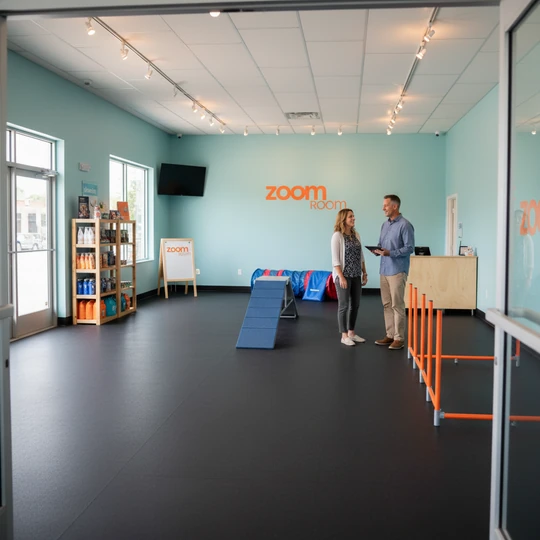
Zoom Room's total investment, for example, ranges from $302,000 to $465,000. That covers the $49,500 franchise fee plus real estate buildout of an approximately 3,000-square-foot facility, equipment, technology systems, initial marketing, insurance, professional fees, and working capital. The investment is competitive with other service-based franchise models and reflects the lean operational footprint of the business.
The Major Cost Categories
Franchise fee: The upfront license payment, typically ranging from $20,000 to $75,000 depending on the brand and category. Some franchisors offer discounts for veterans, multi-unit commitments, or early adopters. Zoom Room offers a 10% veteran discount on its $49,500 franchise fee.
Real estate and buildout: For any franchise requiring a physical location, this is usually the largest cost. It includes the security deposit, lease payments during construction, architectural plans, permits, construction labor, materials, and signage. Costs vary dramatically based on geography, the condition of the space, and the complexity of the buildout. A franchise in Manhattan will cost significantly more than the same concept in a second-tier market.
Equipment and fixtures: Point-of-sale systems, furniture, specialty equipment, display fixtures, and technology infrastructure. The FDD should detail exactly what is required and provide cost ranges.
Initial inventory or supplies: Retail-heavy franchises have significant upfront inventory costs. Service franchises typically have minimal inventory requirements, which is one reason their total investment tends to be lower.
Technology and software: Proprietary software licenses, hardware, Wi-Fi infrastructure, security systems, and any required technology platforms. These are increasingly significant line items as franchise systems become more technology-dependent.
Professional fees: Franchise attorney review of the FDD and franchise agreement. Accountant consultation for entity structuring and financial planning. These fees typically range from $5,000 to $15,000 but are essential investments in protecting yourself.
Insurance: General liability, workers' compensation, property insurance, and any industry-specific coverage. Costs vary by category and geography but should be budgeted based on actual quotes from brokers experienced in your franchise category.
Working Capital: The Cost People Underestimate
Working capital is the money you need to fund operating expenses while the business ramps up to profitability. For most franchises, that ramp takes 12 to 24 months. During that period, you are paying rent, payroll, utilities, marketing, and royalties while the revenue builds.
This is where many new franchisees get into trouble. They budget enough to open the doors but not enough to sustain the business through the growth phase. When cash runs tight, they cut marketing -- which slows growth further -- or they take on debt at unfavorable terms.
A disciplined approach is to budget six to twelve months of operating expenses as working capital, separate from the buildout and opening costs. This buffer gives you the runway to grow the business without making desperate decisions.
The FDD's Item 7 includes an estimate for initial working capital, but many franchise professionals recommend budgeting above the franchisor's estimate. Those estimates represent minimums, and your specific market conditions may require more.
Living expenses matter too. If you are leaving a salaried position to operate a franchise full-time, you need to fund your personal expenses during the ramp-up period. This is often overlooked in the total cost calculation but is essential for realistic financial planning.
Hidden and Often-Overlooked Costs
Beyond the categories listed in Item 7, several costs can catch franchisees off guard.
Lease negotiations and tenant improvement allowances: The quality of your lease negotiation directly affects your profitability for years. Hiring a commercial real estate broker who specializes in retail leasing -- ideally one familiar with franchise buildouts -- can save you tens of thousands of dollars. Some landlords offer tenant improvement allowances (TI) that offset buildout costs, but the availability and amount vary by market and property.
Permitting delays: Construction permits, health department approvals, and zoning reviews can take weeks or months longer than expected. During that time, you may be paying rent on a space you cannot open. Budget for at least two to four weeks of delay beyond the projected timeline.
Grand opening marketing: The initial marketing push to build awareness at launch is separate from ongoing marketing. Some franchisors require a specific grand opening marketing spend; others recommend it. Either way, underfunding the launch means slower customer acquisition.
Additional training travel: If initial training is conducted at the franchisor's headquarters, you will need to cover travel, lodging, and meals for yourself and potentially your key team members. These costs add up quickly for multi-week training programs.
Technology upgrades: Point-of-sale system updates, new software requirements, and hardware refreshes are ongoing costs that are easy to forget when budgeting for the initial investment.
Transfer fees: If you buy an existing franchise location (a resale), the franchisor typically charges a transfer fee ranging from $5,000 to $25,000. This is on top of the purchase price you pay to the selling franchisee.
How to Fund a Franchise Investment
Most franchisees use a combination of funding sources to cover the total investment.
Personal savings and liquidity: Most lenders and franchisors require that a significant portion of the investment come from liquid capital -- cash, securities, or retirement accounts. Zoom Room requires $200,000 in liquid capital and a minimum net worth of $750,000. These thresholds vary by brand but signal the financial stability needed to weather the ramp-up period.
SBA loans: The Small Business Administration's 7(a) loan program is the most common financing vehicle for franchise acquisitions. SBA loans offer favorable terms -- typically 10-year repayment with interest rates of prime plus 2% to 3% -- and require lower down payments than conventional loans. The SBA maintains a Franchise Directory of pre-approved brands, which streamlines the lending process.
Conventional bank loans: Some franchisees use traditional commercial loans, which may offer faster processing but typically require higher down payments and shorter repayment terms than SBA loans.
ROBS (Rollover for Business Startups): This IRS-approved strategy allows you to use retirement funds (401(k) or IRA) to invest in a franchise without paying early withdrawal penalties or taxes. ROBS is complex and requires specialized administrators, but it is a legitimate and increasingly common funding mechanism.
Franchisor financing: Some franchisors offer in-house financing or partnerships with preferred lenders. These programs vary in terms and availability but can simplify the funding process.
The best approach is to work with a financial advisor or franchise funding specialist before committing to any financing structure. The right capital stack depends on your personal financial situation, risk tolerance, and long-term goals.
Frequently Asked Questions
- Home-based and mobile service franchises typically have the lowest total investment, often ranging from $50,000 to $150,000. These models avoid real estate and buildout costs, which are the largest expense categories for brick-and-mortar franchises. However, lower investment does not automatically mean higher return. Evaluate the revenue potential, not just the entry cost.
- Most franchisors require a minimum amount of liquid capital -- cash or assets that can be quickly converted to cash -- to qualify. This typically ranges from $50,000 to $250,000 depending on the brand. Zoom Room requires $200,000 in liquid capital. Liquidity requirements exist because lenders and franchisors want to ensure you have the financial cushion to sustain the business through its early growth phase.
- Generally, franchise fees are standardized and not negotiable for individual buyers. Franchisors are legally required to offer consistent terms as outlined in the FDD. However, some brands offer structured discounts for veterans, multi-unit commitments, or development of new markets. The franchise fee should be evaluated in the context of the total investment, not in isolation.
- Beyond the initial investment, franchise owners pay ongoing royalties (typically 4% to 8% of gross revenue), marketing fund contributions (1% to 3%), rent, payroll, insurance, supplies, and technology fees. Understanding your monthly fixed costs and projecting them against realistic revenue expectations is essential for assessing profitability.
- Yes, through a strategy called ROBS (Rollover for Business Startups). ROBS allows you to use 401(k) or IRA funds to invest in a franchise without early withdrawal penalties or taxes. The process requires specialized administrators and proper entity structuring. It is a legitimate, IRS-approved mechanism used by thousands of franchise owners, but it requires careful execution.
What is the cheapest type of franchise to open? +
How much cash do I need to open a franchise? +
Are franchise fees negotiable? +
What ongoing costs do franchise owners pay? +
Can I use retirement funds to buy a franchise? +
Understand the Full Investment Picture
Zoom Room's total investment ranges from $302,000 to $465,000, including a lean buildout and strong franchisor support. Learn more about what the investment includes.
Request InfoThis is not an offer to sell a franchise. An offer can only be made through a Franchise Disclosure Document. Financial performance representations are available in Item 19 of our Franchise Disclosure Document. Contact us to request our FDD.