
How Long Does It Take to Open a Franchise? A Realistic Timeline
The short answer: four to nine months for most brick-and-mortar franchise concepts, though the range can stretch to twelve months or longer depending on real estate availability, permitting, and construction. Understanding what drives the timeline helps you plan realistically and avoid the frustration that comes from misaligned expectations.
The Typical Franchise Opening Timeline
From the day you sign a franchise agreement to the day you open for business, the typical timeline for a brick-and-mortar franchise runs four to nine months. Home-based and mobile franchises can launch in as little as 30 to 90 days because they skip the real estate and construction phases entirely.
Here is what the timeline looks like for a concept that requires a physical location, broken into its major phases:
Weeks 1-4: Entity formation and initial planning. You establish your business entity (typically an LLC or S-corp), open business bank accounts, begin the loan process if financing is needed, and start initial training modules. Your franchisor will assign a project manager or development team to guide you through the process.
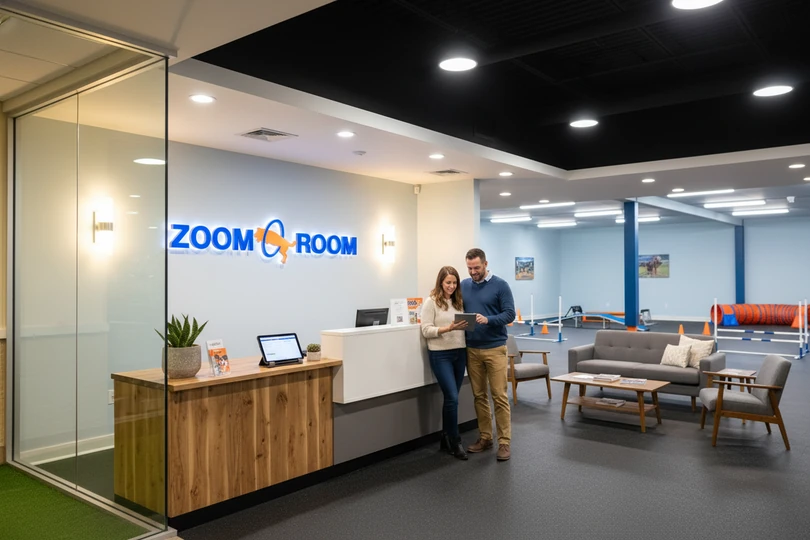
Weeks 4-12: Real estate search and lease negotiation. This is typically the longest and most variable phase. Finding the right location in the right trade area at the right rent takes time. Lease negotiations can add weeks. Most franchisors have specific site criteria -- square footage, frontage, parking, co-tenancy -- that narrow the search. Zoom Room locations, for example, require approximately 3,000 square feet, which provides enough flexibility to find viable options in most markets.
Weeks 8-16: Design, permitting, and construction. Once the lease is signed, the design and buildout process begins. Architectural plans are developed from the franchisor's prototype, permits are pulled, and construction starts. This phase overlaps with the tail end of real estate -- design work often begins while lease negotiations are finalizing.
Weeks 12-20: Training. Most franchisors schedule comprehensive training during the buildout phase so you are ready to operate when the doors open. Training may include both classroom instruction at the franchisor's headquarters and on-site preparation at your location.
Weeks 20-28: Pre-opening marketing and launch. In the final weeks before opening, you execute your grand opening marketing plan, hire and train your initial team on-site, stock inventory and supplies, and conduct soft-opening events to test operations.
What Affects the Timeline Most
Real estate availability. This is the single biggest variable. In tight commercial markets with low vacancy rates, finding a suitable location can take three to six months. In markets with abundant retail space, it might take four to six weeks. Your franchisor's real estate team and any broker relationships they maintain can accelerate this process, but the market fundamentally dictates the pace.
Permitting and local regulations. Municipal permitting processes vary enormously. Some jurisdictions process permits in two to three weeks. Others take two to three months. If your franchise category requires specialized permits -- health department, food service, occupancy -- the timeline extends further. Experienced franchisors know which markets have complex permitting and can help you plan accordingly.
Construction and contractor availability. General contractor availability fluctuates with the economy and the season. During construction booms, securing a contractor and getting on their schedule can add weeks. Weather, supply chain delays, and change orders during construction also affect timing. A 10% to 15% buffer on the construction timeline is prudent.
Financing timeline. If you are using an SBA loan, the approval and funding process typically takes 45 to 90 days. This should run in parallel with real estate search, but delays in loan processing can cascade through the entire timeline. Having your financial documents organized before you sign the franchise agreement helps avoid bottlenecks.
Franchisor readiness. The franchisor's development pipeline matters too. If the training schedule is booked months out, or if the design and construction team is managing multiple simultaneous buildouts, your project may queue behind others. Ask about the franchisor's current development pipeline and how many locations are in the buildout process.
How to Accelerate the Process
You cannot eliminate the structural timeline requirements -- permits take as long as they take -- but you can prevent unnecessary delays through disciplined preparation.
Get your finances in order early. Have your personal financial statement, tax returns, business plan, and entity documents ready before you sign. If you are pursuing SBA financing, begin the loan application process simultaneously with your franchise application. Pre-approval from a lender gives you leverage in lease negotiations and keeps the timeline moving.
Start the real estate search during the franchise evaluation process. Even before you sign a franchise agreement, you can begin identifying potential locations in your target market. Understanding the real estate landscape -- vacancy rates, rental rates, available spaces -- helps you move quickly once the agreement is signed.
Hire a commercial real estate broker early. A broker who specializes in retail leasing in your market knows the available inventory, the landlords, and the negotiation dynamics. This expertise can shave weeks off the real estate phase. If the franchisor has broker relationships in your market, use them.
Communicate proactively with your franchisor. The development team has guided dozens or hundreds of buildouts. They know where delays happen and how to prevent them. Regular communication -- weekly check-ins during the build phase -- keeps everyone aligned and surfaces issues before they become delays.
Build in buffer time. Plan for the realistic timeline, not the best case. If the franchisor says four to six months, plan for seven. This protects you financially and emotionally. The franchisees who struggle most with the opening process are those who planned for the fastest possible timeline and then encountered normal friction.
What You Should Be Doing During the Build Phase
The months between signing the franchise agreement and opening the doors are not dead time. They are an opportunity to build the foundation for a strong launch.
Complete training thoroughly. Do not rush through training to get to the opening faster. The knowledge and skills you build during training directly affect your first-year performance. Take notes, ask questions, and study the operations manual as if your investment depends on it -- because it does.
Build your local network. Introduce yourself to neighboring businesses, local chambers of commerce, community organizations, and potential referral partners. These relationships generate awareness before you open and create a pipeline of early customers.
Develop your hiring pipeline. Begin recruiting before you need staff on the floor. Post job listings, conduct interviews, and identify your core team members early. Having your team hired and ready for on-site training two to three weeks before opening prevents the scramble that many new franchisees experience.
Plan your grand opening marketing. Work with the franchisor's marketing team to develop a grand opening plan that generates buzz and drives traffic in the first weeks. Social media presence, local PR outreach, email list building, and community events should all be in motion before the doors open.
Set up your financial systems. Establish your bookkeeping process, payroll system, and banking relationships. Create your initial budget and cash flow forecast. The administrative infrastructure you build now will save you significant time and stress once the business is operating.
Buying an Existing Location vs. Opening New
One way to bypass much of the opening timeline is to purchase an existing franchise location from a current franchisee. Resale opportunities -- where a franchisee sells their location to a new owner -- allow you to step into an operating business with an existing customer base, trained staff, and established revenue.
Resales eliminate the real estate search, buildout, and pre-opening phases entirely. The transition from signing the purchase agreement to operating the business can happen in as little as 30 to 60 days, depending on franchisor approval and any required training.
The tradeoff is cost and condition. Resale prices reflect the value of an established business, which may be higher or lower than a new location depending on the unit's financial performance. You inherit the existing lease, the current staff, and any deferred maintenance or equipment needs. Due diligence on a resale requires careful financial analysis and a clear understanding of why the current owner is selling.
Franchisors must approve all transfers, and most charge a transfer fee. Some franchisors actively maintain resale listings and facilitate introductions between sellers and qualified buyers. Ask about resale availability if speed to opening is a priority.
Frequently Asked Questions
- Home-based and mobile franchises can launch in 30 to 90 days because they require no physical location, buildout, or construction permits. Service-based franchises that operate from commercial space typically take four to six months. Concepts requiring specialized facilities -- restaurants, fitness, automotive -- often take six to twelve months due to complex buildouts and permitting.
- You can prevent delays by preparing your finances in advance, starting the SBA loan process early, hiring a commercial real estate broker, and maintaining proactive communication with your franchisor's development team. You cannot speed up external factors like municipal permitting or contractor availability, so building buffer time into your plan is the most effective strategy.
- Real estate search and lease negotiation are the most common sources of delay, followed by municipal permitting and construction timelines. Financing delays can also cascade through the process if loan approval takes longer than expected. Experienced franchisors help mitigate these risks through established processes and vendor relationships.
- Most franchise owners do not need to leave their current position until four to eight weeks before the opening date. Training and pre-opening preparation can often be managed alongside other commitments. However, discuss timing with your franchisor -- some systems require full-time involvement earlier in the process. Financial planning should account for the gap between leaving your income and the franchise generating revenue.
What is the fastest franchise to open? +
Can I speed up the franchise opening process? +
What causes the most delays when opening a franchise? +
Should I quit my job before the franchise opens? +
Start Planning Your Zoom Room Timeline
Zoom Room's development team guides franchisees through every phase from signing to opening. Learn about the process and what to expect.
Request InfoThis is not an offer to sell a franchise. An offer can only be made through a Franchise Disclosure Document. Financial performance representations are available in Item 19 of our Franchise Disclosure Document. Contact us to request our FDD.