
Best Non-Food Franchise to Own: Why Smart Investors Look Beyond Restaurants
The first franchise that comes to mind is usually a restaurant. But the first franchise that comes to mind is rarely the best investment. Non-food franchises consistently offer lower complexity, better margins, and a more manageable lifestyle for the owner. Here's what the landscape looks like.
The Case Against Food Franchises
Food franchises are not inherently bad investments. Some are quite good. But as a category, they carry structural disadvantages that most buyers underestimate.
Food cost runs 28% to 35% of revenue. Labor typically adds another 25% to 35%. Before you pay rent, utilities, marketing, royalties, and yourself, you've already spent 60% to 70% of every dollar on just two line items. Net margins of 5% to 10% are considered healthy in food service. That's a thin cushion.
Operational complexity compounds the problem. Food safety regulations, health inspections, equipment maintenance, supply chain management, and the perishability of inventory create daily challenges that most non-food businesses simply don't face. A broken walk-in cooler on a Friday night is a crisis. In a service business, equipment issues are rarely emergencies.
Labor is perhaps the biggest headache. Restaurants require large teams with high turnover -- industry averages run 60% to 80% annually. Constant hiring and training drains management time and increases costs. Non-food franchises with smaller teams experience lower turnover and fewer scheduling challenges.
None of this means you should never consider a food franchise. It means you should understand what you're signing up for and compare it honestly against the alternatives.
Non-Food Franchise Categories Worth Your Attention
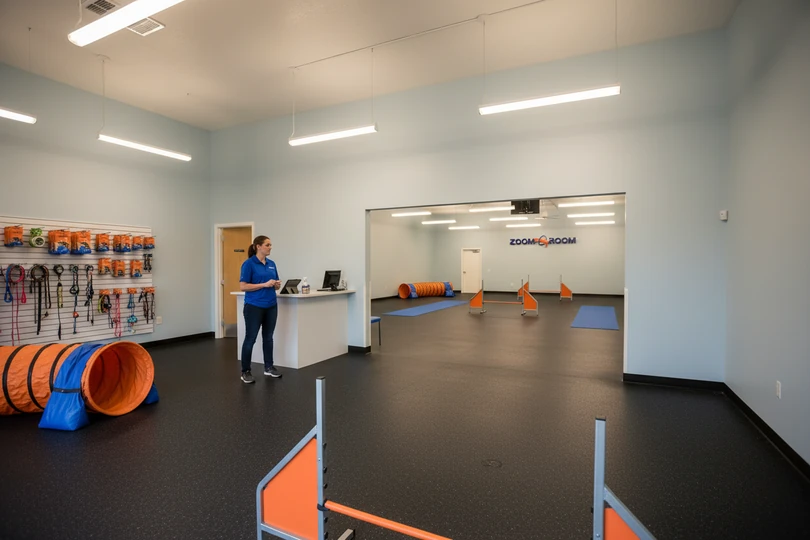
Pet care services. The $157 billion pet industry is growing faster than most consumer categories, and pet care services have doubled to $5.9 billion over the past decade. Within pet care, dog training franchises offer a particularly compelling model: recurring membership revenue, small footprints, lean teams, and emotionally essential demand. Zoom Room -- ranked #1 in dog training -- operates with a total investment of $302,523 to $464,712 in roughly 3,000 square feet with two staff per shift.
Home services. Restoration, cleaning, handyman, and HVAC franchises benefit from essential demand and often operate without a storefront. Investment levels are modest, and the labor model is straightforward. These concepts scale well to multiple territories.
Fitness and wellness. Boutique fitness has matured into a reliable franchise category. Concepts with smaller footprints and membership models generate strong per-square-foot revenue. The best ones serve a specific niche rather than trying to be all things to all people.
Education and enrichment. Tutoring, STEM programs, and children's enrichment franchises operate on enrollment-based revenue with predictable scheduling. They appeal to investors who value community impact alongside financial returns.
Senior care. An aging population has created durable demand for home health, companion care, and senior living services. These franchises often require licensing and regulatory compliance, but the market tailwinds are strong and long-lasting.
Margin Comparison: Food vs. Non-Food
The margin story is where non-food franchises really distinguish themselves.
A typical QSR franchise operates on 5% to 10% net margins after accounting for food cost, labor, occupancy, royalties, and marketing. A strong year might push toward 12% to 15%. A bad year can dip below breakeven.
Service-based non-food franchises typically operate at significantly higher margins because their cost structure is fundamentally different. There's no perishable inventory. The labor model is leaner. The space requirements are usually smaller. And the revenue, when built on memberships, is more predictable.
Consider the comparison: a restaurant generating $1 million in revenue at an 8% margin produces $80K in profit. A service franchise generating $700K at a 15% margin produces $105K -- more profit from less revenue and less complexity.
Margins also affect your long-term wealth building. Higher margins mean you can reinvest in the business, pay down debt faster, and build equity more quickly. When you eventually sell, a business with strong margins commands a higher valuation multiple than one running on thin margins.
The Lifestyle Factor
Beyond the financial comparison, non-food franchises often deliver a better quality of life for the owner.
Restaurant owners work long hours across nights, weekends, and holidays. The business operates during peak consumer hours, which are exactly the hours you'd otherwise spend with your family. Emergencies are frequent and time-sensitive. Staff no-shows can force you to work a shift personally.
Most non-food service franchises operate during business hours or predictable peak times. A fitness studio has morning and evening rushes. A pet training facility operates on a published class schedule. A home services franchise dispatches during daytime hours. The hours are real, but they're more predictable and often more manageable.
This matters more than many buyers initially think. The financial returns of a franchise are meaningless if the lifestyle makes you miserable. During your evaluation process, ask current franchisees about their typical week -- not just their revenue. The franchise work-life balance question is worth taking seriously.
How to Pick the Right Non-Food Franchise
With food off the table, you still face hundreds of options. Here's how to narrow them.
Start with industry alignment. The best franchise owners care about their industry, even if they lack prior experience. If dogs light you up, look at pet care. If fitness motivates you, look at wellness concepts. Authentic enthusiasm for the product or service makes the daily work more sustainable.
Evaluate the revenue model. Prioritize recurring revenue over transactional models. Monthly memberships, service subscriptions, and enrollment-based programs create predictable cash flow and higher business valuations.
Assess the total investment. Don't just look at the franchise fee -- review Item 7 of the FDD for the full picture. Include buildout, equipment, training, and at least six months of working capital in your calculations.
Check industry growth. Is the industry growing structurally, or just riding a trend? The pet industry's 25-year consecutive growth streak is structural. Some fitness fads are cyclical. Understanding the difference matters for your 10-year outlook.
Validate relentlessly. Call every franchisee you can reach. Ask the right questions. Look for patterns in their answers. Validation is where the real information lives.
Frequently Asked Questions
- Service-based franchises in pet care, fitness, and home services consistently rank among the most profitable non-food categories. Profitability depends heavily on the specific concept's unit economics, but non-food franchises generally achieve higher margins than restaurants because they avoid food cost, carry less inventory, and require smaller teams.
- You don't have to avoid food franchises, but you should understand the trade-offs. Food franchises typically operate on thin margins (5-10%), require large teams with high turnover, and involve significant operational complexity. Non-food franchises generally offer higher margins, simpler operations, and a more manageable lifestyle for the owner.
- Home-based service franchises like cleaning, lawn care, and mobile services can start under $50K. These have the lowest capital requirements but also typically generate lower revenue per unit. For a facility-based non-food franchise with stronger revenue potential, expect to invest $150K to $500K depending on the concept.
- Pet franchises are among the strongest non-food alternatives. The pet industry exceeds $157 billion with 65 million dog-owning households, and pet care services have doubled over the past decade. Dog training franchises in particular offer recurring revenue models, manageable operations, and emotionally essential demand that provides resilience during economic downturns.
What are the most profitable non-food franchises? +
Why should I avoid a food franchise? +
What non-food franchise has the lowest startup cost? +
Is a pet franchise a good non-food alternative? +
The #1 Dog Training Franchise
Zoom Room is a non-food franchise with strong unit economics, a membership-based model, and an industry that has grown for 25 consecutive years. No restaurant headaches.
Request InfoThis is not an offer to sell a franchise. An offer can only be made through a Franchise Disclosure Document. Financial performance representations are available in Item 19 of our Franchise Disclosure Document. Contact us to request our FDD.