
Pet Franchise vs. Food Franchise: Investment, Margins, Lifestyle, and Risk Compared
The decision between a pet franchise and a food franchise is one of the most common crossroads for prospective franchise investors. Both categories represent massive industries with proven franchise models. But the day-to-day reality, financial profile, and lifestyle implications of each are dramatically different. This comparison lays out the data so you can make an informed decision based on how you actually want to spend your time and money.
Investment Comparison: What Each Category Costs
Food franchises span an enormous investment range. A limited-menu QSR (quick-service restaurant) might start at $250,000, while a full-service restaurant franchise can exceed $2 million. The median fast-casual franchise investment falls between $350,000 and $700,000. These numbers include real estate buildout, commercial kitchen equipment, signage, initial inventory, and pre-opening expenses.
Pet franchises generally operate at lower investment levels. Dog training franchises like Zoom Room start at $302,000 with a total range of $302,000 to $465,000. Dog grooming concepts typically range from $150,000 to $350,000. Dog daycare and boarding franchises are the most capital-intensive in the pet category, with brands like Dogtopia starting around $532,000 and extending past $1.1 million, and Camp Bow Wow ranging from $566,000 to over $1.1 million.
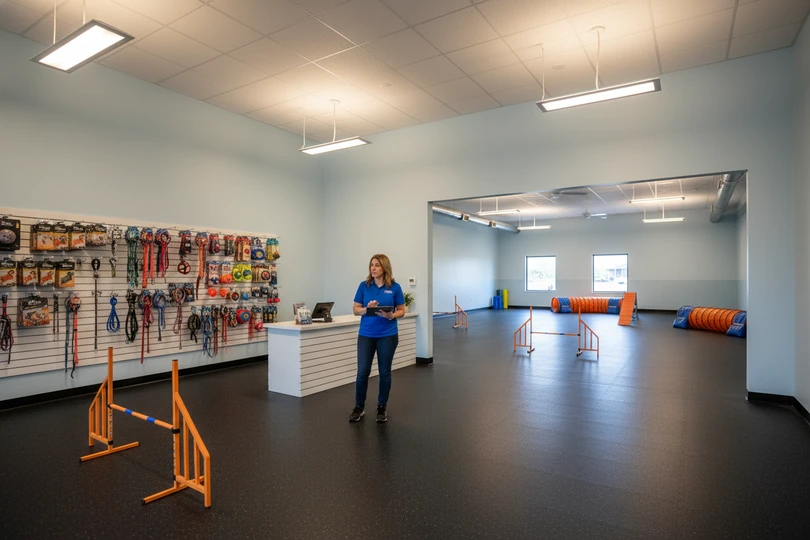
The investment difference becomes more stark when you account for buildout complexity. A restaurant kitchen requires grease traps, commercial ventilation, fire suppression systems, and health department-compliant food preparation surfaces. These specialized buildout requirements can add $50,000 to $200,000 to the construction budget and extend the timeline by months. Pet service buildouts, while not trivial, are generally simpler: rubber flooring, basic plumbing for wash areas, and open training or play spaces.
Operating Margins: Where the Money Actually Goes
This is where the comparison becomes most revealing. Food franchises typically operate on net margins of 5 to 12 percent. A fast-casual restaurant generating $1 million in annual revenue might net $50,000 to $120,000 before debt service and taxes. Food costs consume 28 to 35 percent of revenue. Labor takes another 25 to 35 percent. Occupancy runs 8 to 12 percent. Marketing, royalties, and miscellaneous expenses absorb another 15 to 20 percent. The math is tight.
Pet service franchises generally achieve higher net margins because they avoid the two biggest cost drains in food: perishable inventory and high-turnover labor forces. A dog training franchise has no food costs and minimal inventory beyond basic supplies. Staffing is leaner because the class-based model generates revenue from multiple clients per staff member simultaneously. Net margins of 15 to 25 percent are achievable in well-run pet service operations.
The labor cost comparison deserves emphasis. Restaurant franchises typically employ 15 to 30 workers across multiple shifts, including positions with historically high turnover: line cooks, prep staff, dishwashers, and cashiers. Employee turnover in food service averages 75 percent annually, meaning a 20-person restaurant replaces 15 employees every year. The recruiting, training, and productivity losses from this churn are an ongoing drag on profitability. A dog training franchise running with two staff per shift operates in a fundamentally different labor environment.
Hours of Operation and Lifestyle Impact
A typical fast-casual restaurant operates 70 to 84 hours per week, often from 10 AM to 10 PM seven days a week. Owner involvement during the first two years typically means 50 to 60 hours per week of direct management time, including evenings, weekends, and holidays. The restaurant never closes for Thanksgiving, the Fourth of July, or your child's school play.
Pet service franchises generally operate on schedules more aligned with their customers' lifestyles. Dog training classes run primarily in evenings and on weekends when pet parents are available, with some daytime classes. Total operating hours for a training facility might be 40 to 55 hours per week, with the business closed or minimal on at least one day. The owner's direct involvement can often be reduced to 30 to 40 hours per week once the business is established.
This difference compounds over years of ownership. The cumulative lifestyle impact of 60-hour weeks versus 35-hour weeks affects health, relationships, and the ability to enjoy the autonomy that franchise ownership is supposed to provide. Many franchise buyers cite quality of life as a primary motivation for leaving corporate careers. A franchise that demands more hours than the job you left defeats part of the purpose.
Recession Resistance and Industry Stability
Both industries have demonstrated resilience, but through different mechanisms. The food industry is essential spending: people always eat. However, restaurant spending is discretionary. During recessions, consumers shift from dining out to eating at home, and restaurant revenue can decline 10 to 20 percent. QSR concepts fare better than full-service restaurants because they're positioned as affordable alternatives to cooking.
Pet spending has shown remarkable resistance to economic downturns. The pet industry grew through the 2008-2009 recession, through the 2020 pandemic disruption, and continues to grow through subsequent economic uncertainty. Pet owners consistently report that they would cut their own spending before reducing spending on their pets. The emotional bond with companion animals creates a spending floor that doesn't exist in most consumer categories.
The recurring revenue model of pet services adds an additional layer of stability. A dog training franchise with 100 enrolled families generating class revenue every week has a revenue base that doesn't evaporate overnight. By contrast, a restaurant's revenue resets to zero every morning: today's sales depend entirely on today's customer decisions.
Scalability and Multi-Unit Potential
Food franchises have a proven multi-unit playbook. Many of the largest franchise empires in America are built on restaurant portfolios of 10, 20, or 50 locations. The operational systems for multi-unit restaurant management are well-established, with district manager structures, centralized purchasing, and standardized training programs.
Pet franchises are earlier in the multi-unit maturation curve, but the economics of scaling are arguably more favorable. Opening a second training facility costs $302,000 to $465,000, while opening a second restaurant might cost $500,000 to $1.5 million. The simpler operations of a pet service franchise also mean less management overhead per unit, allowing multi-unit operators to oversee more locations with fewer layers of management.
The resale market is another scalability consideration. Restaurant franchises in established brands have a well-developed resale market because buyers understand the business model. The pet franchise resale market is less mature but developing rapidly as the category grows. Building a pet franchise with strong revenue, clean books, and a solid team creates an asset that will have increasing resale demand as the industry continues to expand.
The Emotional Factor: What Gets You Out of Bed
Beyond the numbers, there is an intangible dimension that matters more than most financial analyses acknowledge. Franchise ownership is a multi-year commitment. Your day-to-day satisfaction with the work itself affects your energy, your decision-making, and ultimately your financial performance.
Food franchise owners spend their days managing food safety compliance, handling customer complaints about order accuracy, negotiating with food suppliers, and covering shifts when employees don't show up. The work is necessary and can be rewarding, but it's fundamentally operational management.
Pet franchise owners spend their days in environments filled with dogs, interacting with pet parents who are emotionally invested in their animals' wellbeing, and facilitating experiences that genuinely improve the lives of families and their pets. The customer feedback loop is uniquely positive: people are happy when they walk in the door because they're bringing their dog to something enjoyable.
This emotional difference is not soft or trivial. It affects employee retention (people want to work with animals), customer referral rates (people love talking about their dog's training), and owner burnout rates. Choosing a franchise that aligns with what genuinely interests you is a practical business decision, not merely a lifestyle preference.
Frequently Asked Questions
- Pet franchises typically achieve higher net profit margins (15 to 25 percent) compared to food franchises (5 to 12 percent) because they avoid food costs and manage fewer employees. However, some food franchises generate higher absolute revenue. The most relevant metric is return on investment: how much net income you generate relative to how much you invested and how many hours you work. By that measure, many pet franchises outperform food concepts.
- Food franchises in established brands currently have a more active resale market with established valuation multiples. Pet franchises are building resale market depth as the category matures. Both types of franchises build value based on revenue, profitability, lease quality, and brand strength. A well-run pet franchise with strong recurring revenue should command a healthy resale multiple as buyer demand for the category increases.
- Pet service franchises are generally simpler to manage because they involve fewer employees, simpler inventory (no perishable food), more predictable scheduling, and less regulatory burden (no health department inspections for food handling). The learning curve for a first-time franchise owner is typically shorter with a pet service concept than with a restaurant.
- Some pet franchise models, particularly dog training with class-based scheduling, can transition to semi-absentee management after the first 12 to 18 months once a reliable manager and staff are in place. Full absentee ownership is rare in any franchise category. Restaurants almost always require active owner involvement or a paid general manager, which adds $50,000 to $70,000 in annual salary to your cost structure.
Is a pet franchise more profitable than a food franchise? +
Do pet franchises or food franchises have better resale value? +
Which is easier to manage: a pet franchise or a restaurant? +
Can I run a pet franchise semi-absentee? +
See How a Pet Franchise Compares
Zoom Room is ranked number one in dog training by Entrepreneur in 2026. With an investment of $302,000 to $465,000, lean staffing, and margins that food franchises rarely achieve, it's a comparison worth making.
Request InfoThis is not an offer to sell a franchise. An offer can only be made through a Franchise Disclosure Document. Financial performance representations are available in Item 19 of our Franchise Disclosure Document. Contact us to request our FDD.