
Indoor Dog Training Facility Cost: Size, Buildout, Equipment, and Zoning
A dedicated indoor dog training facility changes the economics of a dog training business. It creates a controlled environment for group classes, enables year-round operation regardless of weather, and supports a membership model that renting space or working in-home can't match. Here's what it actually costs to build one.
Why Indoor Facilities Matter for Dog Training
The case for an indoor training facility isn't about luxury -- it's about business fundamentals.
An indoor facility lets you run group classes on a consistent schedule regardless of weather. It creates a controlled environment where you can manage distractions, temperature, flooring safety, and the number of dogs in each session. It gives customers a destination -- a place they associate with their dog's progress and community.
Most importantly, it enables a membership-based revenue model. When customers come to your facility regularly for classes, socialization sessions, and enrichment programs, you can build recurring revenue that an in-home or outdoor-only business can't replicate.
In-home trainers and those renting park space or community centers face inherent limitations: weather cancellations, inconsistent environments, no retail revenue, and difficulty building a community. A dedicated facility solves all of these problems, which is why facility-based dog training businesses generally produce stronger unit economics than mobile models.
The trade-off is straightforward: a facility costs more upfront. The question is whether the economics justify the investment. For most markets, the answer is yes -- if the facility is sized correctly and the business model is built around recurring revenue.
Size Requirements: How Much Space Do You Need?
The right facility size depends on your service model, class sizes, and how many simultaneous activities you want to run.
1,500 to 2,500 square feet: Suitable for a single training room with a small retail and reception area. This size limits you to one class at a time and restricts the variety of services you can offer simultaneously. It's the minimum for a functional facility but may constrain growth.
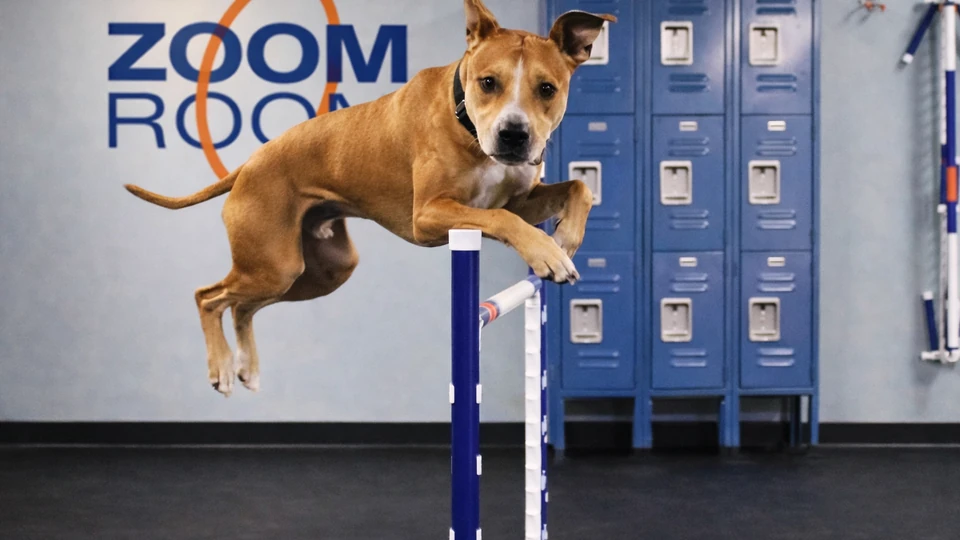
2,500 to 3,500 square feet: The sweet spot for most dog training businesses. This size accommodates a main training floor, a reception and retail area, storage, and potentially a secondary space for smaller groups or private sessions. Zoom Room operates in approximately 3,000 square feet, which supports multiple class types, retail, and the kind of customer experience that drives retention.
3,500 to 5,000+ square feet: Appropriate if you plan to offer additional services like a separate puppy room, agility course, or larger retail presence. More space means more opportunity but also higher rent, utilities, and buildout costs. Make sure the additional revenue justifies the additional expense.
The golden rule: build for your year-two capacity, not your year-five dreams. You can always expand or move to a larger space once the business is established. Starting too large creates unnecessary fixed costs during the ramp-up period when revenue is still growing.
Buildout Costs: Turning Raw Space Into a Training Facility
Buildout is typically the largest single cost component of opening an indoor training facility. The specifics depend on whether you're starting with a raw shell or converting an existing retail space.
Flooring ($10K-$25K). Flooring is the most critical element. Dogs need surfaces with adequate traction to prevent injuries during classes and play. Rubber matting, commercial-grade vinyl, or specialized sports flooring are common choices. The floor also needs to be waterproof, easy to clean, and durable enough to handle claws. This is not a place to cut corners -- bad flooring leads to injuries and liability.
HVAC modifications ($5K-$15K). Dog training facilities generate more heat and odor than standard retail spaces. Most facilities need upgraded HVAC capacity for air circulation, temperature control, and odor management. The degree of modification depends on the building's existing systems and local climate.
Walls, paint, and finish work ($5K-$15K). Training areas need durable, washable wall surfaces up to at least four feet (dog nose height). The retail and reception areas need a professional, welcoming finish that matches the brand standards.
Electrical and lighting ($3K-$10K). Adequate lighting for training areas, retail displays, and reception. Some facilities add camera systems for live-streaming classes to customers. Electrical work may include adding circuits for sound systems, display monitors, and point-of-sale equipment.
Plumbing ($2K-$8K). A dog wash station, utility sink, and adequate drainage are standard. Some facilities add water fountains for dogs and their owners.
Signage and exterior ($3K-$10K). Channel letters, window graphics, and exterior signage that comply with local codes and landlord requirements.
Total buildout range: $30K to $90K for most standard retail conversions, depending on market and existing conditions. New construction or extensive renovations can push higher. These ranges align with what Zoom Room franchisees typically experience in the Item 7 buildout estimates.
Equipment and Technology
Equipment costs for a dog training facility are relatively modest compared to buildout. This is an advantage of training-focused businesses versus daycare or boarding, which require fencing, outdoor yards, and more extensive equipment.
Training equipment ($3K-$8K). Agility obstacles (tunnels, jumps, weave poles, A-frames), training aids, scent work supplies, and enrichment tools. The specific equipment depends on the training curriculum. Franchise systems typically provide equipment specifications and sometimes preferred vendor relationships.
Retail fixtures and inventory ($5K-$15K). If the facility includes a retail component, you'll need display shelving, product inventory, and merchandising. Zoom Room generates approximately 20% of revenue from retail, which means the retail space earns its keep but doesn't dominate the floor plan.
POS and technology ($3K-$8K). Point-of-sale system, scheduling software, customer management database, sound system, and display screens. Franchise systems often provide proprietary technology platforms that handle booking, payments, and customer communication.
Furniture and fixtures ($2K-$5K). Reception desk, waiting area seating, office furniture, and break room setup for staff.
Total equipment range: $13K to $36K. The modest equipment cost is one reason dog training facilities have a lower total investment than daycare or boarding concepts, which require significantly more specialized infrastructure.
Zoning, Permits, and Lease Considerations
One of the practical advantages of a dog training facility is that most operate in standard retail-zoned space. Unlike dog daycare (which often requires special use permits, outdoor areas, and noise mitigation) or veterinary facilities (which require medical zoning), a training facility typically fits within existing commercial retail zoning.
Zoning. Verify that your intended location permits pet-related businesses. Most retail-zoned spaces in strip malls, shopping centers, and commercial corridors allow it. Some municipalities require a conditional use permit for businesses involving animals, but this is generally straightforward to obtain.
Permits. Standard construction permits for buildout, plus any business licenses required by your city or county. Health department permits may be required in some jurisdictions. A local attorney or the franchisor's real estate team can guide you through the specifics.
Lease negotiations. Key factors include lease duration (match or exceed your franchise agreement term), tenant improvement allowances (landlord contributions to buildout), personal guarantees, CAM (common area maintenance) charges, and co-tenancy clauses. A franchise system's real estate team can provide guidance on lease negotiation, and some franchisors help negotiate directly on your behalf.
Zoom Room operates in roughly 3,000 square feet of standard retail-zoned space -- the same kind of space occupied by yoga studios, salons, and small retail shops. This makes site selection faster and less complicated than concepts requiring specialized zoning or outdoor facilities.
Total Cost and How It Compares
Putting it all together, the total cost of an indoor dog training facility breaks down roughly as follows.
Buildout: $30K-$90K. Equipment and technology: $13K-$36K. Initial marketing: $10K-$25K. Working capital: $30K-$75K. Franchise fee (if applicable): $20K-$50K. Legal, insurance, and miscellaneous: $5K-$15K.
Independent total: $88K-$241K+ (without a franchise fee or brand infrastructure).
Franchise total: Zoom Room's range of $302,523 to $464,712 includes all of the above plus the franchise fee, brand, training, technology platform, and ongoing support. The premium over an independent build covers the system, the brand, and the proven economics.
Compare this to dog daycare facilities ($532K-$1.1M for Dogtopia or Camp Bow Wow), and the investment efficiency of a training-focused facility becomes clear. You get a purpose-built facility with recurring revenue economics at roughly one-third to one-half the cost of a daycare buildout.
For a complete comparison of franchise investment levels, see the dog training franchise cost breakdown or the broader franchise opportunities under $500K guide.
Frequently Asked Questions
- An independent indoor dog training facility typically costs $88K to $241K+ depending on size, location, and buildout complexity. A franchise facility like Zoom Room has a total investment of $302K to $465K, which includes the franchise fee, brand, training, and ongoing support in addition to the physical facility costs.
- Most dog training facilities operate in 2,500 to 3,500 square feet. Zoom Room uses approximately 3,000 square feet, which accommodates a training floor, reception and retail area, and storage. This is significantly smaller than daycare or boarding facilities, which typically require 5,000 to 10,000+ square feet.
- Dog training facilities need flooring with good traction to prevent injuries, waterproofing for easy cleanup, and durability to withstand claws and heavy use. Rubber matting, commercial-grade vinyl, and specialized sports flooring are the most common options. Flooring typically costs $10K to $25K and is the most important buildout decision.
- Most indoor dog training facilities fit within standard retail zoning. Unlike dog daycare or veterinary facilities, a training-focused business typically doesn't require special use permits, outdoor areas, or medical zoning. Some municipalities require conditional use permits for pet-related businesses, but these are generally straightforward to obtain.
- Standard equipment includes agility obstacles, training aids, scent work supplies, a POS system, scheduling software, sound system, and retail fixtures. Total equipment costs typically run $13K to $36K -- significantly less than daycare or boarding concepts that require fencing, drainage, and outdoor infrastructure.
How much does it cost to build an indoor dog training facility? +
How much space do I need for a dog training facility? +
What type of flooring is best for a dog training facility? +
Do I need special zoning for an indoor dog training facility? +
What equipment does a dog training facility need? +
A Turnkey Indoor Training Facility
Zoom Room provides complete facility design specifications, vendor relationships, and buildout support for a roughly 3,000 sq ft indoor training facility. See the full investment picture.
Request InfoThis is not an offer to sell a franchise. An offer can only be made through a Franchise Disclosure Document. Financial performance representations are available in Item 19 of our Franchise Disclosure Document. Contact us to request our FDD.