
Dog Training Industry Trends: How the Market Is Evolving in 2026
The dog training industry is in the middle of a fundamental transformation. The shift from correction-based methods to positive reinforcement, the rise of socialization as a primary service, and the professionalization of what was once a fragmented cottage industry are creating new opportunities -- and new competitive dynamics -- for training businesses.
The Market Landscape for Dog Training
Dog training sits within the broader pet services segment, which has doubled to approximately $14 billion over the past decade. Within that segment, training and enrichment services are growing fastest, driven by structural demand from 65 million dog-owning households and demographic shifts that favor professional service usage.
The training market has historically been fragmented. Most training has been delivered by independent trainers operating out of parks, clients' homes, or rented spaces. Many had no formal business structure, limited marketing, and inconsistent methodology. This fragmentation is one of the reasons training has been slower to professionalize than grooming or daycare.
That's changing. The past several years have seen the emergence of branded training facilities, franchise systems, and multi-location operators that bring consistency, professional environments, and scalable business models to an industry that has operated informally for decades. This professionalization trend is still in its early stages, which represents both a market opportunity and a competitive advantage for first movers.
The Positive Reinforcement Revolution
The most significant methodological shift in dog training history is well underway. Positive reinforcement -- training methods based on rewarding desired behavior rather than punishing unwanted behavior -- has become the dominant approach among professional trainers, veterinary behaviorists, and major training organizations.
This shift is supported by decades of behavioral science research demonstrating that positive reinforcement produces faster, more durable behavior changes with fewer adverse side effects than aversive methods. Peer-reviewed studies consistently show that dogs trained with positive methods exhibit fewer stress behaviors, show better social skills, and maintain trained behaviors more reliably over time.
The consumer impact is equally significant. Positive reinforcement training is more appealing to modern dog owners who view their pets as family members and are uncomfortable with methods that involve physical correction, intimidation, or pain. This alignment between scientific evidence and consumer preference has expanded the addressable market for training by making it attractive to owners who would never have sought training under the old paradigm.
For training businesses, the positive reinforcement approach also supports better unit economics. Positive methods are more conducive to group class formats (dogs are less reactive and more manageable), create a more enjoyable experience that drives retention and referrals, and reduce liability risk associated with aversive training techniques.
Socialization as a Primary Service Category
Socialization -- the structured exposure of dogs (particularly puppies) to new people, animals, environments, and experiences -- has evolved from a component of general training into a standalone service category. This evolution reflects growing awareness that early socialization is the single most impactful investment an owner can make in their dog's long-term behavior and quality of life.
Veterinary behaviorists and professional organizations now recommend beginning socialization during the critical period between 3 and 14 weeks of age. Puppy socialization classes have become the entry point for many training facilities, creating customer relationships that extend into basic obedience, advanced training, and enrichment programs over the dog's lifetime.
The demand for socialization services was amplified by the pandemic. Dogs adopted during lockdowns often missed critical socialization windows, creating a generation of under-socialized dogs with reactivity, anxiety, and fear issues. These behavioral challenges are driving both remedial socialization programs for older dogs and heightened awareness of the importance of early socialization for new puppies.
Socialization-first training models have a structural advantage in customer acquisition. New puppy owners actively seek socialization opportunities, often before they recognize the need for formal obedience training. A training business that positions socialization as its front door captures customers at the earliest possible point in the dog's life and builds relationships that can span 10-15 years.
Technology Integration in Dog Training
Technology is enhancing dog training businesses across several dimensions. Online booking and scheduling systems reduce administrative burden and no-shows. CRM platforms automate customer communication and drive retention through targeted follow-up. Marketing automation tools generate local leads and maintain engagement without requiring marketing expertise from the trainer or facility owner.
Virtual and hybrid training models gained traction during the pandemic and have maintained a modest market share. However, in-person training remains the overwhelmingly preferred format for most owners, particularly for socialization-focused programs where the value comes from real-world interaction. Virtual training works for specific applications (follow-up coaching, behavior consultation) but has not disrupted in-person demand.
AI is beginning to appear in training-adjacent applications. Automated customer engagement, personalized class recommendations based on dog profiles, and predictive scheduling optimization are early applications that improve both the customer experience and the operator's efficiency.
The most important technology trend for training businesses is not any single tool but the integration of technology into a cohesive operating platform. Training facilities that manage booking, payment, customer communication, marketing, and performance analytics from integrated systems operate significantly more efficiently than those using disconnected manual processes.
The Expansion Beyond Basic Obedience
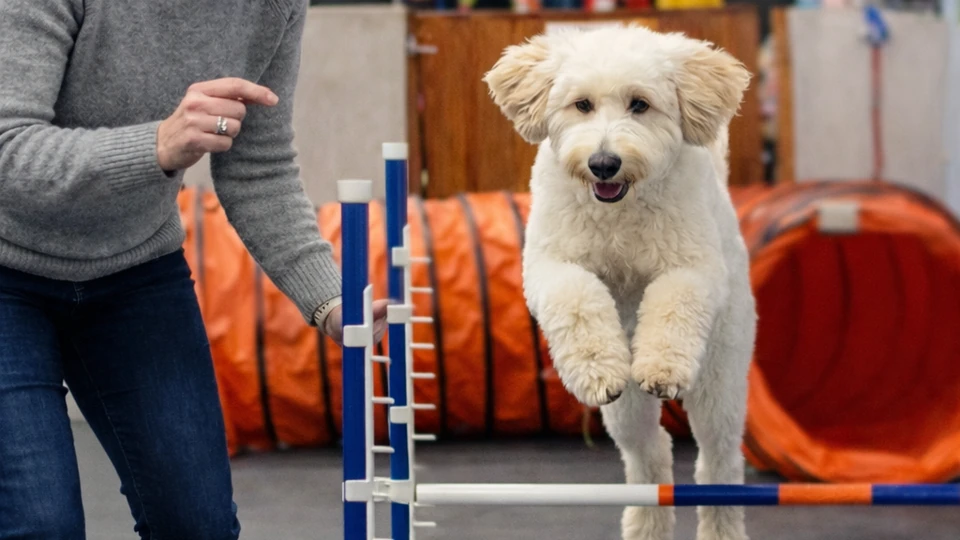
Dog training businesses that limit their offerings to basic obedience are leaving significant revenue on the table. The market has expanded to include agility, scent work, canine confidence building, puppy development programs, reactive dog rehabilitation, therapy dog certification, and various enrichment activities that keep dogs mentally and physically stimulated.
This expansion serves multiple business purposes. It increases average revenue per customer by creating progression pathways beyond the initial training program. It improves retention by giving customers reasons to continue attending classes after their dog has mastered basic commands. And it creates community -- regular participants who form social bonds with other dog owners and become advocates for the business.
The enrichment and activity trend also reflects the humanization of pets. Owners who enroll their dogs in agility or scent work are not just seeking training outcomes. They're seeking shared experiences with their dog -- activities that are fun and engaging for both species. This experiential dimension adds emotional value that supports premium pricing and reduces price sensitivity.
Multi-service training facilities that offer a menu of programs generate higher revenue per square foot, achieve better customer lifetime value, and build stronger community bonds than single-service operations. This breadth-of-offering model is a natural fit for franchise systems that can develop and standardize diverse programming at the corporate level while delivering it locally.
Franchise Opportunity in Dog Training
The dog training industry's combination of strong growth, fragmented competition, methodological standardization, and expanding service categories creates a compelling franchise opportunity. The transition from independent operators to branded systems is in its early stages, with most markets still dominated by solo trainers and small local businesses.
Franchise models bring several structural advantages to dog training. Consistent methodology and curriculum ensure quality control -- a critical factor in an industry where poor training can harm dogs and expose businesses to liability. Branded facilities create a professional environment that inspires confidence and justifies premium pricing. Technology platforms reduce the operational complexity that overwhelms many independent trainers who are skilled with dogs but inexperienced with business management.
The owner-participatory franchise model is particularly well-suited to dog training. Unlike a food franchise where the owner manages a system but doesn't cook, a dog training franchise attracts owners who want to work with dogs and participate in the service delivery. This alignment between owner passion and business model drives franchisee satisfaction and retention.
For investors evaluating the dog training franchise landscape, the key differentiators are training methodology (positive reinforcement should be non-negotiable), facility quality, breadth of programming, the strength of the franchisor's operating systems and technology, leadership team credentials, and validation from existing franchisees.
Frequently Asked Questions
- Yes. Dog training is the fastest-growing sub-segment within pet services, which itself is the fastest-growing major segment of the $157 billion pet industry. Growth is driven by the positive reinforcement revolution, expanding socialization demand, the pandemic puppy boom creating millions of first-time owners, and the broadening of training beyond basic obedience into enrichment, agility, and specialized programs.
- Positive reinforcement is a training methodology based on rewarding desired behaviors rather than punishing unwanted ones. It is supported by decades of behavioral science research showing it produces faster, more durable behavior changes with fewer stress-related side effects. Positive reinforcement has become the dominant approach among professional trainers and is the only method recommended by veterinary behaviorists. It is also more appealing to modern dog owners who view their pets as family members.
- Socialization -- structured exposure to new people, animals, and environments -- is the single most impactful investment in a dog's long-term behavior. Veterinary behaviorists recommend beginning socialization during the critical period between 3 and 14 weeks of age. Dogs that miss this window are significantly more likely to develop fear, anxiety, and reactivity. Socialization classes have become a primary service category and a key entry point for training businesses.
- Dog training franchises offer compelling economics for investors who align with the model. The industry has strong growth, recession resistance, e-commerce protection, and favorable demographic trends. Franchise models address the key weaknesses of independent training businesses by providing consistent methodology, professional facilities, technology platforms, and business management support. Evaluate specific brands based on training methodology, leadership credentials, unit economics, and franchisee satisfaction.
Is dog training a growing industry? +
What is positive reinforcement dog training? +
Why is socialization important for dogs? +
Is a dog training franchise a good investment? +
Lead the Dog Training Industry's Next Chapter
Zoom Room is the top-ranked dog training franchise, built on positive reinforcement and socialization-first programming. See how the franchise model works.
Request InfoThis is not an offer to sell a franchise. An offer can only be made through a Franchise Disclosure Document. Financial performance representations are available in Item 19 of our Franchise Disclosure Document. Contact us to request our FDD.