
Market Analysis
Yuma Franchise Market Analysis: Dog Training Demand vs. Competition
Yuma combines a population of 129,052, a 60% pet ownership rate, and a median household income of $58,657 — key indicators of demand for dog training and socialization services. Here's what the data says about this market.
| Yuma, AZ — Market Snapshot | |
|---|---|
| MSA Population | 129,052 |
| Population Growth (2020–2025) | 5.5% |
| Median Household Income | $58,657 |
| Pet Ownership Rate (State) | 59.5% |
| Dog Ownership % | 43.8% |
| Avg. Pet Spending/Household | $1,580 |
| Dog Training Businesses | 14 |
| Avg. Commercial Rent ($/sqft) | $20 |
| Walk Score | 30 |
Why Yuma's Demographics Favor Dog Training
Yuma's metro area has a population of 129,052 with steady growth of 5.5% since 2020. This growth pattern signals an expanding market for service-based businesses, particularly those serving pet owners.
With a median household income of $58,657 — near the national average — Yuma households have the spending power to invest in premium pet services. Arizona's pet ownership rate of 59.5% means a significant portion of local households are potential customers for dog training and socialization services.
The demographic profile supports a socialization-focused franchise model — one where dog owners participate in group classes, build community, and return weekly. Markets with Yuma's combination of income and pet ownership tend to produce strong customer retention and high lifetime value.
Competitive Landscape: Dog Training in Yuma
Yuma's 14 dog training businesses serve 129,052 residents at a ratio of one per 9,218 -- indicating supply has not kept pace with the market's 5.5% growth. Yuma's geographic isolation in the far southwest corner of Arizona creates a self-contained market: Phoenix is three hours east, San Diego three hours west, and no competing metro serves the area directly.
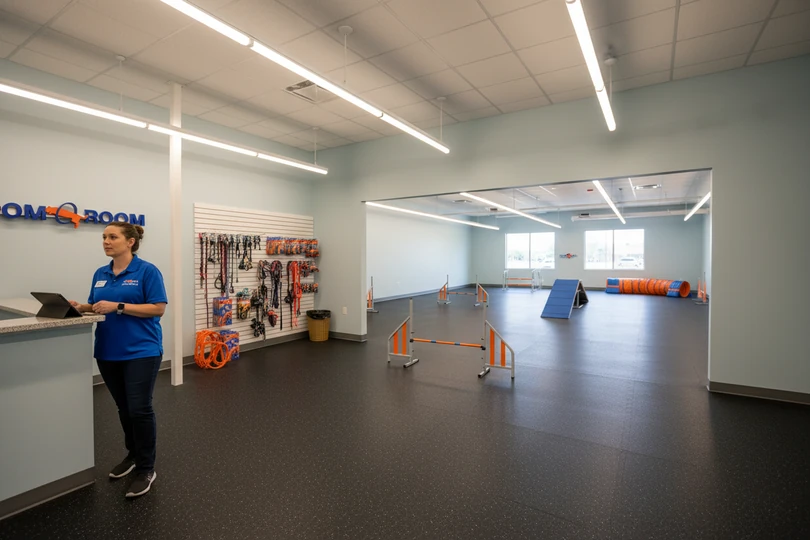
Most existing providers are independent operators and Yuma Proving Ground-adjacent trainers. A structured group socialization concept with a professional retail presence and weekly class scheduling represents a format that Yuma's market does not currently offer, targeting the suburban and military-family segments specifically.
Dog Ownership and Pet Spending in Arizona
Arizona's 43.8% dog ownership rate exceeds the national average, and Yuma's 59.5% pet ownership rate pushes well beyond that. The military presence (Yuma Proving Ground and MCAS Yuma) adds a steady stream of pet-owning families, while the winter snowbird population creates seasonal demand surges. At $1,580 in annual pet spending, the market supports quality pet services.
Yuma's extreme summer heat makes climate-controlled indoor facilities especially valuable -- outdoor dog training is impractical for six months of the year. The pet services spending trend is amplified in desert markets where indoor alternatives to outdoor exercise are a genuine necessity rather than a convenience.
Investment Context: Operating a Franchise in Yuma
Yuma's $20.00-per-square-foot commercial rents are moderate for an Arizona market. The 32nd Street and Avenue B corridors provide strip-center retail suitable for a 3,000-square-foot climate-controlled training facility, with good accessibility from both the civilian residential areas and the military installations that bookend the metro.
Arizona does not require franchise registration, simplifying the startup timeline. The total investment of $302,523 to $464,712 should be evaluated alongside Yuma's unique demand profile: a year-round military population supplemented by winter seasonal residents who add 85,000+ temporary inhabitants during peak months. Request the Franchise Disclosure Document for detailed financials.
Franchise vs. Independent in Yuma
Yuma's dual customer base -- year-round military families and seasonal snowbirds -- requires different marketing approaches. A franchise with digital marketing systems can target both segments efficiently: reaching PCSing military families before they arrive and capturing snowbird dog owners through seasonal search patterns. An independent trainer building through local networks captures only one of these audiences at a time.
Military spouses seeking employment in Yuma's limited civilian economy represent an ideal staffing pipeline for a franchise that teaches its methodology to new hires. This alignment between the franchise staffing model and the military-spouse labor pool creates a practical hiring advantage in a market where experienced dog trainers are essentially unavailable.
Frequently Asked Questions
- Yuma's combination of a 129,052 population, 60% pet ownership rate, and median household income of $58,657 makes it a promising market for pet services. The ratio of approximately one dog trainer per 9,218 residents suggests a competitive but viable landscape.
- The Yuma metro area has approximately 14 dog training businesses. The majority are independent operators offering private lessons. Very few provide the ongoing, group-class socialization model that drives recurring revenue and long-term customer retention.
- A dog training franchise typically requires a total investment in the range of $302,523 to $464,712, depending on location, buildout, and market conditions. Yuma's commercial rent of approximately $20.00 per square foot helps keep the overall investment competitive. Contact us to request our Franchise Disclosure Document for detailed financial information.
- No. Arizona does not require franchise registration, which simplifies the startup process. Regardless of state requirements, franchisors must provide a Franchise Disclosure Document at least 14 days before any agreement is signed, per FTC requirements.
Is Yuma a good market for a dog training franchise? +
How many dog training businesses are in Yuma? +
What does it cost to open a dog training franchise in Yuma? +
Does Arizona require franchise registration? +
Explore Territory Availability in Yuma
See if your preferred Yuma-area territory is available. Our team will walk you through the market data and next steps.
Request InfoThis is not an offer to sell a franchise. An offer can only be made through a Franchise Disclosure Document. Financial performance representations are available in Item 19 of our Franchise Disclosure Document. Market data sourced from U.S. Census Bureau, APPA, and public records. Contact us to request our FDD.