
Market Analysis
Franchise Opportunities in Tucson: What the Data Says About the Pet Market
Tucson's growing population, strong household incomes, and high pet ownership create favorable conditions for a dog training franchise. Here's a data-driven look at what makes this market worth evaluating.
| Tucson, AZ — Market Snapshot | |
|---|---|
| MSA Population | 690,259 |
| Population Growth (2020–2025) | 3.8% |
| Median Household Income | $67,562 |
| Pet Ownership Rate (State) | 59.5% |
| Dog Ownership % | 43.8% |
| Avg. Pet Spending/Household | $1,580 |
| Dog Training Businesses | 19 |
| Avg. Commercial Rent ($/sqft) | $20 |
| Walk Score | 42 |
Why Tucson's Demographics Favor Dog Training
Tucson's metro area has a population of 690,259 with steady growth of 3.8% since 2020. This growth pattern signals an expanding market for service-based businesses, particularly those serving pet owners.
With a median household income of $67,562 — above the national average — Tucson households have the spending power to invest in premium pet services. Arizona's pet ownership rate of 59.5% means a significant portion of local households are potential customers for dog training and socialization services.
The demographic profile supports a socialization-focused franchise model — one where dog owners participate in group classes, build community, and return weekly. Markets with Tucson's combination of income and pet ownership tend to produce strong customer retention and high lifetime value.
Competitive Landscape: Dog Training in Tucson
Tucson has approximately 19 dog training businesses serving a metro of 690,259 — one trainer per 36,329 residents. Given the metro's 3.8% population growth since 2020 and Arizona's nation-leading pet ownership rate (59.5%), this is a market where training supply has not kept pace with demand. Many existing operators focus on desert-specific needs — rattlesnake avoidance training, coyote awareness, and off-leash desert trail preparation — serving an outdoor-oriented niche rather than the general pet-owning population.
The University of Arizona (45,000+ students) anchors a central Tucson corridor that generates strong demand for indoor socialization programs. The Foothills and Catalina Foothills neighborhoods to the north, the Oro Valley suburb, and the growing Sahuarita-Green Valley area to the south are all residential zones with high dog ownership and no dedicated group-class training facility. The Tucson Mall / Oracle Road commercial corridor and the Broadway-Kolb retail area offer accessible retail locations currently without a structured training presence.
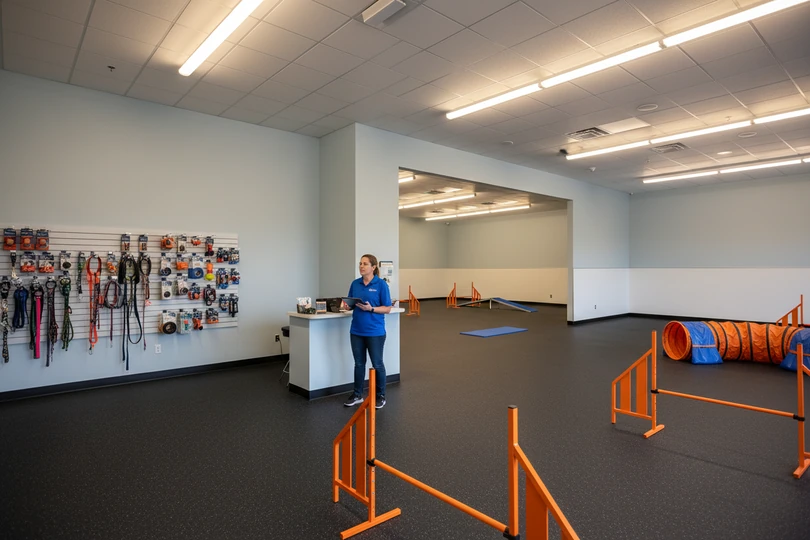
A franchise centered on indoor group socialization addresses a specific gap in Tucson's market. The desert climate — where summer temperatures regularly exceed 100F and limit outdoor training for months — creates particular demand for climate-controlled, indoor-format programs. The lean two-person staffing model and standard retail footprint keep operating costs well below the boarding and daycare concepts that require larger facilities and more intensive animal care.
Dog Ownership and Pet Spending in the Tucson Region
Arizona's dog ownership rate of 43.8% exceeds the national average, and Tucson's specific characteristics push local ownership higher. The city's Sonoran Desert lifestyle — outdoor-oriented, with easy access to hiking trails in Saguaro National Park, Sabino Canyon, and the Santa Catalina foothills — attracts and creates dog owners. Average annual pet spending of $1,580 per household reflects both the state's growing income levels and the cultural centrality of pets in the desert Southwest lifestyle.
Tucson's economic base combines the University of Arizona's research ecosystem, Raytheon Missiles & Defense (the metro's largest private employer, with over 13,000 local workers), Davis-Monthan Air Force Base, and a growing tech sector. Raytheon's defense-engineering workforce and military families both index high for dog ownership and structured service usage. The university's student and faculty population adds a research-oriented demographic that approaches dog training with the same evidence-based mindset they apply to other domains.
The pet services training segment's national growth has been particularly strong in Sun Belt metros where population growth is driving new household formation. Tucson's combination of high pet ownership, year-round need for climate-controlled socialization facilities (summer heat makes outdoor training impractical for 4-5 months), and a growing population creates durable, multi-season demand for structured indoor training programs.
Investment Context: Operating a Franchise in Tucson
Commercial retail rents in Tucson average approximately $20.00 per square foot annually — roughly 40% less than Phoenix-Scottsdale while serving a population approaching 700,000. The Oracle Road corridor, Broadway Boulevard east of downtown, and the Grant-Stone retail area offer high-traffic locations at rates that keep the fixed-cost structure favorable. The Oro Valley and Marana growth areas to the northwest provide newer retail inventory at competitive rates as commercial development follows residential expansion.
Arizona does not require franchise registration, which streamlines the path from FDD review to lease signing. The state's business-friendly regulatory environment — no franchise-specific taxes, a 2.5% flat individual income tax rate (among the lowest in the nation), and relatively straightforward commercial permitting — creates a favorable operating environment for franchise businesses.
The total investment of $302,523 to $464,712 for a dog training franchise maps well to Tucson's cost structure. While not as inexpensive as some Midwest or Deep South markets, Tucson offers the combination of a large, growing population and moderate operating costs that creates attractive unit economics for a retail-based franchise. Arizona's low income tax rate and absence of franchise registration fees further improve the financial picture. Contact us to request the Franchise Disclosure Document for detailed financial information.
Franchise vs. Independent in Tucson
Tucson's existing dog training scene reflects the city's independent, desert-culture identity: solo trainers with outdoor-focused programs, many specializing in desert-safety training or working with rescue dogs from the Humane Society of Southern Arizona and Pima Animal Care Center. These operators have built local followings but typically serve narrow niches. For a new independent, the challenge in a geographically sprawling metro (Tucson covers over 230 square miles) is reaching the entire market — from the university area to the Foothills to Sahuarita — with a limited marketing budget.
A franchise model addresses this geographic-reach problem through centralized digital marketing. Tucson's population — a mix of defense-sector professionals, university-connected households, retirees from other states, and young professionals — overwhelmingly researches services online. A franchise with professional SEO targeting Tucson-specific search terms, a consistent brand presence across Google and social media, and reviews from a national network captures this dispersed demand more efficiently than an independent operating from a single neighborhood base.
The military connection at Davis-Monthan AFB adds another franchise-favorable dynamic. Service members rotating into Tucson conduct pre-move research online and seek established, recognizable service providers. On the staffing side, a franchise that systematizes its training methodology can hire from the University of Arizona's annual graduating class and the metro's retail and hospitality workforce — a far larger talent pool than the small community of certified dog trainers in southern Arizona.
Frequently Asked Questions
- Tucson's combination of a 690,259 population, 60% pet ownership rate, and median household income of $67,562 makes it a strong market for pet services. The ratio of approximately one dog trainer per 36,329 residents suggests meaningful room for new entrants.
- The Tucson metro area has approximately 19 dog training businesses. The majority are independent operators offering private lessons. Very few provide the ongoing, group-class socialization model that drives recurring revenue and long-term customer retention.
- A dog training franchise typically requires a total investment in the range of $302,523 to $464,712, depending on location, buildout, and market conditions. Tucson's commercial rent of approximately $20.00 per square foot helps keep the overall investment competitive. Contact us to request our Franchise Disclosure Document for detailed financial information.
- No. Arizona does not require franchise registration, which simplifies the startup process. Regardless of state requirements, franchisors must provide a Franchise Disclosure Document at least 14 days before any agreement is signed, per FTC requirements.
Is Tucson a good market for a dog training franchise? +
How many dog training businesses are in Tucson? +
What does it cost to open a dog training franchise in Tucson? +
Does Arizona require franchise registration? +
Explore Territory Availability in Tucson
See if your preferred Tucson-area territory is available. Our team will walk you through the market data and next steps.
Request InfoThis is not an offer to sell a franchise. An offer can only be made through a Franchise Disclosure Document. Financial performance representations are available in Item 19 of our Franchise Disclosure Document. Market data sourced from U.S. Census Bureau, APPA, and public records. Contact us to request our FDD.