
Market Analysis
Why St. Louis Is a Prime Market for a Dog Training Franchise in 2026
St. Louis's growing population, strong household incomes, and high pet ownership create favorable conditions for a dog training franchise. Here's a data-driven look at what makes this market worth evaluating.
| St. Louis, MO — Market Snapshot | |
|---|---|
| MSA Population | 1,437,558 |
| Population Growth (2020–2025) | -0.9% |
| Median Household Income | $66,096 |
| Pet Ownership Rate (State) | 61.4% |
| Dog Ownership % | 47.3% |
| Avg. Pet Spending/Household | $1,380 |
| Dog Training Businesses | 20 |
| Avg. Commercial Rent ($/sqft) | $16 |
| Walk Score | 64 |
Key employers: BJC HealthCare, Mercy Health, Edward Jones, Emerson Electric, Anheuser-Busch
Why St. Louis's Demographics Favor Dog Training
St. Louis's metro area has a population of 1,437,558 with stable growth of -0.9% since 2020. This growth pattern signals an expanding market for service-based businesses, particularly those serving pet owners.
With a median household income of $66,096 — above the national average — St. Louis households have the spending power to invest in premium pet services. Missouri's pet ownership rate of 61.4% means a significant portion of local households are potential customers for dog training and socialization services.
The demographic profile supports a socialization-focused franchise model — one where dog owners participate in group classes, build community, and return weekly. Markets with St. Louis's combination of income and pet ownership tend to produce strong customer retention and high lifetime value.
Competitive Landscape: Dog Training in St. Louis
St. Louis has approximately 20 dog training businesses serving a metro population of 1,437,558 — one trainer per 71,878 residents. While more providers exist here per capita than in some Sun Belt metros, the competitive landscape remains fragmented and tilted toward traditional private-lesson models.
Existing providers are scattered across the metro's distinctive geographic layout. St. Louis County suburbs like Kirkwood, Clayton, and Chesterfield have a handful of established independent trainers. The city's urban core — neighborhoods like the Central West End, Tower Grove, and Soulard — is largely underserved for facility-based dog training. Very few operators in either zone offer ongoing group socialization classes on a recurring weekly schedule, which is the model that drives consistent retention and long-term customer value.
The metro's bi-state geography creates an additional competitive dynamic. St. Louis straddles the Missouri-Illinois border, with substantial residential population in Metro East communities like Edwardsville, O'Fallon (IL), and Belleville. Dog training providers on the Missouri side rarely market to or serve the Illinois suburbs, and vice versa. A franchise with centralized marketing systems can capture demand from both sides of the river — an advantage that locally-focused independent trainers typically do not pursue.
Dog Ownership and Pet Spending in Missouri
Missouri's dog ownership rate of 47.3% of households is well above the national average, and St. Louis's Midwestern culture reinforces that number. Dog ownership here is deeply embedded in household norms, supported by the metro's affordable housing stock, generous yard sizes, and an extensive park system anchored by Forest Park and the network of county greenways. Average annual pet spending in the region runs approximately $1,380 per household.
While St. Louis's per-household pet spending sits below coastal metros, the cost-of-living adjustment matters. A household earning $66,096 in St. Louis retains more disposable income than a household earning $100,000 in San Francisco or Seattle. That purchasing power parity makes St. Louis dog owners a viable market for premium pet services, despite the lower nominal income figure. The training segment has grown faster than any other pet services category nationally over the past decade, and Midwestern metros are catching up to the coastal adoption curve.
St. Louis's economic diversification also insulates pet spending from sector-specific downturns. The metro's employer base spans healthcare (BJC, Mercy), financial services (Edward Jones), manufacturing (Emerson Electric), and consumer goods (Anheuser-Busch, Purina — the latter headquartered in the city's Checkerboard Square). That diversification creates more stable household income patterns than single-industry metros, which matters for service businesses that depend on recurring customer enrollment.
Investment Context: Operating a Franchise in St. Louis
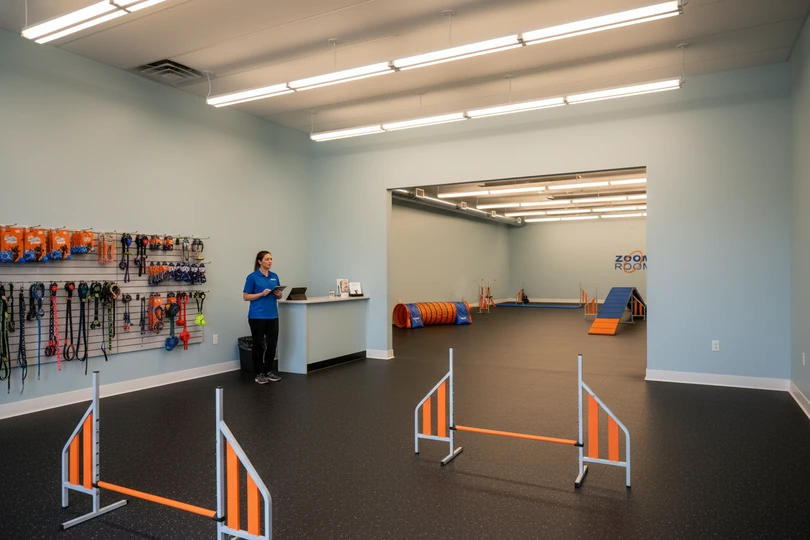
Commercial retail rent in the St. Louis metro averages roughly $16.00 per square foot annually — among the lowest of any major U.S. metro and less than half the cost of comparable space in Chicago, Seattle, or Denver. For a dog training franchise requiring approximately 3,000 square feet of retail-zoned space, St. Louis's real estate economics are a clear advantage. Lower fixed occupancy costs accelerate the path to breakeven and improve operating margins during the ramp-up period.
Missouri does not require franchise registration, which eliminates a common source of startup delay and legal expense. The state's business-friendly regulatory environment and moderate tax burden create favorable operating conditions for service-based franchises. St. Louis also benefits from a central geographic position — Lambert International Airport and the I-70/I-44/I-64 interchange make the metro accessible for franchisor support visits and regional networking.
The total investment for a dog training franchise in the $302,523–$464,712 range is well-suited to St. Louis's cost structure, with the real estate component likely falling at the lower end of the range. Retail corridors in Brentwood, the Delmar Loop, Manchester Road in West County, or the emerging Cortex Innovation Community area all present viable site options. Contact us to request the Franchise Disclosure Document for detailed financial information.
Franchise vs. Independent in St. Louis
St. Louis's dog training market is populated by small independent operators who have built reputations through local referral networks, often centered on specific county suburbs or city neighborhoods. An independent entrant starting from scratch faces a long brand-building process in a metro where loyalty to established providers runs strong. A franchise model compresses that timeline with immediate brand equity, a proven curriculum, and digital marketing systems that generate visibility across the entire bi-state metro from day one.
The bi-state dynamic is a specific advantage for a franchise. St. Louis County, the city of St. Louis, and the Metro East (Illinois) are distinct markets with separate consumer identities. Independent trainers typically operate in one zone. A franchise with centralized marketing infrastructure can run campaigns that reach dog owners in Chesterfield, Soulard, and Edwardsville simultaneously — capturing a broader customer base without proportionally higher marketing costs.
St. Louis's labor market is more favorable than coastal cities but still presents challenges for finding experienced dog trainers. A franchise that embeds expertise in its curriculum rather than depending on each hire's prior experience can recruit from the metro's large pool of customer-service-oriented workers — including the hospitality and healthcare sectors that are well-established in St. Louis — and train them on the system. That hiring flexibility keeps labor costs manageable while maintaining service quality.
Frequently Asked Questions
- St. Louis's combination of a 1,437,558 population, 61% pet ownership rate, and median household income of $66,096 makes it a strong market for pet services. The ratio of approximately one dog trainer per 71,878 residents suggests meaningful room for new entrants.
- The St. Louis metro area has approximately 20 dog training businesses. The majority are independent operators offering private lessons. Very few provide the ongoing, group-class socialization model that drives recurring revenue and long-term customer retention.
- A dog training franchise typically requires a total investment in the range of $302,523 to $464,712, depending on location, buildout, and market conditions. St. Louis's commercial rent of approximately $16.00 per square foot helps keep the overall investment competitive. Contact us to request our Franchise Disclosure Document for detailed financial information.
- No. Missouri does not require franchise registration, which simplifies the startup process. Regardless of state requirements, franchisors must provide a Franchise Disclosure Document at least 14 days before any agreement is signed, per FTC requirements.
Is St. Louis a good market for a dog training franchise? +
How many dog training businesses are in St. Louis? +
What does it cost to open a dog training franchise in St. Louis? +
Does Missouri require franchise registration? +
Explore Territory Availability in St. Louis
See if your preferred St. Louis-area territory is available. Our team will walk you through the market data and next steps.
Request InfoThis is not an offer to sell a franchise. An offer can only be made through a Franchise Disclosure Document. Financial performance representations are available in Item 19 of our Franchise Disclosure Document. Market data sourced from U.S. Census Bureau, APPA, and public records. Contact us to request our FDD.