
Market Analysis
Starting a Pet Franchise in San Francisco, California: Demographics, Competition, and Opportunity
With 18 dog training businesses serving a metro of 2,641,707, San Francisco has room for a differentiated franchise concept. The numbers tell an interesting story about opportunity in this market.
| San Francisco, CA — Market Snapshot | |
|---|---|
| MSA Population | 2,641,707 |
| Population Growth (2020–2025) | -2.1% |
| Median Household Income | $129,648 |
| Pet Ownership Rate (State) | 52.9% |
| Dog Ownership % | 36.2% |
| Avg. Pet Spending/Household | $1,580 |
| Dog Training Businesses | 18 |
| Avg. Commercial Rent ($/sqft) | $55 |
| Walk Score | 87 |
Key employers: Salesforce, UCSF, Wells Fargo, Gap, Uber
Why San Francisco's Demographics Favor Dog Training
San Francisco's metro area has a population of 2,641,707 with stable growth of -2.1% since 2020. This growth pattern signals an expanding market for service-based businesses, particularly those serving pet owners.
With a median household income of $129,648 — well above the national average — San Francisco households have the spending power to invest in premium pet services. California's pet ownership rate of 52.9% means a significant portion of local households are potential customers for dog training and socialization services.
The demographic profile supports a socialization-focused franchise model — one where dog owners participate in group classes, build community, and return weekly. Markets with San Francisco's combination of income and pet ownership tend to produce strong customer retention and high lifetime value.
Competitive Landscape: Dog Training in San Francisco
San Francisco has approximately 18 dog training businesses serving a metro population of 2,641,707 — one trainer per 146,762 residents. For a metro with the highest per-capita dog spending in the country and a culture that treats dogs as genuine family members, that provider density is remarkably thin.
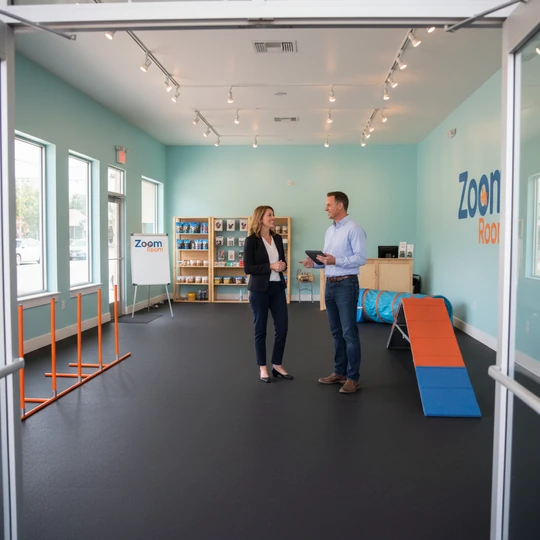
The competitive landscape reflects San Francisco's broader business environment: high barriers to entry have kept out all but the most established independent operators. Most existing trainers offer private, in-home sessions at premium hourly rates or operate small-group classes in parks (Dolores Park, Crissy Field, Fort Funston). Very few have invested in dedicated indoor training spaces. That leaves a gap for a facility-based franchise model that offers weather-independent group socialization classes on a recurring weekly schedule.
San Francisco's dog-friendly office culture — pioneered by tech companies and now widespread across the city's commercial corridors — has created a population of dog owners who need well-socialized dogs as a practical matter, not just a lifestyle preference. Dogs that accompany their owners to coworking spaces in SoMa, cafes in the Mission, or Salesforce Tower require reliable behavior in stimulating environments. That functional demand for socialization training is distinct from markets where training is primarily about basic obedience.
Dog Ownership and Pet Spending in San Francisco
California's statewide dog ownership rate of 36.2% understates the reality in San Francisco. The city has long been identified as having more dogs than children, and pet culture permeates daily life — from the dog-friendly patios on Chestnut Street to the off-leash areas at Fort Funston and McLaren Park. Average annual pet spending in the region runs approximately $1,580 per household, but San Francisco's $129,648 median household income means the actual dollar commitment to pet services is likely higher than most California metros.
The spending pattern among San Francisco dog owners is also distinctive. This is a market where premium positioning is the default expectation, not a niche. Organic dog food, boutique grooming, and structured training programs are baseline services, not luxuries. The pet training segment has grown faster than any other pet services category nationally over the past decade, and San Francisco's affluent, education-oriented population has been at the front of that curve.
The city's density and apartment-heavy housing stock create a specific training need: dogs in San Francisco encounter more stimuli per square block than in almost any other American city. Elevator rides, sidewalk crowds, off-leash park interactions, and public transit exposure all create demand for structured socialization that goes beyond sit-stay-come basics.
Investment Context: Operating a Franchise in San Francisco
Commercial retail rent in San Francisco averages roughly $55.00 per square foot annually — the highest among major U.S. metros. That is the market's primary cost challenge and requires careful site selection. However, the post-pandemic commercial real estate correction has created vacancy and sublease opportunities in neighborhoods like the Inner Sunset, Outer Richmond, and Daly City that were not available five years ago. A dog training franchise requiring approximately 3,000 square feet can find viable spaces in these corridors at rates below the metro average.
California requires franchise registration through the Department of Financial Protection and Innovation. This adds lead time to the startup process but also provides franchisees with an additional layer of regulatory review. San Francisco's high walk score of 87 is relevant for site selection: foot traffic matters more here than in car-dependent markets, and a visible storefront in a walkable neighborhood generates organic awareness that reduces customer acquisition costs.
The total investment for a dog training franchise in the $302,523–$464,712 range will sit at the upper end in San Francisco due to rent and buildout costs. That is offset by the metro's exceptional per-customer revenue potential — higher incomes and premium service expectations translate to stronger average transaction values. Contact us to request the Franchise Disclosure Document for detailed financial information.
Franchise vs. Independent in San Francisco
San Francisco's dog training market is intensely local and reputation-driven. Independent trainers who have built followings over years dominate through personal brand, Instagram presence, and word-of-mouth in specific neighborhoods. For a new independent entrant, breaking into that ecosystem takes significant time and marketing spend. A franchise model compresses that timeline by providing immediate brand credibility, a proven curriculum, and digital marketing infrastructure that competes for search visibility from day one.
The tech-savvy consumer base in San Francisco amplifies the discovery advantage. Dog owners here research exhaustively online before choosing a training provider. They read reviews, compare class formats, and evaluate credentials. A franchise with consistent national branding, aggregated review volume, and a clear class structure performs well in that research process. Independent trainers, by contrast, often have minimal web presence beyond a personal Instagram account or a Yelp listing.
San Francisco's labor market is among the most expensive in the country, and experienced dog trainers command premium wages. A franchise that places expertise in its curriculum rather than requiring each staff member to be a seasoned behaviorist can hire from a broader candidate pool. In a city where baristas earn $20+ per hour, the ability to train staff on a system rather than recruit specialists is not just operationally convenient — it is financially necessary.
Frequently Asked Questions
- San Francisco's combination of a 2,641,707 population, 53% pet ownership rate, and median household income of $129,648 makes it a strong market for pet services. The ratio of approximately one dog trainer per 146,762 residents suggests meaningful room for new entrants.
- The San Francisco metro area has approximately 18 dog training businesses. The majority are independent operators offering private lessons. Very few provide the ongoing, group-class socialization model that drives recurring revenue and long-term customer retention.
- A dog training franchise typically requires a total investment in the range of $302,523 to $464,712, depending on location, buildout, and market conditions. San Francisco's commercial rent of approximately $55.00 per square foot is a factor to plan for in your budget. Contact us to request our Franchise Disclosure Document for detailed financial information.
- Yes. California requires franchise registration, which adds administrative steps but provides additional regulatory oversight. Regardless of state requirements, franchisors must provide a Franchise Disclosure Document at least 14 days before any agreement is signed, per FTC requirements.
Is San Francisco a good market for a dog training franchise? +
How many dog training businesses are in San Francisco? +
What does it cost to open a dog training franchise in San Francisco? +
Does California require franchise registration? +
Explore Territory Availability in San Francisco
See if your preferred San Francisco-area territory is available. Our team will walk you through the market data and next steps.
Request InfoThis is not an offer to sell a franchise. An offer can only be made through a Franchise Disclosure Document. Financial performance representations are available in Item 19 of our Franchise Disclosure Document. Market data sourced from U.S. Census Bureau, APPA, and public records. Contact us to request our FDD.