
Market Analysis
The Business Case for a Dog Training Franchise in Middletown, Connecticut
Middletown's growing population, strong household incomes, and high pet ownership create favorable conditions for a dog training franchise. Here's a data-driven look at what makes this market worth evaluating.
| Middletown, CT — Market Snapshot | |
|---|---|
| MSA Population | 1,256,525 |
| Population Growth (2020–2025) | -0.3% |
| Median Household Income | $87,414 |
| Pet Ownership Rate (State) | 54.0% |
| Dog Ownership % | 36.3% |
| Avg. Pet Spending/Household | $1,520 |
| Dog Training Businesses | 18 |
| Avg. Commercial Rent ($/sqft) | $20 |
| Walk Score | 30 |
Why Middletown's Demographics Favor Dog Training
Middletown's metro area has a population of 1,256,525 with stable growth of -0.3% since 2020. This growth pattern signals an expanding market for service-based businesses, particularly those serving pet owners.
With a median household income of $87,414 — well above the national average — Middletown households have the spending power to invest in premium pet services. Connecticut's pet ownership rate of 54.0% means a significant portion of local households are potential customers for dog training and socialization services.
The demographic profile supports a socialization-focused franchise model — one where dog owners participate in group classes, build community, and return weekly. Markets with Middletown's combination of income and pet ownership tend to produce strong customer retention and high lifetime value.
Competitive Landscape: Dog Training in Middletown
The Middletown metro has only 18 dog training businesses serving a population of 1,256,525, a ratio of roughly one per 69,800 residents. That is the most dramatically underserved ratio in this entire market analysis by a wide margin. While the MSA figure includes the broader Hartford-Middletown corridor, even accounting for overlap with Hartford-area providers, the level of unmet demand is striking.
Middletown itself sits along the Connecticut River between Hartford and New Haven, positioned as a distinct community within the broader metro. A facility-based franchise in Middletown would serve the central Connecticut corridor, drawing from communities that are poorly served by the few existing independent trainers. The sheer scale of the addressable population relative to existing providers creates an unusual opportunity for first-mover advantage.
Dog Ownership and Pet Spending in Connecticut
Connecticut's 36.3% dog ownership rate is near the national average, but the Middletown area's suburban character supports higher local ownership than the state figure suggests. Regional pet spending averages approximately $1,520 per household annually, among the higher figures in this analysis. The services share of that spending continues to grow as affluent New England households invest in training, wellness, and professional grooming.
Middletown's educated, high-income population ($87,414 median household income) views structured pet training as a standard part of responsible ownership. Wesleyan University adds an academic community element that further supports demand for professional, curriculum-based services. The combination of high spending power and strong service expectations creates a customer base that would support premium pricing for a professional training operation.
Investment Context: Operating a Franchise in Middletown
Commercial rents in Middletown average roughly $20.00 per square foot annually, moderate for a Connecticut market. Connecticut does not require franchise registration, simplifying the startup process. The state's regulatory environment is well-established for service businesses, though its tax structure and labor costs are higher than many states in this analysis.
Middletown's median household income of $87,414 is well above the national average, strongly supporting premium service pricing. The total investment range of $302,523 to $464,712 faces some pressure from Connecticut's elevated operating costs, but the extraordinary population-to-provider ratio (nearly 70,000 to 1) and high household incomes provide an offsetting demand base that most markets cannot approach. The slight population decline (-0.3%) is worth monitoring but is typical of Connecticut's broader demographic trend rather than a Middletown-specific concern.
Franchise vs. Independent in Middletown
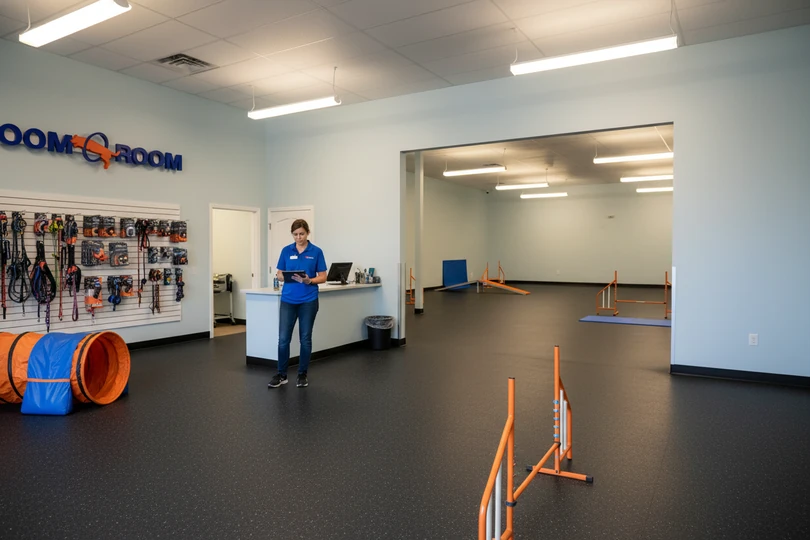
The few independent trainers in the Middletown area cannot meaningfully serve a metro of over 1.2 million people. A franchise with professional branding, a dedicated retail facility, and structured class scheduling would capture demand that currently has nowhere to go. In an affluent, educated Connecticut market where consumers expect polished service experiences and research options thoroughly online, the franchise model's professional infrastructure is particularly well-suited.
Connecticut's labor market is competitive across all service sectors. A franchise that embeds training expertise in its curriculum can recruit from Middletown's diverse workforce, including Wesleyan-affiliated candidates, based on interpersonal skills rather than dog training credentials. That staffing flexibility bypasses the challenge of finding specialist talent in a market where every service business competes for the same limited employee pool.
Frequently Asked Questions
- Middletown's combination of a 1,256,525 population, 54% pet ownership rate, and median household income of $87,414 makes it a strong market for pet services. The ratio of approximately one dog trainer per 69,807 residents suggests meaningful room for new entrants.
- The Middletown metro area has approximately 18 dog training businesses. The majority are independent operators offering private lessons. Very few provide the ongoing, group-class socialization model that drives recurring revenue and long-term customer retention.
- A dog training franchise typically requires a total investment in the range of $302,523 to $464,712, depending on location, buildout, and market conditions. Middletown's commercial rent of approximately $20.00 per square foot helps keep the overall investment competitive. Contact us to request our Franchise Disclosure Document for detailed financial information.
- No. Connecticut does not require franchise registration, which simplifies the startup process. Regardless of state requirements, franchisors must provide a Franchise Disclosure Document at least 14 days before any agreement is signed, per FTC requirements.
Is Middletown a good market for a dog training franchise? +
How many dog training businesses are in Middletown? +
What does it cost to open a dog training franchise in Middletown? +
Does Connecticut require franchise registration? +
Explore Territory Availability in Middletown
See if your preferred Middletown-area territory is available. Our team will walk you through the market data and next steps.
Request InfoThis is not an offer to sell a franchise. An offer can only be made through a Franchise Disclosure Document. Financial performance representations are available in Item 19 of our Franchise Disclosure Document. Market data sourced from U.S. Census Bureau, APPA, and public records. Contact us to request our FDD.