
Market Analysis
Starting a Pet Franchise in Los Angeles, California: Demographics, Competition, and Opportunity
With 17 dog training businesses serving a metro of 6,814,092, Los Angeles has room for a differentiated franchise concept. The numbers tell an interesting story about opportunity in this market.
| Los Angeles, CA — Market Snapshot | |
|---|---|
| MSA Population | 6,814,092 |
| Population Growth (2020–2025) | -1.2% |
| Median Household Income | $82,498 |
| Pet Ownership Rate (State) | 52.9% |
| Dog Ownership % | 36.2% |
| Avg. Pet Spending/Household | $1,580 |
| Dog Training Businesses | 17 |
| Avg. Commercial Rent ($/sqft) | $42 |
| Walk Score | 67 |
Key employers: County of Los Angeles, Kaiser Permanente, UCLA, Cedars-Sinai, Disney
Why Los Angeles's Demographics Favor Dog Training
Los Angeles's metro area has a population of 6,814,092 with stable growth of -1.2% since 2020. This growth pattern signals an expanding market for service-based businesses, particularly those serving pet owners.
With a median household income of $82,498 — well above the national average — Los Angeles households have the spending power to invest in premium pet services. California's pet ownership rate of 52.9% means a significant portion of local households are potential customers for dog training and socialization services.
The demographic profile supports a socialization-focused franchise model — one where dog owners participate in group classes, build community, and return weekly. Markets with Los Angeles's combination of income and pet ownership tend to produce strong customer retention and high lifetime value.
Competitive Landscape: Dog Training in Los Angeles
Roughly 17 dog training businesses serve a metro of 6.8 million people. That ratio — one trainer per 400,000+ residents — is remarkably thin for a market this size. Most of those operators are solo trainers running private-lesson practices out of West LA, Silver Lake, or the Westside, with limited capacity and no group-class infrastructure.
Los Angeles's geography fragments the competitive picture further. The metro stretches across dozens of distinct communities — from Pasadena to the South Bay, the San Fernando Valley to the Eastside. A dog owner in Burbank is unlikely to drive to Manhattan Beach for weekly classes. This creates natural micro-markets within the broader metro, each with its own competitive dynamics and addressable population.
The entertainment industry workforce — with irregular schedules, high incomes, and strong attachment to pets — represents a customer segment that values flexible, drop-in class formats over rigid appointment schedules. A socialization-focused franchise with evening and weekend programming is positioned differently than the typical Monday-through-Friday private trainer.
Dog Ownership and Pet Spending in California
California's dog ownership rate of 36.2% sits near the national average, but the raw numbers tell a different story in a metro this large. Even at that rate, Los Angeles contains hundreds of thousands of dog-owning households. Average annual pet spending of $1,580 per household exceeds the national figure, consistent with a market where premium services are the expectation rather than the exception.
Los Angeles's dog-friendly culture amplifies spending patterns. Hiking trails in Runyon Canyon and Griffith Park, off-leash beaches in Malibu and Long Beach, and dog-friendly patios across Silver Lake and Venice create a lifestyle where dogs are integrated into daily routines. That integration drives demand for training and socialization — owners who take their dogs everywhere need dogs that behave everywhere.
The national shift toward pet services spending is particularly pronounced in coastal California metros, where the humanization of pets has been a cultural norm for longer than in most markets. Training sits at the center of that shift, positioned as both a practical necessity and a lifestyle investment.
Investment Context: Operating a Franchise in Los Angeles
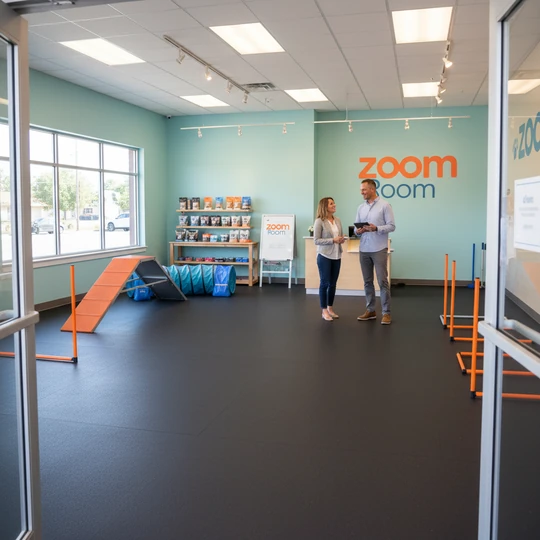
Commercial rent averaging $42.00 per square foot makes Los Angeles one of the more expensive markets for retail-based concepts. That said, a dog training franchise operating in roughly 3,000 square feet has a fundamentally different rent exposure than a daycare or boarding facility requiring 5,000 to 10,000 square feet. The smaller footprint makes the math work in submarkets where larger pet-service concepts struggle with occupancy costs.
California is a franchise registration state, meaning franchisors must register their offering with the state before selling. For franchise buyers, this adds a layer of regulatory review on top of the federal FTC requirements. It also means the Franchise Disclosure Document has been examined by state regulators — an additional safeguard for investors doing their due diligence.
The total investment range of $302,523 to $464,712 is competitive relative to other franchise concepts targeting the Los Angeles market. Areas like Glendale, Torrance, Pasadena, and Studio City offer retail corridors with rent below the metro average while maintaining strong foot traffic and demographic profiles. Request the Franchise Disclosure Document for detailed financial information.
Franchise vs. Independent in Los Angeles
Los Angeles is one of the most competitive markets in the country for consumer attention. An independent dog trainer starting from scratch faces a long ramp to visibility — building a Google presence, generating reviews, and establishing credibility in a metro where consumers have endless options. A franchise with existing brand recognition, a national review footprint, and tested digital marketing playbooks compresses that timeline significantly.
The labor market in Los Angeles presents another structural challenge for independents. Finding experienced dog trainers is difficult in any market; in LA, where the cost of living is high and alternative employment is abundant, it is especially so. A franchise model that embeds expertise in the curriculum rather than in individual trainers can hire from a broader talent pool — people with strong interpersonal skills and a passion for dogs, trained on a proven system rather than years of independent experience.
Los Angeles already has seven Zoom Room locations, which validates the market's receptivity to structured, group-class dog training. For a prospective franchise owner, the presence of existing locations in the metro provides both proof of concept and a network of operational knowledge specific to the Southern California market.
Frequently Asked Questions
- Los Angeles's combination of a 6,814,092 population, 53% pet ownership rate, and median household income of $82,498 makes it a strong market for pet services. The ratio of approximately one dog trainer per 400,829 residents suggests meaningful room for new entrants.
- The Los Angeles metro area has approximately 17 dog training businesses. The majority are independent operators offering private lessons. Very few provide the ongoing, group-class socialization model that drives recurring revenue and long-term customer retention.
- A dog training franchise typically requires a total investment in the range of $302,523 to $464,712, depending on location, buildout, and market conditions. Los Angeles's commercial rent of approximately $42.00 per square foot is a factor to plan for in your budget. Contact us to request our Franchise Disclosure Document for detailed financial information.
- Yes. California requires franchise registration, which adds administrative steps but provides additional regulatory oversight. Regardless of state requirements, franchisors must provide a Franchise Disclosure Document at least 14 days before any agreement is signed, per FTC requirements.
Is Los Angeles a good market for a dog training franchise? +
How many dog training businesses are in Los Angeles? +
What does it cost to open a dog training franchise in Los Angeles? +
Does California require franchise registration? +
Explore Territory Availability in Los Angeles
See if your preferred Los Angeles-area territory is available. Our team will walk you through the market data and next steps.
Request InfoThis is not an offer to sell a franchise. An offer can only be made through a Franchise Disclosure Document. Financial performance representations are available in Item 19 of our Franchise Disclosure Document. Market data sourced from U.S. Census Bureau, APPA, and public records. Contact us to request our FDD.