Market Analysis
Coos Bay Franchise Market Analysis: Dog Training Demand vs. Competition
With 10 dog training businesses serving a metro of 48,649, Coos Bay has room for a differentiated franchise concept. The numbers tell an interesting story about opportunity in this market.
| Coos Bay, OR — Market Snapshot | |
|---|---|
| MSA Population | 48,649 |
| Population Growth (2020–2025) | 2.5% |
| Median Household Income | $63,775 |
| Pet Ownership Rate (State) | 63.6% |
| Dog Ownership % | 47.2% |
| Avg. Pet Spending/Household | $1,580 |
| Dog Training Businesses | 10 |
| Avg. Commercial Rent ($/sqft) | $20 |
| Walk Score | 30 |
Why Coos Bay's Demographics Favor Dog Training
Coos Bay's metro area has a population of 48,649 with stable growth of 2.5% since 2020. This growth pattern signals an expanding market for service-based businesses, particularly those serving pet owners.
With a median household income of $63,775 — above the national average — Coos Bay households have the spending power to invest in premium pet services. Oregon's pet ownership rate of 63.6% means a significant portion of local households are potential customers for dog training and socialization services.
The demographic profile supports a socialization-focused franchise model — one where dog owners participate in group classes, build community, and return weekly. Markets with Coos Bay's combination of income and pet ownership tend to produce strong customer retention and high lifetime value.
Competitive Landscape: Dog Training in Coos Bay
Coos Bay's 10 dog training businesses serve a metro of 48,649, yielding one trainer per roughly 4,865 residents. The Oregon coast's remote character shapes the competitive landscape: existing providers are independent trainers and small-kennel operators, many serving the hunting and outdoor-dog segment that dominates rural coastal communities. No national pet franchise operates in Coos County.
The small population is a constraint, but Coos Bay functions as the commercial hub for the southern Oregon coast. A facility-based group training model would serve a functional trade area extending along US-101 from Florence to Gold Beach. The 2.5% population growth and Oregon's 63.6% pet ownership rate — among the highest in the nation — indicate a market where pet density is strong even if absolute population is modest.
Dog Ownership and Pet Spending in Oregon
Oregon's 47.2% dog ownership rate and Coos Bay's 63.6% overall pet ownership reflect the Pacific Northwest's deep cultural connection to animal companionship. At $1,580 in average annual pet spending, Oregon households invest meaningfully in their pets. The coastal lifestyle — beach walks, hiking, and outdoor recreation with dogs — creates a population that views training and socialization as practical necessities rather than optional extras.
The services-spending shift in the pet sector is well-advanced in Oregon's Willamette Valley and Portland metro but is only beginning to reach the coast. Retirees and remote workers relocating to the southern Oregon coast from Portland, Eugene, and California bring service-spending habits developed in larger markets. This demographic migration is gradually shifting Coos Bay's consumer profile toward one that supports structured training businesses.
Investment Context: Operating a Franchise in Coos Bay
Commercial rents in Coos Bay average $20.00 per square foot annually, placing a 3,000-square-foot facility at roughly $60,000 per year. This is elevated for a market of 48,649 and reflects limited retail inventory along the coast. Oregon does not require franchise registration, and the state's lack of sales tax simplifies pricing for retail and service businesses.
The total investment of $302,523 to $464,712 requires careful evaluation against the small population base. The 48,649 metro population is among the smallest in this analysis, and operators should model enrollment conservatively despite the high pet ownership density. The coastal hub dynamic extends the functional trade area, but distance and driving times limit how far that reach extends. The Franchise Disclosure Document provides the framework for modeling these dynamics.
Franchise vs. Independent in Coos Bay
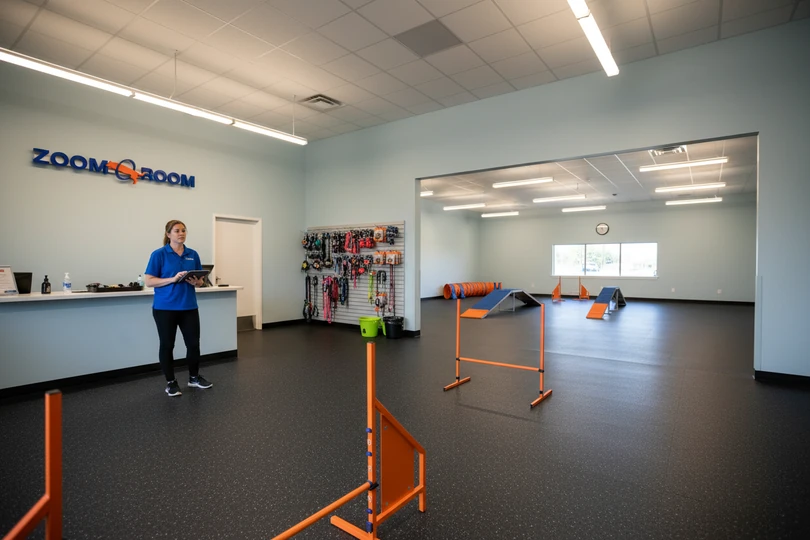
On the southern Oregon coast, the existing independent trainers have deep community roots. A new entrant without those connections faces a slow ramp in a market where personal relationships drive referrals. A franchise provides an immediate differentiation through a professional retail facility and a structured group-class format that is genuinely novel in the Coos Bay market — the product itself, not just the brand, is the competitive advantage.
The labor constraint on the coast is severe. Finding experienced dog trainers willing to live and work in Coos County is a challenge that a franchise model directly addresses. By embedding expertise in the curriculum, the system allows operators to hire from the available coastal workforce and train capable team members on the methodology, rather than searching for specialists who would need to relocate to one of Oregon's most remote population centers.
Frequently Asked Questions
- Coos Bay's combination of a 48,649 population, 64% pet ownership rate, and median household income of $63,775 makes it a promising market for pet services. The ratio of approximately one dog trainer per 4,865 residents suggests a competitive but viable landscape.
- The Coos Bay metro area has approximately 10 dog training businesses. The majority are independent operators offering private lessons. Very few provide the ongoing, group-class socialization model that drives recurring revenue and long-term customer retention.
- A dog training franchise typically requires a total investment in the range of $302,523 to $464,712, depending on location, buildout, and market conditions. Coos Bay's commercial rent of approximately $20.00 per square foot helps keep the overall investment competitive. Contact us to request our Franchise Disclosure Document for detailed financial information.
- No. Oregon does not require franchise registration, which simplifies the startup process. Regardless of state requirements, franchisors must provide a Franchise Disclosure Document at least 14 days before any agreement is signed, per FTC requirements.
Is Coos Bay a good market for a dog training franchise? +
How many dog training businesses are in Coos Bay? +
What does it cost to open a dog training franchise in Coos Bay? +
Does Oregon require franchise registration? +
Explore Territory Availability in Coos Bay
See if your preferred Coos Bay-area territory is available. Our team will walk you through the market data and next steps.
Request InfoThis is not an offer to sell a franchise. An offer can only be made through a Franchise Disclosure Document. Financial performance representations are available in Item 19 of our Franchise Disclosure Document. Market data sourced from U.S. Census Bureau, APPA, and public records. Contact us to request our FDD.