
Market Analysis
Columbus Franchise Market Analysis: Dog Training Demand vs. Competition
With 18 dog training businesses serving a metro of 1,185,074, Columbus has room for a differentiated franchise concept. The numbers tell an interesting story about opportunity in this market.
| Columbus, OH — Market Snapshot | |
|---|---|
| MSA Population | 1,185,074 |
| Population Growth (2020–2025) | 4.1% |
| Median Household Income | $79,668 |
| Pet Ownership Rate (State) | 58.3% |
| Dog Ownership % | 44.2% |
| Avg. Pet Spending/Household | $1,380 |
| Dog Training Businesses | 18 |
| Avg. Commercial Rent ($/sqft) | $17 |
| Walk Score | 46 |
Key employers: Ohio State University, OhioHealth, Nationwide, Cardinal Health, Battelle
Why Columbus's Demographics Favor Dog Training
Columbus's metro area has a population of 1,185,074 with steady growth of 4.1% since 2020. This growth pattern signals an expanding market for service-based businesses, particularly those serving pet owners.
With a median household income of $79,668 — well above the national average — Columbus households have the spending power to invest in premium pet services. Ohio's pet ownership rate of 58.3% means a significant portion of local households are potential customers for dog training and socialization services.
The demographic profile supports a socialization-focused franchise model — one where dog owners participate in group classes, build community, and return weekly. Markets with Columbus's combination of income and pet ownership tend to produce strong customer retention and high lifetime value.
Competitive Landscape: Dog Training in Columbus
Columbus has approximately 18 dog training businesses for a metro population of 1,185,074 — a ratio of one trainer per 65,837 residents. That ratio understates the gap: most existing operators cluster near the Short North, Clintonville, and Upper Arlington corridors, leaving fast-growing suburbs like Dublin, Westerville, and Grove City with minimal coverage. For a franchise evaluating territory density, the suburban white space is notable.
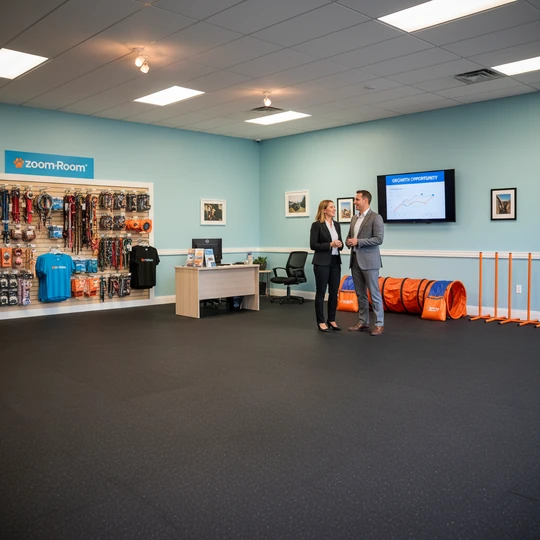
The existing competitive set skews heavily toward solo practitioners offering private, in-home sessions or board-and-train programs. Very few Columbus trainers operate a structured group-class format with a fixed retail location. That means there is limited local precedent for the recurring-revenue, socialization-based model — which can be an advantage. A franchise entering this market would not be displacing an incumbent so much as creating a category.
Columbus's large student and young-professional population — driven by Ohio State University's 60,000+ enrollment and a growing tech corridor anchored by companies like CoverMyMeds and Root Insurance — tends to favor experiential, community-oriented services over transactional ones. That behavioral preference aligns well with a group-class format built on repeat visits and social engagement.
Dog Ownership and Pet Spending in Ohio
Ohio's dog ownership rate of 44.2% of households sits above the national average, and Columbus in particular outperforms the state figure. The metro's younger demographic skew — median age roughly two years below the U.S. median — correlates with higher rates of first-time dog ownership, a segment that indexes heavily toward professional training services. Average annual pet spending in the region runs approximately $1,380 per household, with the services category (training, grooming, wellness) growing faster than product sales.
Columbus's cultural identity reinforces this spending pattern. The Franklinton Arts District, North Market, and the city's extensive park system — including more than 20 dedicated dog parks — create an environment where dog ownership is visible, social, and integrated into daily life. That visibility drives a feedback loop: more dogs in public spaces means more demand for well-socialized animals, which translates to demand for structured training.
Nationally, the pet services sector has doubled over the past decade, with training growing faster than boarding or grooming. In a market like Columbus, where household formation is rising and first-time dog ownership is elevated, that secular trend compounds with local demand drivers.
Investment Context: Operating a Franchise in Columbus
Columbus's commercial retail rents average approximately $17.00 per square foot annually — meaningfully below peer metros like Denver ($27) or Dallas ($22). For a dog training franchise that operates in roughly 3,000 square feet of standard retail-zoned space, this translates to an occupancy cost that is among the lowest in comparably sized markets. Suburban corridors along Sawmill Road, Polaris Parkway, and Easton area offer strong visibility with moderate lease rates.
Ohio does not require franchise registration, which removes an administrative layer that exists in roughly 15 states. Combined with the metro's relatively fast permitting timelines and business-friendly municipal climate, the path from signing a franchise agreement to opening day tends to be shorter here than in more regulated environments.
The total investment for a dog training franchise in the $302,523–$464,712 range is well-calibrated for Columbus's cost structure. With occupancy costs on the lower end for a Tier 1 metro and a labor market buoyed by Ohio State's steady pipeline of part-time and entry-level workers, the unit economics here deserve close examination. Request the Franchise Disclosure Document for detailed financial projections.
Franchise vs. Independent in Columbus
Columbus is a market where consumer discovery happens online first. The metro's digitally engaged, younger-skewing population researches and compares options before committing. In that environment, a franchise with national SEO infrastructure, aggregated reviews across multiple locations, and consistent branding holds a structural advantage over a solo trainer marketing through a personal Facebook page or word-of-mouth referrals.
The labor dynamics of Columbus also favor a franchise approach. Ohio State University produces a large pool of part-time workers — students studying animal science, veterinary medicine, and related fields — who are well-suited to a training role but lack years of professional dog training experience. A franchise that embeds expertise in the curriculum rather than the individual trainer can tap this talent pool in ways an independent operation cannot. The system trains the person; the person does not need to arrive pre-trained.
Finally, Columbus's position as a well-known test market for national brands means consumers here are unusually receptive to franchise concepts. The city has a documented history of early adoption for retail and service-based franchises, which reduces the brand education burden that exists in markets less accustomed to national chains.
Frequently Asked Questions
- Columbus's combination of a 1,185,074 population, 58% pet ownership rate, and median household income of $79,668 makes it a strong market for pet services. The ratio of approximately one dog trainer per 65,837 residents suggests meaningful room for new entrants.
- The Columbus metro area has approximately 18 dog training businesses. The majority are independent operators offering private lessons. Very few provide the ongoing, group-class socialization model that drives recurring revenue and long-term customer retention.
- A dog training franchise typically requires a total investment in the range of $302,523 to $464,712, depending on location, buildout, and market conditions. Columbus's commercial rent of approximately $17.00 per square foot helps keep the overall investment competitive. Contact us to request our Franchise Disclosure Document for detailed financial information.
- No. Ohio does not require franchise registration, which simplifies the startup process. Regardless of state requirements, franchisors must provide a Franchise Disclosure Document at least 14 days before any agreement is signed, per FTC requirements.
Is Columbus a good market for a dog training franchise? +
How many dog training businesses are in Columbus? +
What does it cost to open a dog training franchise in Columbus? +
Does Ohio require franchise registration? +
Explore Territory Availability in Columbus
See if your preferred Columbus-area territory is available. Our team will walk you through the market data and next steps.
Request InfoThis is not an offer to sell a franchise. An offer can only be made through a Franchise Disclosure Document. Financial performance representations are available in Item 19 of our Franchise Disclosure Document. Market data sourced from U.S. Census Bureau, APPA, and public records. Contact us to request our FDD.