
Market Analysis
Why Cincinnati Is a Prime Market for a Dog Training Franchise in 2026
Cincinnati combines a population of 1,263,189, a 58% pet ownership rate, and a median household income of $74,362 — key indicators of demand for dog training and socialization services. Here's what the data says about this market.
| Cincinnati, OH — Market Snapshot | |
|---|---|
| MSA Population | 1,263,189 |
| Population Growth (2020–2025) | 1.5% |
| Median Household Income | $74,362 |
| Pet Ownership Rate (State) | 58.3% |
| Dog Ownership % | 44.2% |
| Avg. Pet Spending/Household | $1,380 |
| Dog Training Businesses | 19 |
| Avg. Commercial Rent ($/sqft) | $16 |
| Walk Score | 50 |
Key employers: Kroger, Procter & Gamble, Cincinnati Children's, Fifth Third Bank, UC Health
Why Cincinnati's Demographics Favor Dog Training
Cincinnati's metro area has a population of 1,263,189 with stable growth of 1.5% since 2020. This growth pattern signals an expanding market for service-based businesses, particularly those serving pet owners.
With a median household income of $74,362 — above the national average — Cincinnati households have the spending power to invest in premium pet services. Ohio's pet ownership rate of 58.3% means a significant portion of local households are potential customers for dog training and socialization services.
The demographic profile supports a socialization-focused franchise model — one where dog owners participate in group classes, build community, and return weekly. Markets with Cincinnati's combination of income and pet ownership tend to produce strong customer retention and high lifetime value.
Competitive Landscape: Dog Training in Cincinnati
Cincinnati's 19 dog training businesses serve a metro of 1,263,189 residents — roughly one provider per 66,000 people. The competitive landscape skews heavily toward traditional independent operators: private trainers working from home, a few kennel-based programs in the outer suburbs, and veterinary clinics that offer basic puppy classes as a referral service. Facility-based group training with a dedicated retail presence is essentially absent from Cincinnati's commercial corridors.
The Over-the-Rhine (OTR) neighborhood has undergone one of the most dramatic urban revitalizations in the Midwest, drawing young professionals, restaurants, and boutique retail into what was previously a disinvested area. The adjacent neighborhoods of Northside, Oakley, and Hyde Park have experienced similar demographic shifts. These areas now have the income, density, and cultural orientation to support premium pet services, but no structured group-training facility has established a presence in any of them.
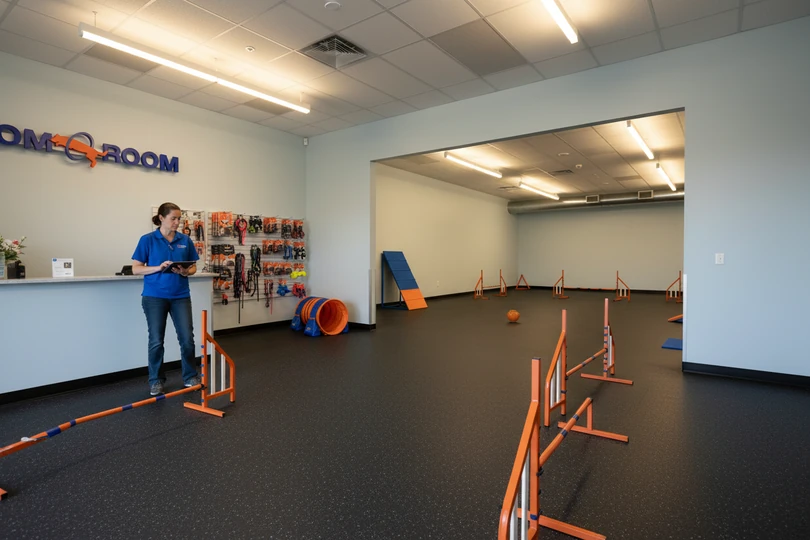
A franchise focused on group socialization classes in retail-format space occupies an empty category in Cincinnati. The concept's two-person floor model and standard retail footprint make it fundamentally different from the boarding and daycare operations that represent Cincinnati's only other brick-and-mortar pet service options. For a market where Procter & Gamble and Kroger headquarters anchor a substantial consumer products and retail management talent pool, the gap is notable — and correctable.
Dog Ownership and Pet Spending in Ohio
Ohio's 44.2% dog ownership rate is comfortably above the national average, and Cincinnati sits squarely in the state's strongest pet ownership corridor. The city's culture of dog ownership runs deep — Cincinnati consistently ranks among the most dog-friendly mid-size metros nationally, with dedicated dog parks in nearly every neighborhood, a strong network of rescue organizations, and a community that actively integrates dogs into daily life. This cultural baseline translates into a large, engaged addressable market for training services.
Average annual pet spending of $1,380 per household is growing, driven by the same services-over-products shift visible nationally. In Cincinnati, this transition is being accelerated by the economic engine of Procter & Gamble and Kroger — two companies with deep expertise in consumer behavior. The professionals who work at these headquarters, along with those at Cincinnati Children's Hospital, Fifth Third Bank, and UC Health, represent a consumer class that researches service providers thoroughly, values quality, and commits to programs that deliver measurable results for their dogs.
The pet services industry's growth trajectory intersects with Cincinnati's specific market dynamics in a favorable way. The metro's 1.5% population growth, while modest, is concentrated in the revitalized urban neighborhoods and first-ring suburbs where pet service demand is highest. Unlike markets experiencing rapid growth that may overshoot and correct, Cincinnati's steady, organic growth suggests durable demand patterns that support long-term business planning.
Investment Context: Operating a Franchise in Cincinnati
Cincinnati's average commercial rent of approximately $16.00 per square foot provides some of the most favorable unit economics available in a metro of this size. For a franchise concept requiring roughly 3,000 square feet, annual base rent in the range of $48,000 keeps fixed costs manageable and accelerates the path to positive cash flow. Retail space along Montgomery Road, in the Oakley Station development, or in suburban centers in Mason and West Chester offers strong visibility and traffic counts at rents that are a fraction of what comparable space commands in coastal metros.
Ohio does not require franchise registration, which removes a regulatory step that adds weeks or months in states like neighboring Illinois, New York, or Maryland. Cincinnati's permitting processes are generally efficient, and the Greater Cincinnati area offers multiple jurisdictions with slightly different timelines — covering parts of Ohio, Kentucky, and Indiana — giving franchise operators flexibility in site selection across state lines.
The total investment of $302,523 to $464,712 stretches further in Cincinnati than in most metros with comparable household incomes and pet ownership rates. The gap between the metro's $74,362 median income and its low operating costs creates a favorable margin structure. Cincinnati's cost of living is approximately 10% below the national average, which means the real purchasing power of local households exceeds what the income figure alone suggests. Request a Franchise Disclosure Document for detailed financial information and current territory availability.
Franchise vs. Independent in Cincinnati
Cincinnati is a market where brand trust and community reputation carry outsized weight. The city's strong neighborhood identities and loyal consumer base mean that established businesses thrive — but new independents face a slow ramp-up. A franchise model compresses that timeline by delivering immediate brand credibility, a professional facility, and the operational systems needed to convert first-time visitors into long-term members from the initial weeks of operation.
The P&G and Kroger influence on Cincinnati's consumer culture is worth noting for franchise investors. This is a market shaped by two of the world's foremost consumer products and retail companies. Cincinnati consumers are sophisticated about value propositions, marketing claims, and service quality. They respond to professionalism, consistency, and transparent pricing — exactly the attributes that a franchise model delivers through standardized operations, curriculum, and customer experience. Independent trainers offering inconsistent scheduling, variable quality, and informal pricing structures are at a disadvantage with this consumer base.
On the staffing side, Cincinnati's healthcare and financial services sectors absorb much of the metro's professional workforce, making it challenging to recruit experienced dog trainers. A franchise that embeds training expertise in the curriculum can hire from the broader pool of personable, reliable candidates — including graduates from the University of Cincinnati, Xavier, and Northern Kentucky University — and develop their skills through a structured program. This approach turns Cincinnati's large service-sector workforce into a hiring advantage rather than a constraint.
Frequently Asked Questions
- Cincinnati's combination of a 1,263,189 population, 58% pet ownership rate, and median household income of $74,362 makes it a strong market for pet services. The ratio of approximately one dog trainer per 66,484 residents suggests meaningful room for new entrants.
- The Cincinnati metro area has approximately 19 dog training businesses. The majority are independent operators offering private lessons. Very few provide the ongoing, group-class socialization model that drives recurring revenue and long-term customer retention.
- A dog training franchise typically requires a total investment in the range of $302,523 to $464,712, depending on location, buildout, and market conditions. Cincinnati's commercial rent of approximately $16.00 per square foot helps keep the overall investment competitive. Contact us to request our Franchise Disclosure Document for detailed financial information.
- No. Ohio does not require franchise registration, which simplifies the startup process. Regardless of state requirements, franchisors must provide a Franchise Disclosure Document at least 14 days before any agreement is signed, per FTC requirements.
Is Cincinnati a good market for a dog training franchise? +
How many dog training businesses are in Cincinnati? +
What does it cost to open a dog training franchise in Cincinnati? +
Does Ohio require franchise registration? +
Explore Territory Availability in Cincinnati
See if your preferred Cincinnati-area territory is available. Our team will walk you through the market data and next steps.
Request InfoThis is not an offer to sell a franchise. An offer can only be made through a Franchise Disclosure Document. Financial performance representations are available in Item 19 of our Franchise Disclosure Document. Market data sourced from U.S. Census Bureau, APPA, and public records. Contact us to request our FDD.