
Market Analysis
The Business Case for a Dog Training Franchise in Birmingham, Alabama
Birmingham's growing population, strong household incomes, and high pet ownership create favorable conditions for a dog training franchise. Here's a data-driven look at what makes this market worth evaluating.
| Birmingham, AL — Market Snapshot | |
|---|---|
| MSA Population | 630,029 |
| Population Growth (2020–2025) | -0.3% |
| Median Household Income | $68,984 |
| Pet Ownership Rate (State) | 59.5% |
| Dog Ownership % | 47.3% |
| Avg. Pet Spending/Household | $1,410 |
| Dog Training Businesses | 17 |
| Avg. Commercial Rent ($/sqft) | $14 |
| Walk Score | 35 |
Key employers: UAB Health System, Regions Financial, BBVA, Vulcan Materials, Protective Life
Why Birmingham's Demographics Favor Dog Training
Birmingham's metro area has a population of 630,029 with stable growth of -0.3% since 2020. This growth pattern signals an expanding market for service-based businesses, particularly those serving pet owners.
With a median household income of $68,984 — above the national average — Birmingham households have the spending power to invest in premium pet services. Alabama's pet ownership rate of 59.5% means a significant portion of local households are potential customers for dog training and socialization services.
The demographic profile supports a socialization-focused franchise model — one where dog owners participate in group classes, build community, and return weekly. Markets with Birmingham's combination of income and pet ownership tend to produce strong customer retention and high lifetime value.
Competitive Landscape: Dog Training in Birmingham
Birmingham's 17 dog training businesses yield a ratio of roughly one provider per 37,000 residents. While that is more competitive than some larger metros on a per-capita basis, the nature of the existing supply tells a more nuanced story. The majority of Birmingham's trainers operate as solo practitioners offering private lessons, many working from rural properties south and east of the city. There is a notable absence of facility-based, group-class training in the commercial corridors where Birmingham's professional class lives and shops.
The Homewood, Mountain Brook, and Vestavia Hills areas — among the most affluent zip codes in Alabama — have strong retail infrastructure but limited pet service options beyond basic grooming and veterinary care. The emerging Avondale and Lakeview districts, where Birmingham's food-and-culture renaissance has concentrated, are attracting younger residents with dogs and expendable income but no structured training facility nearby.
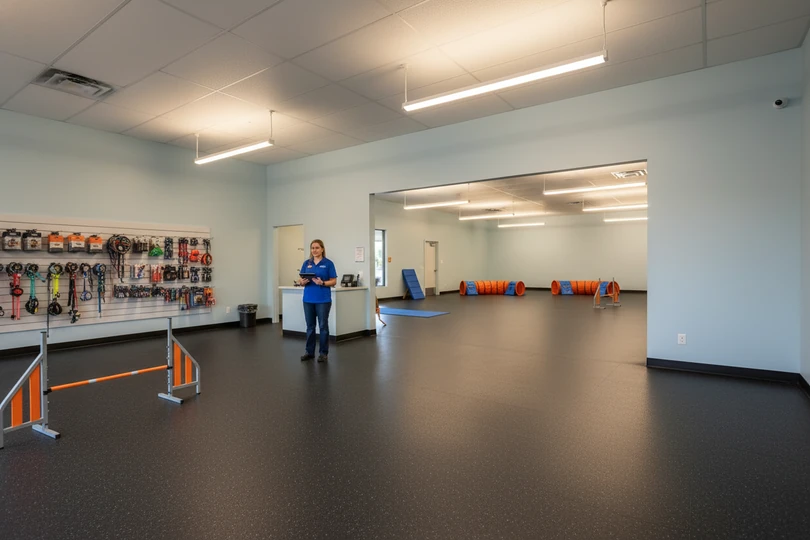
A retail-format franchise focused on group socialization occupies a category that essentially does not exist in Birmingham today. The two-person floor model and standard retail footprint make it operationally distinct from the boarding kennels and daycare facilities that represent the only other brick-and-mortar pet businesses in the market. For a first mover, Birmingham offers the advantage of establishing the category rather than competing within it.
Dog Ownership and Pet Spending in Alabama
Alabama's 47.3% dog ownership rate is among the highest in the nation, and Birmingham sits at the center of the state's most concentrated population of pet-owning households. The cultural orientation toward dogs in the Birmingham area runs deep — this is a market where dog ownership is a norm, not a trend, which produces a stable and predictable base of demand for training services.
Average household pet spending of $1,410 annually is growing, but the more significant dynamic in Birmingham is the shift in how that money is allocated. Historically, pet spending in mid-size Southern markets skewed toward products — food, treats, supplies. The emerging pattern, driven by UAB Health System professionals and the growing cadre of white-collar workers in Birmingham's financial and insurance sectors, mirrors national trends: a rising share of pet spending directed toward services like training, grooming, and veterinary wellness. This transition represents a structural tailwind for training-focused businesses.
Birmingham's cost-of-living advantage plays into this dynamic as well. Because housing, transportation, and food costs are well below the national average, Birmingham households retain more discretionary income than their salary figures alone suggest. A household earning $69,000 in Birmingham has spending power comparable to a household earning $85,000 or more in higher-cost markets — purchasing power that directly supports premium pet service adoption.
Investment Context: Operating a Franchise in Birmingham
Birmingham's commercial rent of approximately $14.00 per square foot is among the lowest of any metro area profiled in this franchise opportunity analysis. For a concept requiring roughly 3,000 square feet of retail-zoned space, that translates to annual base rent in the range of $42,000 — a figure that materially reduces the fixed cost structure and improves the path to cash flow positive operations. Retail space along Highway 280, in the Patton Creek and Brook Highland shopping areas, or in the Homewood/Mountain Brook commercial district provides high visibility at rents that would be unthinkable in coastal markets.
Alabama does not require franchise registration, eliminating the regulatory delay that adds weeks or months to the startup timeline in registration states. Combined with Birmingham's generally expedient permitting and inspection processes, the timeline from signed franchise agreement to grand opening can be among the shortest in the franchise system.
The total investment of $302,523 to $464,712 stretches further in Birmingham than in virtually any other metro of comparable size. The combination of low rents, affordable labor, and no state income tax creates an operating cost profile that is difficult to replicate in larger or coastal markets. Request a Franchise Disclosure Document for detailed financial information and current territory availability in the Birmingham metro.
Franchise vs. Independent in Birmingham
Birmingham is a relationship-driven market where word of mouth carries significant weight. Independent dog trainers benefit from this dynamic in the early stages, but they hit a ceiling quickly: without systems for online reputation management, consistent branding, or scalable customer acquisition, most independent operators plateau at a handful of weekly clients. A franchise model brings the operational infrastructure that allows a Birmingham-based owner to scale beyond the limitations of a solo practice while still leveraging the personal connections that matter in this market.
The talent challenge is particularly acute in Birmingham. The UAB Health System, Regions Financial, and the city's insurance and banking sector absorb a large share of the educated workforce, leaving fewer candidates available for specialized roles. An independent dog training business must find experienced trainers — a narrow pool nationally and an even narrower one in Alabama. A franchise that embeds its expertise in a structured curriculum can hire for personality, customer engagement skills, and reliability, then develop dog training competency through a proven certification process.
Birmingham's emerging identity as a dining, arts, and culture destination — driven by James Beard-recognized restaurants, the Birmingham Civil Rights Institute, and the revitalized downtown — has attracted a new cohort of residents who bring cosmopolitan expectations for services. This demographic is more likely to choose a professionally branded, facility-based training program over a solo trainer operating from a backyard. A franchise captures this market segment from day one.
Frequently Asked Questions
- Birmingham's combination of a 630,029 population, 60% pet ownership rate, and median household income of $68,984 makes it a strong market for pet services. The ratio of approximately one dog trainer per 37,061 residents suggests meaningful room for new entrants.
- The Birmingham metro area has approximately 17 dog training businesses. The majority are independent operators offering private lessons. Very few provide the ongoing, group-class socialization model that drives recurring revenue and long-term customer retention.
- A dog training franchise typically requires a total investment in the range of $302,523 to $464,712, depending on location, buildout, and market conditions. Birmingham's commercial rent of approximately $14.00 per square foot helps keep the overall investment competitive. Contact us to request our Franchise Disclosure Document for detailed financial information.
- No. Alabama does not require franchise registration, which simplifies the startup process. Regardless of state requirements, franchisors must provide a Franchise Disclosure Document at least 14 days before any agreement is signed, per FTC requirements.
Is Birmingham a good market for a dog training franchise? +
How many dog training businesses are in Birmingham? +
What does it cost to open a dog training franchise in Birmingham? +
Does Alabama require franchise registration? +
Explore Territory Availability in Birmingham
See if your preferred Birmingham-area territory is available. Our team will walk you through the market data and next steps.
Request InfoThis is not an offer to sell a franchise. An offer can only be made through a Franchise Disclosure Document. Financial performance representations are available in Item 19 of our Franchise Disclosure Document. Market data sourced from U.S. Census Bureau, APPA, and public records. Contact us to request our FDD.