
You Have $200K to Invest in a Franchise. Here's What That Actually Gets You.
This is one of the most common questions on Reddit and Quora franchise threads — and it makes sense. $200K in liquid capital puts you in a strong position, but not every franchise is built the same. Let's break down what you should actually be looking at.
What $200K in Liquid Capital Really Means
First, let's clear something up. When franchise people talk about "liquid capital," they mean cash or assets you can convert to cash quickly — savings, stocks, money market accounts. It does not include the equity in your house or your retirement accounts (unless you're doing a ROBS rollover).
Having $200K liquid does not mean you can only buy a franchise that costs $200K total. Most franchisors want to see that you have enough cash to cover a chunk of the initial investment plus a working capital cushion, with the rest coming from SBA loans or other financing. So $200K liquid could realistically support a total investment of $300K to $500K+ depending on how much you finance.
That said, you do not want to dump every dollar into day one. Smart franchise investors keep a reserve for the first 6-12 months of operations before the business is fully self-sustaining. Running out of working capital is one of the top reasons new franchise locations struggle.
The Franchise Categories Open to You
At the $200K liquid capital level, you've got options across several major franchise categories. Here is how they break down:
Service-based franchises. These include home services (cleaning, painting, restoration), fitness concepts, pet services, tutoring, and business-to-business services. Many of these have total investments in the $250K-$500K range. The advantage is that they're often less capital-intensive than food or retail, with lower build-out costs and smaller teams to manage.
Food and restaurant franchises. Some quick-service and fast-casual concepts fall within reach at this level, though the bigger names (think major burger or chicken chains) often require $1M+ and multi-unit commitments. Smaller or emerging food concepts can work, but food franchises tend to have thinner margins, longer hours, and higher employee counts.
Retail franchises. These vary wildly. Some specialty retail concepts have modest build-outs, while others require expensive inventory and prime lease locations. Make sure you understand the inventory carrying costs before committing.
Health and wellness. This is a growing space — everything from med spas to physical therapy clinics. Some require licensed professionals on staff, which adds complexity but can also create a competitive moat.
What Actually Drives ROI in a Franchise
People on Reddit love to ask "what's the best ROI franchise?" — and honestly, the answer is unsatisfying: it depends. But here are the factors that actually move the needle:
Recurring revenue. Franchises where customers come back regularly — memberships, subscriptions, classes — tend to build more predictable cash flow than one-time transaction businesses. A dog training studio where families attend weekly classes is a different financial animal than a franchise where every sale is a cold start.
Labor model. How many employees do you need, and how skilled do they need to be? A franchise that runs with a lean team of two or three people on the floor has a fundamentally different cost structure than one that needs 15 employees across shifts. Labor is typically the biggest expense in any service business, so this matters more than most people realize.
Unit economics. Look at the Item 19 in the Franchise Disclosure Document. What do the top-performing locations look like vs. the median? What does revenue ramp look like in year one vs. year three? These numbers tell you the real story.
Owner involvement. Some franchises are designed so the owner works in the business, especially in the first year or two. Others assume you are hiring a manager from day one. Fully manager-run models sound appealing, but they add payroll and reduce your control over the customer experience during the most critical growth phase.
Why Service Franchises Deserve a Closer Look
If you spend time reading franchise discussion threads, you will notice a pattern: a lot of experienced franchise investors steer people toward service-based businesses. There are good reasons for that.
Service franchises often have lower build-out costs, which means more of your $200K goes toward working capital instead of construction. They tend to have simpler operations — fewer employees, less inventory, less spoilage. And many of them tap into industries with strong secular growth trends.
The pet industry is a good example. It has grown past $157 billion in the U.S. and shows no signs of slowing down. Pet owners increasingly treat their dogs and cats like family members, and spending on services like training, grooming, and enrichment keeps climbing regardless of economic cycles. During the 2008 recession and again during COVID, pet industry spending actually increased.
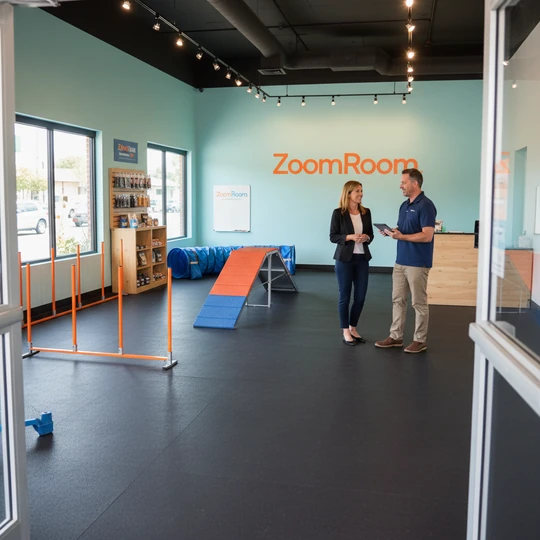
Zoom Room, the #1 dog training franchise in the Entrepreneur Franchise 500 for 2026, fits squarely in this space. With a total investment of $302,523 to $464,712 and a liquid capital requirement of $200,000, it is designed for exactly the investor profile we are talking about here. The model runs with just two people on the floor, uses a positive reinforcement training approach that drives an 87% customer retention rate, and the owner-participatory structure means you are building relationships with clients rather than managing a large staff from an office.
Common Mistakes at the $200K Level
Here is where people go wrong with $200K to invest:
Chasing brand recognition over unit economics. A famous brand name does not guarantee you will make money. Some of the most recognized franchise brands have mediocre franchisee economics because the system is mature and saturated. Emerging brands in growing industries sometimes offer better individual unit performance.
Ignoring the FDD. The Franchise Disclosure Document is your single most important research tool. Read it cover to cover. Pay special attention to Item 7 (total investment breakdown), Item 19 (financial performance), and Item 20 (franchisee contact list). Then call as many existing franchisees as you can.
Underestimating working capital. Your franchise fee and build-out are just the beginning. You need enough runway to cover rent, payroll, marketing, and your own living expenses while the business ramps up. Ask franchisees how long it took to reach breakeven and plan for it to take longer.
Skipping validation. Franchise validation — calling existing franchisees to learn about their experience — is the most underused tool available to you. The franchisees listed in Item 20 can tell you things no sales presentation ever will.
How to Start Narrowing Your Options
If you have $200K and you are serious about franchising, here is a practical path forward:
Step 1: Define your lifestyle goals. Do you want to work in the business or manage it from a distance? Are you looking for something you are passionate about or purely a financial play? Your answer shapes which categories to explore.
Step 2: Pick 2-3 industries. Do not try to evaluate 30 brands at once. Pick a few sectors that align with your goals and research the top franchise options within each.
Step 3: Request FDDs. Once you have a short list, request the Franchise Disclosure Document from each brand. This is free and does not commit you to anything.
Step 4: Talk to franchisees. This is the most important step. Call at least 8-10 franchisees from each brand you are seriously considering. Ask about their investment experience, the support they received, how long it took to ramp up, and whether they would do it again.
Step 5: Build a financial model. Use Item 19 data, franchisee feedback, and local market research to build a realistic pro forma for your specific territory. Include conservative assumptions and stress-test your projections.
Frequently Asked Questions
- $200K in liquid capital puts you in a strong position for many franchise opportunities. Most mid-range franchises require $100K to $250K in liquid capital, with total investments of $250K to $500K when you include SBA financing. You are well within range for service-based, fitness, pet, and some food franchise concepts. Just make sure to keep a reserve for working capital — you should not invest every dollar into the franchise fee and build-out.
- For most first-time franchise investors, it is smarter to focus on one brand and do it well. Running a franchise takes real time and attention, especially in the first year. If you spread yourself across two brands from day one, you risk underperforming in both. Build one successful location first, then consider a second unit or a different brand once you have systems in place and reliable management.
- There is no single category that guarantees the best ROI because so much depends on your local market, your management skills, and the specific brand. That said, service-based franchises — especially those with recurring revenue models, lean staffing, and strong customer retention — tend to offer favorable unit economics. Look at Item 19 data in the FDD to compare actual financial performance rather than relying on category generalizations.
- Payback periods vary widely by brand, location, and how well you execute. Many franchise systems see franchisees reach breakeven within 12 to 24 months, with full payback of the initial investment taking 3 to 5 years. The key factors are revenue ramp speed, operating margins, and how much of the initial investment went to one-time costs like build-out vs. ongoing expenses. Ask existing franchisees about their experience — their timelines are the most reliable data point.
- No. Most franchise systems are designed for people without prior franchise or industry experience. That is the whole point of the franchise model — you are buying a proven system with training and support built in. What matters more is your management ability, work ethic, willingness to follow the system, and financial preparedness. Good franchise brands have comprehensive training programs that cover operations, marketing, and business management.
Is $200K enough liquid capital to buy a franchise? +
Should I invest all $200K into one franchise or diversify? +
What franchise categories have the best ROI? +
How long does it take for a franchise to pay for itself? +
Do I need franchise experience to invest $200K in a franchise? +
See What $200K Gets You with Zoom Room
Zoom Room's liquid capital requirement is $200,000 — putting it right in your range. Request information to learn about the investment structure, review the FDD, and talk to existing franchise owners about their experience.
Request InfoThis is not an offer to sell a franchise. An offer can only be made through a Franchise Disclosure Document. Financial performance representations are available in Item 19 of our Franchise Disclosure Document. Contact us to request our FDD.