
How to Tell If a Franchise Is a Pyramid Scheme
It's a fair question, and asking it doesn't make you paranoid. Some business opportunities that look like franchises are actually recruitment-driven schemes disguised with franchise terminology. Knowing the difference can save you from a costly mistake. Here's how to separate legitimate franchise opportunities from operations that are closer to pyramid schemes.
The Core Difference: Product Revenue vs. Recruitment Revenue
The single clearest distinction between a legitimate franchise and a pyramid scheme comes down to one question: where does the money come from?
In a legitimate franchise, revenue comes from selling products or services to actual customers. A pizza franchise makes money selling pizza. A dog training franchise makes money providing training classes. The customers are real people paying for something they want.
In a pyramid scheme, the real money comes from recruiting new participants. The "product" might exist, but it's secondary to the recruitment engine. If the primary way people make money is by signing up others rather than serving customers, that's the pyramid structure regardless of what it's called.
Ask yourself: would this business work if it stopped recruiting new franchisees or participants tomorrow? If the answer is yes, because it serves real customers with real demand, you're likely looking at a legitimate business. If the whole model collapses without new recruits, run.
FTC Guidelines for Spotting Pyramid Schemes
The Federal Trade Commission has clear guidelines about what separates legitimate business opportunities from pyramid schemes. According to the FTC, key warning signs include:
Income claims based on recruitment. If the pitch focuses on how much money you can make by bringing in other participants rather than by serving customers, that's a red flag.
Required inventory purchases. Some schemes require participants to buy large quantities of product upfront, with the real profit going to whoever sold them that inventory, not to customer sales.
Emphasis on the "opportunity" over the product. Legitimate businesses lead with their product or service. If every conversation steers back to the "amazing business opportunity" and the product feels like an afterthought, pay attention.
Legitimate franchises are regulated under the FTC's Franchise Rule. They must provide a Franchise Disclosure Document (FDD) at least 14 days before you sign anything or pay any money. If someone asks you to pay before providing an FDD, they're either violating federal law or they're not actually a franchise.
Characteristics of Legitimate Franchise Opportunities
Legitimate franchises share several characteristics that distinguish them from recruitment schemes:
A registered FDD on file. Real franchises are registered with the FTC and, in many states, with state regulators. The FDD is a public document that discloses fees, obligations, litigation history, and financial performance.
A real product or service with customer demand. The business exists to serve customers, not to sell business opportunities. Revenue comes from operations, not from franchise fees.
Training focused on operations, not recruitment. Initial training covers how to run the business: operations, customer service, marketing, hiring. If training is mostly about how to recruit others, that's a problem.
Transparent fee structures. Franchise fees, royalties, and marketing fund contributions are clearly disclosed. There aren't hidden costs or escalating "levels" of investment tied to recruitment milestones.
Existing franchisees you can contact. Item 20 of the FDD lists current and former franchisees. You can call them and ask about their experience. Pyramid schemes typically don't give you access to people who've left the program.
Warning Signs That Should Make You Dig Deeper
Some business opportunities occupy a gray area. They might technically be legal but share characteristics with problematic schemes. Watch for these patterns:
High upfront costs with vague deliverables. You're paying $50,000 but it's unclear what you're actually getting in return, no real estate, no equipment, no inventory. Just "access" to a system or territory.
Income testimonials from top earners only. If the marketing features the success stories of the top 1% while most participants struggle, the economics don't work for most people.
Pressure to recruit sub-franchisees or area developers. Some legitimate franchise systems have multi-unit or area development structures. But if the primary pitch is about how you'll profit from other people's franchise fees, scrutinize the model carefully.
No brick-and-mortar presence or tangible operations. Not all franchises need a storefront, but if the entire business exists in a virtual space with no physical operations, customers, or employees, ask what exactly is being franchised.
Refusal to provide the FDD before taking money. This is non-negotiable. The law requires the FDD be provided at least 14 days before any payment. Anyone who says they can't provide it, or who asks for money first, is either breaking the law or not a franchise.
How to Verify a Franchise Is Legitimate
Beyond looking for red flags, take these proactive steps to verify any franchise opportunity:
Check state registration. Many states require franchise registration. Contact your state's franchise registration office to verify the brand is properly registered.
Search the FTC's database. Look for any enforcement actions or complaints filed against the company.
Talk to a franchise attorney. An experienced franchise attorney can review the FDD and spot issues that might not be obvious to someone unfamiliar with franchise law.
Call existing franchisees. Talk to at least five to ten current owners. Ask about their experience, the support they receive, and whether the business matches what was presented during the sales process.
Research the brand independently. Search for news articles, Better Business Bureau complaints, and online reviews from both customers and franchisees. A legitimate brand has a track record you can verify.
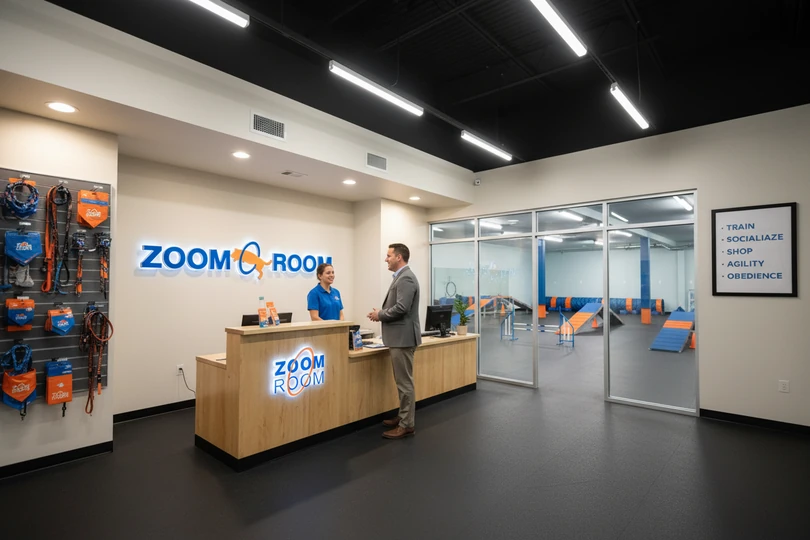
Zoom Room, as an example, operates as a registered franchise with a full FDD, brick-and-mortar locations providing dog training and enrichment services, and a roster of existing franchise owners available for validation calls. That's the kind of transparency to look for in any franchise opportunity.
Frequently Asked Questions
- No. While the franchise model is heavily regulated and most franchises are legitimate businesses, some operators use franchise-like terminology to disguise recruitment schemes. Always verify that the company provides an FDD, is registered with applicable state authorities, and derives its revenue from actual customer sales rather than franchisee recruitment.
- Not necessarily, but the line can be blurry. Multi-level marketing (MLM) is a legal business structure where participants earn from both product sales and recruitment. A pyramid scheme is illegal because it relies primarily on recruitment rather than product sales. The FTC evaluates MLMs based on whether the emphasis is on selling to real customers or on recruiting new participants.
- Stop all communication and do not pay any money. Report the company to the FTC at ReportFraud.ftc.gov and to your state's attorney general office. If you've already paid money, consult with a franchise attorney about your options for recovery. Document everything: emails, marketing materials, and any claims made during the sales process.
- No. In a legitimate franchise system, the franchisor handles franchise development and recruitment. Some systems offer referral bonuses if an existing franchisee introduces a new candidate, but your income should come from operating your business and serving customers, not from recruiting other franchisees.
Are all franchise opportunities legitimate? +
Is an MLM the same as a pyramid scheme? +
What should I do if I suspect a franchise is a scam? +
Do legitimate franchises require you to recruit other franchisees? +
Research a Transparent Franchise Opportunity
Zoom Room is a registered franchise with a full FDD, real brick-and-mortar locations, and existing owners who welcome validation calls. Start your research the right way.
Request InfoThis is not an offer to sell a franchise. An offer can only be made through a Franchise Disclosure Document. Financial performance representations are available in Item 19 of our Franchise Disclosure Document. Contact us to request our FDD.