
How to Find a Franchise Where Corporate Support Is Actually Good
Every franchise promises world-class support during the sales process. Every single one. The problem is that the quality of support varies enormously between franchise systems, and you won't experience it firsthand until after you've signed the agreement and written the check. Here's how to evaluate franchise support before you commit.
What Good Franchise Support Actually Looks Like
Before you can evaluate support, you need to know what good looks like. The best franchise systems provide support across five key areas:
Pre-opening support. Site selection assistance, lease negotiation guidance, buildout project management, vendor introductions, staff hiring resources, and a clear timeline from signing to opening day. The franchisor should have a dedicated team managing your launch, not just a manual you're expected to follow on your own.
Initial training. Comprehensive training that covers operations, marketing, technology systems, customer service standards, financial management, and leadership. This should be long enough to actually prepare you (typically two to four weeks) and should include both classroom and hands-on components.
Ongoing operational support. A dedicated franchise business consultant who knows your market, reviews your performance data regularly, and proactively identifies opportunities. The best systems assign one consultant to a manageable number of locations (15-25) so they can give real attention to each franchisee.
Marketing support. National brand campaigns, local marketing guidance and materials, social media support, and digital marketing programs. You should have both the tools and the strategic guidance to drive customers to your location.
Technology and innovation. Modern, reliable technology systems that are maintained and updated regularly, plus ongoing introduction of new products, services, or operational improvements that keep the brand competitive.
Red Flags That Signal Poor Support
During the franchise discovery process, watch for these warning signs that support might not live up to the marketing promises:
High franchisee-to-consultant ratios. If one consultant is responsible for 50+ locations, they can't provide meaningful individual attention. Ask specifically how many locations each consultant manages.
Vague answers about support structure. If the franchise development team can't clearly explain who will support you, how often, and through what channels, that's a problem. Good systems have documented support structures.
Declining satisfaction in the FDD. The FDD includes contact information for all current and former franchisees. If a significant number of franchisees have left the system recently (check Item 20), support issues are often the reason.
No franchisee advisory council. The best franchise systems have a formal advisory council where franchisees have input on system decisions. The absence of one suggests the franchisor isn't interested in franchisee feedback.
Outdated technology. If the POS system, booking platform, or reporting tools look like they haven't been updated in years, the franchisor isn't investing in the tools franchisees need to succeed.
Excessive turnover in the support team. Ask franchisees whether their consultant changes frequently. High turnover in the support team means you're constantly re-educating your franchisor about your business, which defeats the purpose of having a consultant.
The Validation Process: How to Get Honest Answers
Validation, meaning talking directly to current and former franchisees, is the single most important step in evaluating franchise support. The franchisor will give you a list of franchisees to contact, but you should also reach out to people not on the list. The FDD contains contact information for every franchisee in the system.
Here's a validation script specifically designed to evaluate support quality:
Ask about the opening process. "How was your experience from signing to opening day? Did the support team deliver what they promised during the sales process? What would you change about the pre-opening support?"
Ask about ongoing support. "How often do you hear from your franchise consultant? Do they proactively contact you, or do you have to chase them? Can you give me a specific example of how corporate support helped you solve a real problem?"
Ask about responsiveness. "When you have an urgent issue, how quickly does corporate respond? Who do you call? Are there things you've asked for that haven't been addressed?"
Ask the big question. "Knowing what you know now, would you buy this franchise again? Why or why not?" The answer to this question tells you more than any brochure ever will.
How Support Changes as the System Grows
A franchise system with 20 locations and one with 200 locations often provide very different support experiences, even within the same brand. Understanding where a franchise is in its growth trajectory helps you set realistic expectations.
Early-stage systems (under 50 units). You'll often get more personal attention because the corporate team has fewer franchisees to support. The founders may still be directly involved. The downside is that systems and processes may still be developing, and you might experience growing pains as the brand figures things out.
Growth-stage systems (50-200 units). This is often where support quality is most variable. The brand is scaling, and the question is whether the support infrastructure is scaling with it. Some brands hire ahead of growth. Others stretch their team thin and fill gaps later. Ask specifically about the support team's growth plan.
Mature systems (200+ units). More established processes and resources, but potentially less personal attention. Support tends to be more standardized, which is good for consistency but can feel impersonal. Large systems often have regional support teams, which provides a middle ground between personal attention and systematic processes.
What Support Should Cost You (and What It Shouldn't)
Your royalty payments fund the franchisor's support infrastructure. But some franchise systems charge additional fees for things that should be included in the base support package. Be alert to charges for items that feel like they should be standard:
Should be included: Basic training for you and your initial staff, a dedicated franchise consultant, access to the operations manual and brand standards, use of the technology platform, and national marketing campaigns.
Reasonable to charge separately: Advanced or specialized training programs, annual conference attendance, additional staff training beyond the initial team, customized marketing campaigns, and optional technology add-ons.
Red flag if charged separately: Access to the operations manual, basic technology updates or bug fixes, responses to operational questions, or use of the brand name and trademarks (which is what the royalty fundamentally pays for).
The key principle is that ongoing fees should fund ongoing support. If you're paying 6-8% of revenue in royalties and not receiving proportional value in support, training, marketing, and technology, the economics are out of balance.
Frequently Asked Questions
- The most reliable method is validation: talking directly to current and former franchisees. Ask specific questions about support quality, responsiveness, and whether the brand delivered what was promised during the sales process. Talk to at least ten franchisees, including some not on the franchisor's recommended list. Also look at franchisee turnover rates in the FDD's Item 20 for signs of systemic dissatisfaction.
- The best franchise systems maintain a ratio of one consultant for every 15 to 25 locations. This allows enough time for regular check-ins, performance reviews, and proactive problem-solving. If a consultant is responsible for 40 or more locations, meaningful individual attention becomes nearly impossible. Ask about the current ratio and whether the franchisor plans to hire additional support staff as the system grows.
- Yes. Good franchise support includes both national brand marketing (funded by the marketing fund) and guidance on local marketing strategies. This should include local marketing templates, social media support, guidance on local advertising channels, and grand opening marketing plans. Some brands go further and provide dedicated local marketing support or digital marketing management. Ask what's included and what costs extra.
- Start by documenting your concerns and raising them formally with your franchise consultant and their supervisor. If the system has a franchisee advisory council, bring issues there. Review your franchise agreement to understand your rights. Some franchise agreements include dispute resolution procedures. As a last resort, franchise attorneys can advise on your options. The best approach is to identify support quality issues before signing by doing thorough validation.
How do I know if a franchise has good support before I sign? +
What's a reasonable franchise consultant-to-location ratio? +
Should the franchisor help with local marketing? +
What happens if I'm unhappy with franchise support after signing? +
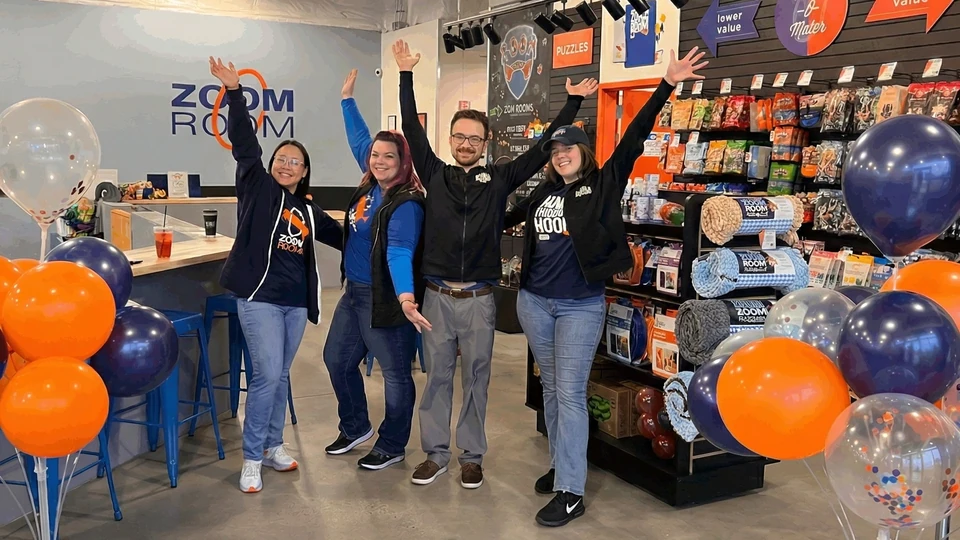
See How Zoom Room Supports Its Franchise Owners
Zoom Room is committed to franchisee success through comprehensive training, ongoing support, and a collaborative franchise community. Request information to learn about the support system.
Request InfoThis is not an offer to sell a franchise. An offer can only be made through a Franchise Disclosure Document. Financial performance representations are available in Item 19 of our Franchise Disclosure Document. Contact us to request our FDD.