
How to Buy a Franchise: The Complete Process from Research to Opening Day
Buying a franchise is one of the biggest financial decisions you'll make. The process typically takes three to six months and involves multiple stages, each with its own decisions and potential pitfalls. Here's what the path actually looks like.
Step 1: Self-Assessment -- Know What You Want Before You Start Looking
Before you research a single brand, get clear on your own criteria. This step saves enormous time and prevents you from falling for a franchise that looks great on paper but doesn't fit your life.
Start with your finances. How much liquid capital do you have available? What's your total net worth? Most franchisors set minimum thresholds -- typically $100K to $250K in liquid capital and $300K to $1M in net worth, depending on the concept. If you're planning to finance part of the investment, understand your borrowing capacity. Franchise financing options include SBA loans, ROBS (using retirement funds), and conventional business loans.
Then consider lifestyle. Do you want to work in the business daily, or manage it as a semi-absentee owner? Some franchises are built for owner-operators. Others are designed for investors who hire managers. Be honest about which model fits your goals.
Finally, think about risk tolerance. A $300K franchise in a proven system carries different risk than a $50K startup franchise. Neither is inherently better -- but they suit different people.
Step 2: Research and Narrow Your Options
With your criteria defined, you can start evaluating specific opportunities. The goal at this stage is to build a short list of three to five brands worth investigating deeply.
Use franchise rankings as a starting point, not a decision tool. The Franchise 500 and similar lists identify large, established brands, but they don't measure franchisee satisfaction or unit-level profitability.
Look at the industry first, then the brand. If you believe in the long-term growth of pet services, for example, then compare the pet franchise opportunities available. If you want a service business with low labor, explore that category broadly before narrowing to specific concepts.
At this stage, you can also work with a franchise broker, though be aware that brokers are paid by franchisors and may steer you toward brands that pay higher commissions. They can be helpful for discovering options, but always do your own independent research.
Step 3: Request and Review the Franchise Disclosure Document
The Franchise Disclosure Document (FDD) is the most important document in the franchise buying process. By law, the franchisor must provide it to you at least 14 days before you sign any agreement or pay any money.
The FDD contains 23 items covering everything from the franchisor's history and litigation record to the total investment and financial performance. It's dense -- often 200 to 400 pages -- but you don't need to read every word with equal attention.
Focus your energy on a few critical items. Item 7 details the estimated initial investment, including franchise fee, buildout, equipment, and working capital. Item 19 (if disclosed) provides financial performance representations -- what franchisees actually earn. Item 20 lists every franchisee in the system with contact information, which you'll need for validation calls.
If you want a comprehensive breakdown, read the practical guide to reading an FDD.
Step 4: Validate with Current and Former Franchisees
Franchise validation is the single most important step in the buying process. It's also the one that most buyers shortchange.
Using the contact list from Item 20 of the FDD, call at least five to ten current franchisees. Ask about their experience with training and support, how their revenue has tracked against expectations, what surprised them, and whether they'd make the same investment again. You should also prepare specific questions organized by category -- financial, operational, and cultural.
Don't just call the franchisees the development team recommends. Call franchisees from different markets, different tenure levels, and if possible, some who have left the system. The full picture matters more than the highlights.
Pay attention to patterns. If three out of five franchisees mention the same operational challenge, that's meaningful. If everyone says corporate support is strong, that's meaningful too. One unhappy franchisee might be an outlier. A pattern is a signal.
Step 5: Engage a Franchise Attorney and Secure Financing
Before you sign any agreement, hire an attorney who specializes in franchise law. General business attorneys are not sufficient -- franchise law has specific nuances that require specialized knowledge.
Your attorney will review the franchise agreement, identify provisions that are unusual or potentially problematic, and help you understand what you're committing to. Franchise agreements are typically non-negotiable on major terms, but an experienced attorney can sometimes negotiate specific provisions and will at minimum ensure you understand the obligations.
Simultaneously, finalize your financing. If you're using an SBA loan, the approval process can take 30 to 60 days. ROBS (Rollover for Business Startups) lets you use retirement funds without early withdrawal penalties but requires proper setup. Having your financing in place before you reach the signing stage keeps the process on track.
Step 6: Discovery Day, Signing, and the Path to Opening
Most franchisors invite prospective franchisees to a Discovery Day at their headquarters. This is your chance to meet the leadership team, see the operation firsthand, and get your remaining questions answered. Treat it as a two-way evaluation -- they're assessing you, and you should be assessing them.
If everything checks out, you'll sign the franchise agreement and pay the franchise fee. From there, the clock starts on buildout and training.
The pre-opening phase typically involves site selection (with franchisor guidance), lease negotiation, facility buildout, equipment procurement, and initial training. Depending on the concept, this phase can take two to six months.
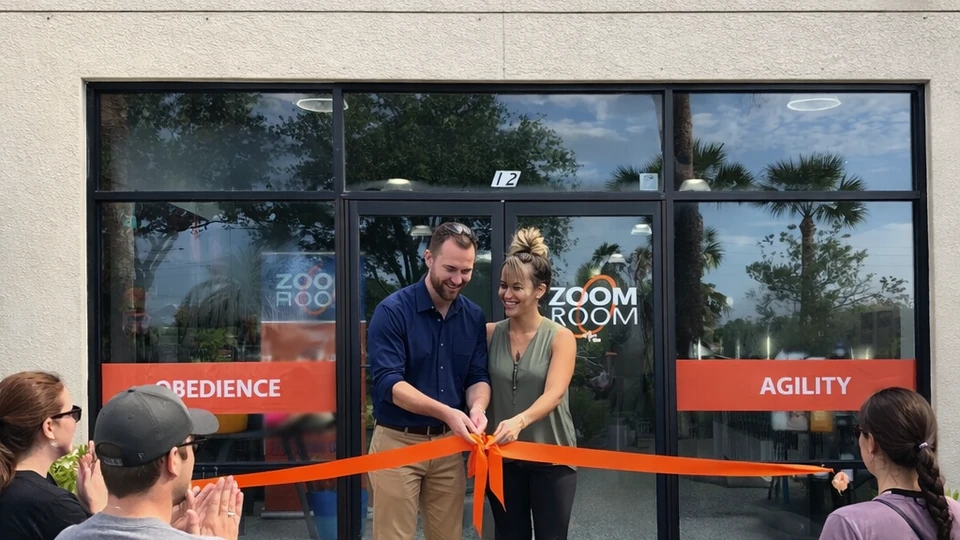
Zoom Room, for example, operates in standard retail-zoned spaces of roughly 3,000 square feet, which simplifies the site selection and buildout process compared to concepts requiring specialized construction. The Zoom Room franchise process is designed to move from initial inquiry to opening in a structured, predictable timeline.
Opening day is a milestone, not a finish line. The first six months of operation are where the real learning happens, and the quality of ongoing support from your franchisor matters enormously during this period.
Frequently Asked Questions
- The process from initial research to opening day typically takes three to six months. The research and FDD review phase takes one to two months, financing and legal review take another month, and the buildout and training phase takes two to four months depending on the concept.
- It varies enormously by concept. Home-based franchises can start under $50K, while restaurant and facility-based franchises can exceed $1 million. Most franchisors require minimum liquid capital (often $100K-$250K) and minimum net worth (often $300K-$1M). The total investment is detailed in Item 7 of the FDD.
- Most franchises do not require prior industry experience. The franchise model is designed to train you on the specific skills needed to operate the business. What matters more is your management ability, work ethic, and willingness to follow the system. Some of the most successful franchisees come from entirely different career backgrounds.
- Some franchises offer semi-absentee ownership models where you hire a manager and oversee the business part-time. However, most franchisors prefer -- and some require -- that you be actively involved in the business, especially during the first year. Be upfront about your intentions during the evaluation process.
- Franchise validation -- talking to current and former franchisees -- is the most important step. The FDD provides the data, but conversations with people who are living the experience reveal the reality behind the numbers. Call at least five to ten franchisees from different markets and tenure levels before making your decision.
How long does it take to buy a franchise? +
How much money do I need to buy a franchise? +
Do I need experience in the industry to buy a franchise? +
Can I buy a franchise while keeping my current job? +
What is the most important step when buying a franchise? +
Ready to Explore a Proven Franchise Model?
Zoom Room is the #1 dog training franchise with a total investment starting at $302,523. Learn about the process, the model, and whether it fits your goals.
Request InfoThis is not an offer to sell a franchise. An offer can only be made through a Franchise Disclosure Document. Financial performance representations are available in Item 19 of our Franchise Disclosure Document. Contact us to request our FDD.